
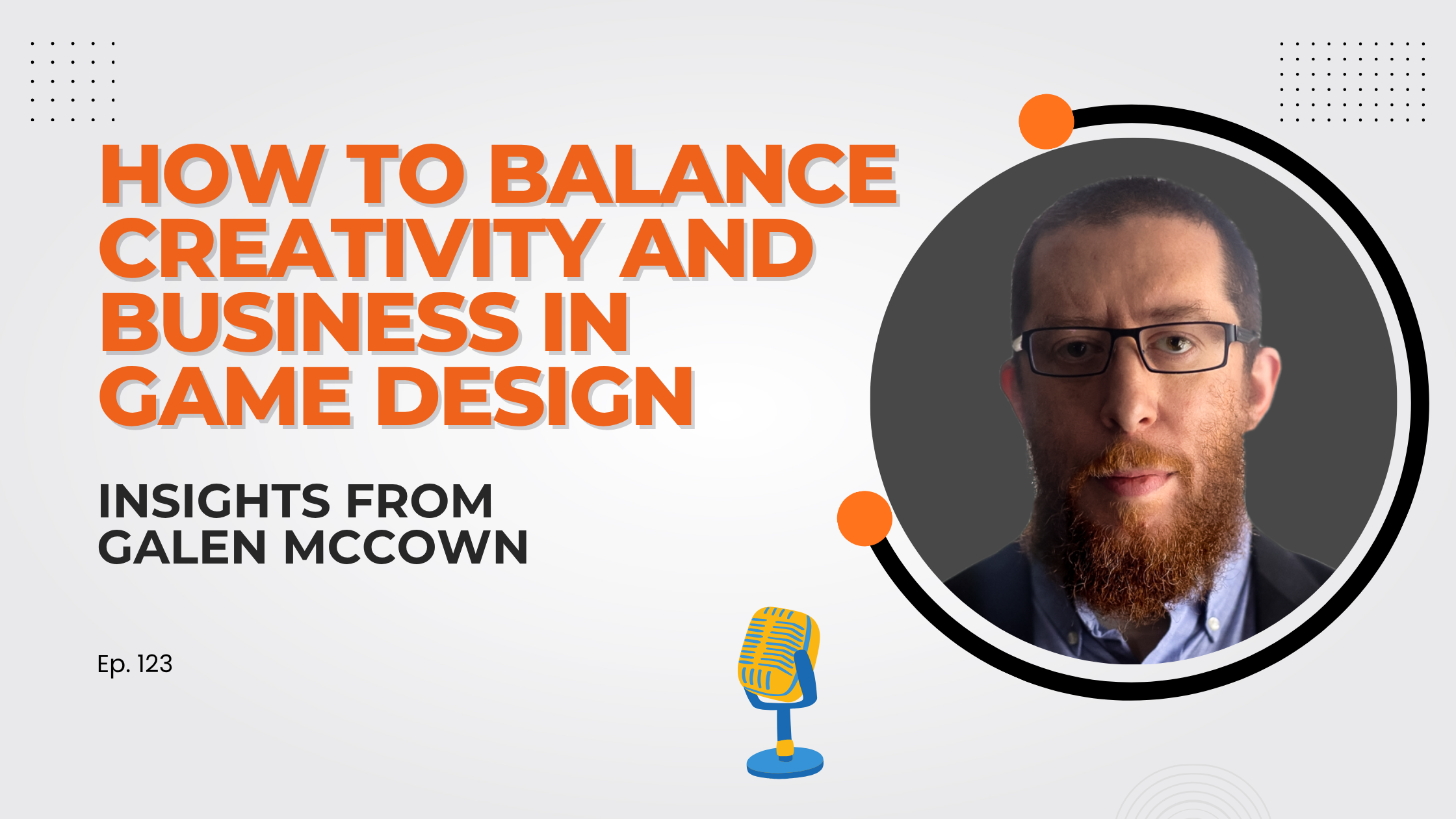
Welcome to the inspiring journey of turning passion into enterprise. Starting a new venture often begins with a spark, an idea, a passion, or a problem waiting to be solved. For Galen McCown, a licensed psychotherapist turned board game creator, it was the love for modern tabletop games that ignited his entrepreneurial path. His story demonstrates how curiosity, resilience, and community engagement can transform a simple hobby into a thriving business.
In this post, you’ll discover how Galen’s journey unfolded, from discovering game design during the pandemic to creating engaging products like Super Snipers and innovative mint tin games. It’s a testament to how creativity paired with persistence can open doors to unexpected opportunities.

#123: Therapist's Path to Board Game Innovation – Toy Business Unboxed
Episode Highlight
- 00:42 Welcome to Toy Business Unboxed
- 01:15 What got you into the industry?
- 02:26 Creative spark in game design
- 03:41 Online playtesting explosion
- 04:32 Designing for contests
- 05:29 Game mechanics and rules
- 07:39 Lessons in game design
- 09:48 Transition to product development
- 12:35 Marketing and community support
- 15:17 Self-publishing vs. licensing
- 18:05 Mint tin game series
- 19:14 Balancing business and life
- 27:34 Advice for the toy industry
How a Psychotherapist Discovered a New Passion in Board Games
Galen’s journey into game design began in 2011 when his girlfriend introduced him to modern board games like Dominion and Mage Knight. This sparked a desire to create his own games, especially solo experiences. Using basic tools like PowerPoint and sticky notes, he started experimenting with game design. His passion and curiosity drove him to learn through trial and error, setting the foundation for his future success. The process was not without challenges, but each obstacle became a learning opportunity. Galen’s story is a reminder that passion can lead to unexpected and rewarding paths.
The Pandemic Catalyst: Turning Time and Isolation into Opportunity
The COVID-19 pandemic provided Galen with unexpected free time to focus on game design. With the birth of his second daughter and lockdowns in place, he immersed himself in online design communities and virtual playtesting. These resources were invaluable, helping him refine his ideas and gain visibility through design contests. The pandemic became a catalyst for his creative pursuits. It allowed him to connect with other designers and explore new ideas. This period of isolation turned into a time of growth and innovation for Galen.
Creating Game Mechanics and Lessons Learned Along the Way
Super Snipers, Galen’s first major product, blends simplicity with strategy. It’s a two-player game where players hide and shoot, creating a tense, puzzle-like experience. Balancing real-time and turn-based gameplay was a challenge, but offering both options catered to different player preferences. This flexibility made the game accessible and enjoyable for a wide audience. Galen learned that understanding player needs is crucial to successful game design. His experience with Super Snipers taught him valuable lessons about creativity and adaptability.
From Prototype to Launch: Pricing, Marketing, and Community Engagement
Launching Super Snipers on Kickstarter taught Galen the importance of proper pricing and community engagement. Initially priced at $45, he learned to adjust perceptions around value. His transparent blogging about the crowdfunding journey fostered trust and attracted followers. Collaborations with other creators amplified his success, demonstrating the power of community support. Galen’s approach to marketing was both innovative and authentic. He realized that building relationships with his audience was key to his success.
Navigating Self-Publishing vs. Licensing: Galen’s Decision and Industry Realities
Galen chose self-publishing to fully realize his vision for Super Snipers, despite the challenges of managing manufacturing and distribution. This decision required embracing the complexities of running a small business. Many creators face the dilemma of self-publishing versus licensing, but Galen’s experience highlights the importance of assessing personal strengths and goals. He found that self-publishing allowed him to maintain creative control. Galen’s journey shows that understanding one’s priorities is essential in making the right business decisions.
Building a Product Line with Reach: Mint Tin Games and Beyond
Galen’s mint tin games are compact, portable, and easy-to-learn, fitting into small tins like Altoids. These games are perfect for travel and social settings, appealing to both gamers and non-gamers. His success with a recent Kickstarter underscores the appeal of high-quality, accessible products. This strategy leverages low production costs and high portability. Galen’s innovative approach to product design has opened new markets. His mint tin games are a testament to creativity and practicality in design.
Final Words: Advice for Aspiring Toy & Game Entrepreneurs
Advice for newcomers in the tabletop industry is simple yet powerful: join the community, share your journey, and help others. Building relationships within the industry provides support, inspiration, and growth opportunities. Whether you’re designing your very first game or scaling an existing one, surrounding yourself with fellow creators accelerates learning. Success in toys and games doesn’t come overnight—it requires persistence and a strong sense of community. Galen’s story is a reminder that collaboration and support are vital to success. His journey offers valuable insights for anyone looking to enter the industry.
Conclusion
Galen McCown’s journey from psychotherapist to successful board game designer illustrates how passion, community, and strategic product development can turn a hobby into a meaningful business. His story encourages aspiring entrepreneurs to balance creativity with operational savvy, fostering genuine relationships along the way. By embracing community engagement and continuous learning, anyone can transform their passion into a thriving venture. Galen’s experience is a testament to the power of perseverance and innovation. His journey inspires others to pursue their dreams with confidence and determination.
Connect with Galen McCown
If you’re interested in learning more about Galen’s Games or connecting with Galen McCown, you can reach out through the following channels:
- Website: Visit Galen’s Games Website for game details and updates.
- Facebook: Follow Galen’s Games on Facebook for for news and events.
- Instagram: Follow Galen’s Games on Instagram for more content.
Transcript
Jason Hsieh (00:00)
Welcome back to another episode of Toy Business Unboxed. Today we are joined by Galen a psychotherapist turned board game designer who turned his passion into a business that he really enjoyed. Starting with sticky nose and PowerPoint, Galen was able to transform his idea into Super Snipers, Kickstarter success, and now is building a full lineup of different board games with his main theme games series. So thank you so much for joining us on the podcast today.
Galen McCown (00:25)
Thank you for having me.
Jason Hsieh (00:26)
So let’s first start off on the beginning. What got you into the industry?
Galen McCown (00:32)
Sure. So, you know, I think it started with first getting into modern board games. So when I met my first started dating my wife in 2011, she introduced me to the whole world of modern board game design, which I had no idea existed. I played Monopoly and Risk like everybody else. And she introduced me to things like Dominion and Race for the Galaxy and all these other games that are kind of the modern hobby.
So I got really into that. ⁓ And then I got a game, which is still my favorite solo board game called Mage Knight. two things about it. One, it was on the cover. Under it was the designer’s name, Vlaada Chvátil I’m sure I’m butchering his name, but there was his name on the cover, which first made me think about it. And then also playing the game, which I loved. It was the first time I really thought like,
okay, somebody actually designed this experience that I’m having. Somebody had to come up with this. what is that process like? And it really kind of clicked something in me creatively that I wanted to do that myself and specifically make a game that was like Mage Knight. That was a great solo experience, but maybe a little bit more accessible, a little bit easier to play. And so I had started on that process probably around 2018 and just
not knowing anything, not knowing anybody else who did this, not knowing about the community, just simply, hey, can I make something that works? And like you said, you know, PowerPoint and sticky notes, right. And, you know, leaving cards and, and then, you know, what happened that really kind of the next thing that happened was the pandemic. And I think this is the story of a lot of people that got into this recently. Two things I had, my second daughter was born in January of 2020.
And, ⁓ you know, so I had a lot of time off from work with that. And then additionally, very quickly after that, the pandemic hit and I was working from home. so anybody who has a newborn, you know, there, there’s a lot you can’t do, but, you know, there are some things you also have in a weird way, you have a lot of time. It’s just very specific time. you can’t be very loud. You can’t move around a lot. You’re kind of stationary, but you can do things. And one of the things I could do was design
board games. And so I did, you know, a little bit of research, I ran across something called the board game design lab, which is a podcast site run by Gabe Barrett, where I connected with other people, I discovered discord, I discovered tabletop simulator which was really when this whole thing kind of blew up this online play testing, because it was the only place to do it. And so I started kind of getting involved with other designers and meeting people and
learning more about it. I began designing the game. I began designing for contests. There’s a place called the Game Crafter, which is a on demand site and a lot of great games on there. And they, they run a lot of contests and they’re really fun because, you know, they have very specific, regulations that kind of help breed creativity, know, restrictions, breed creativity. And so they wanted the contest was for solo duo.
games that are playable at one and two players specifically. And I had this concept for a sniper game that used polyaminos to kind of invoke the sense of focusing in and isolating innocent bystanders and framing your primary target. And so I designed the game for that contest. And I very luckily, at the same time, there was another guy, Was Yang, who is a Malaysian-based ⁓
artist and game designer himself, he had, he had offered to kind of work together with anybody kind of do free art for the contest if anybody was interested. I just, you know, in a matter of fate kind of hooked up with him and, we put this together. And while I entered that contest, I entered another one, which was called the Cardboard Edison, which is one of the bigger contests in board games. And I ended up being a finalist for that contest. And that was really the moment where I said,
to myself, maybe I know what I’m doing a little bit at least. Maybe there’s something to this. And, you know, that was really the moment that I kind of knew like, I don’t know how to say it, I caught the bug. I knew at that point, I couldn’t stop and ever since, you know, I can’t stop designing games in my brain, so I may as well design them in life.
Jason Hsieh (04:35)
I think you have a physical copy of the Super Snipers game. Would you mind sharing a little bit about the game mechanic, the rules and how it is actually played?
Galen McCown (04:46)
Absolutely. So Super Snipers is a fast, puzzly sniper duel. And so in this game, I’ll actually just use the back of the box here to talk about a little bit. So it’s a two player game. It is also playable solo, but it’s two player dueling sniper game where you are kind of in this sniper duel. And the idea is that, you know, this is your setup here. As you can see, there’s kind of a symmetric setup between the two players here. It’s easier to point from this side. And
you know, what you’re doing is it’s got a hiding phase. So you have these little disks that will either on one side show your avatar or I’ll say miss right and you’re using them to hide in front of your opponent’s location. So a little bit like Battleship here, right? Like I’m in one of these three locations, you don’t know which one it is. and so you hide and then the next thing you do is at the same time with simultaneous turns, you’re taking these, you know, kind of the classic
tetronomo shapes, every all the shapes, you know, from Tetris are showing up in three different colors. And you’re placing them on any of these grids with the idea of isolating the crosshair. So once you’ve done that, you flip the disk and you see, hey, did I find you or I didn’t find you, right? Okay. Once you find your opponent, you take one of the target grids that corresponds with the space where you found them and you pop it in your scope board. So this is like a dual layered scope board that everything fits inside.
And now there’s innocent bystanders on there that you are isolating using the polyaminos to keep them isolated and framing that primary target in the kill box, leaving room for your bullet to cover them. So it’s a race game, basically. And so you’re doing this. The first one to do that takes out their opponent. And there’s a lot of catch up mechanisms in the game. And one of the major ones is that when, you went around, basically wherever you were shooting from that location is now compromised. It’s going to be taken away from the game.
So next year I may have won, but I only have two places to hide at. You only have two places to search. Let’s keep the games pretty tight. There’s a lot of asymmetric characters, a lot of, as you can see, a lot of cool, you know, kind of character art and stuff. Everybody’s favorites. This guy’s got a gun for a head and his name is Gunhead. But yeah, that’s the that’s the gist of it. That’s the mile high view of it. ⁓
Jason Hsieh (06:32)
Okay.
I see. What was some of your biggest lesson learned from, you know, creating this product from scratch?
Galen McCown (06:56)
obviously I learned a lot a lot a lot about game design. Some fascinating things I so specifically for this one, One of the big challenges was I created a game and I think personally playing it. So there’s a version of the game where you play where you and I are taking your turns at the same time, right? And yeah, I wait for you to finish. wait for me to finish then we take our next.
But there’s a version you can play with a little tin second sand timer where I start my turn by flipping that timer. And when I’m done placing in that timers up, I can start my next turn. And it really puts a lot of pressure on, right? And it’s my, it’s my favorite way to play. really gets the kind of emotion of the game out. But the thing is there’s kind of a wisdom, you know, a wisdom in the game design world that you, really should put forth your best foot. You should, if the game’s going to be real time, make it real time. If the game’s going to be turn-based, make it turn-based.
And what was really fascinating, and so I would hear that a lot in play tests. And this game, its best version is real time. You just got to make it real time game. Or turn-based is the best version of this game. This is what you should do. And what I noticed is it was really split. I was getting this advice. And what I ended up doing, and I think it was the right decision. I’ve seen this at least with a couple other games is, you know,
Jason Hsieh (07:59)
Okay.
Galen McCown (08:09)
actually, I don’t want to alienate either of you. I understand where that wisdom comes from. And at the same time, two things, one, learning the game without the timer is the best way to learn it, right? Where you don’t have the pressure, I can see the rules, you can ask questions, you know, it’s important that that version of the game exists just to learn it if nothing else. And it functions fine. And there are some people that just their brain shut off when, there’s a sand timer involved and they wouldn’t
But they very much enjoy it. And then there’s other people who absolutely love that thrill of the real time. So, you know, I kind of learned, I learned a lot of things from other people. And then you have to learn what advice to take and where to kind of forge new paths a little bit, I think was one of the more bigger design lessons. I would definitely say, you know, use the term product. And I think that was, probably
The biggest learning thing was jumping from learning how to design a game to learning how to design a product, because it’s not the same thing.
Jason Hsieh (09:02)
Can you elaborate on the differences? ⁓
Galen McCown (09:05)
Yeah, so a game system, you know that functions and works on is it’s it’s its own problem, right? And it takes a lot of play testing and there’s a lot of thought that goes into that. Yeah, and and it’s it’s a wonderful thing to design a game system that works a product though. You also have to think about. I mean, there’s so much more to it, right? Like so and some of this overlaps with design. So like the the ergonomics of player.
Right? Like I know that I can build a five by five grid and that you can use these little polyamino pieces. And I know how far I have to space out things to make them work. Right. But where on the table am I bringing those polyaminos from? Right. Like where, where are they coming from? How am I selecting them? How fiddly is it to do it? Right.
I played a lot of polyamino games and one of the things I find frustrating is everything shifting around. so kind of from a product standpoint, well, two things. One, you want table presence, right? Is a very big thing. Like you want people to see the game on the table and say, what is that? They get excited about it, right? And so I created those scope boards.
which the map actually sits down inside. So you have an edge to build up against and that’s just so much more satisfying. So that’s really, that’s not a game design thing. That’s a product thing, right? Like, you know, what, what is the actual, you know, experience? What are the ergonomics of what people are doing? What feels good, right? Like you got to think about card materials. have, you know, tokens and acrylic. Why’d I do acrylic? People like acrylic, but also, you know, it’s hiding this if they’re cardboard and they develop a scratch.
they don’t work anymore. You know what that, you know what that hiding this means. So you’re kind of the durability of it. And then you’re also with all those considerations, of course, when you’re making a product, you’re also thinking about price point size of the box. What is, know, when somebody sees this on the shelf, how much do they think it should be based on what it is, what you know, size of the box, the experience, which, know, is one of the, I think the mistakes I made early on, it was kind of,
You know, I landed at a price point based on a lot of a lot of good reasons in terms of thinking about, kind of margins and what the actual product is worth. However, it’s also it is a two player quick puzzle game and having it at least at the time. Now it doesn’t seem like as big a deal. But when I when I first kickstarted this, having a forty five dollar price point was a little rough because people were comparing it to games like Patchwork.
which you’re getting much less in the box, but it’s another two player puzzle game. You can pick that up for 20 or 25 bucks. I’m asking for a lot more money than that. I think that was one of many lessons kind of learned.
Jason Hsieh (11:38)
in the pricing as well. Yeah. Okay. Okay. And I know you have been also spent a lot of time on blogging as far as like part of your marketing effort. Can you also elaborate on some of the effort that you are done? You have done and you’ve tried so far.
Galen McCown (11:52)
So I think, yeah, so I have a blog on my website that I’ve been doing since, would it have been? I don’t know, sometime in 2020, but I started getting serious when I ran my campaign in November of 2022. So about three months prior to that, I started doing a monthly blog where I did kind of real time in the moment, what it’s like to launch a campaign from three months prior through the whole campaign to fulfilling.
and just all the real experiences, all the real mistakes, all the real numbers kind of thing. And I think it wasn’t actually, it wasn’t designed to be marketing per se. was more, you know, I received some great advice early on that you find, you know, within the creator community, within the kind of community that supports you, find a niche, find some way to be supportive, find some way to be helpful, right? And one of the things I saw that I,
that I felt was missing was there’s a lot of there’s a lot of better blogs. I’ll admit it, right? There’s there’s great game design blogs. There’s great marketing blogs. There’s great podcasts about it. There’s great books about I own the books I’ve read them. What was really missing was the kind of the real in the moment experience of it, the kind of, okay, you spent you know, this which marketing did you choose and why and you spent this much and how much did you get back? There was no there was
really kind of something missing there. And so that was the niche I tried to fill and ended up being very helpful for a lot of creators that were kind of in the same boat, But it also helped kind of
forge a lot of relationships that helps a lot as well. just give one example. I, you know, as I ran the campaign, and I was in, kind of. Passed that first 24 hours and I hadn’t quite met the funding goal did very well as my friend there, but I wasn’t there. another creator, James Hudson, ⁓ had, who had wonderlands war, which is a very big, very huge campaign. It was a reprint campaign, you know,
lots and lots and lots of backers, he sent out an update kind of talking about my game and saying, hey, this is cool, check this out. And I immediately had an influx of backers that put me over my funding goal. And it was just this great feel, you know? And so I didn’t make those connections for that reason, but they ended up really kind of helping. there’s a camaraderie and, you know, there’s a lot of mutual support out there at least in this.
in the board game design industry specifically. And then the last part, know, interestingly, I think I would have, as I go back and read it, I honestly would have forgotten about 50%. I didn’t write it down. And so when I did another campaign, I reread all those and I was really able to make some adjustments that made a huge difference. And I had a much more successful campaign the second time
Jason Hsieh (14:23)
Hahaha
And I also want to talk about one of the issues you just mentioned, which is very common in the board games design industry, is to choose whether to go with self-publishing or go with a traditional publisher and try to pitch your ideas for licensing it. What are some of the things you consider when you are making your own decision about those options?
Galen McCown (14:55)
I’m laughing because I’ll I’m happy to answer that question. And then, you know, what other people should consider, I’ll probably answer differently. That’s what we do. So for me, honestly, I don’t necessarily suggest this, but people are gonna do what they want to do. I really started as I fell in love with my own version of the game, right? So I done, I made Super Snipers enough
tenter in a contest and, you know, and got some recognition around that, got some excitement. And I suddenly just the thought of, you know, pitching and licensing and having it rethemed or having it changed. I just, couldn’t do it. I needed, I needed it to exist. I needed my vision to be out in the world. And I’m just this way about things. I, if I start something, I see it all the way through. And so I decided to pursue self publishing. I, um,
I was naive. I really thought I knew it wasn’t going to be easy. had no idea how hard it was going to be. No idea, you know, just how much I didn’t know. You don’t know what you don’t know. And so it became a kind of right. Like I said, it was a, was more of a vehicle for my making this particular game and not necessarily starting a business, which is the wrong thing to do. I’ve since, you know,
Jason Hsieh (15:54)
Yeah.
Galen McCown (16:12)
made it into a business and I’ve grown into it. But at first it was all about just like, I want to, you know, want to crowdfund Super Snipers and if I, you know, make money, great, but ultimately I just want people to play my game. was the vision that got me started.
Jason Hsieh (16:28)
Yeah, but just like you said, self-publishing is literally running your own business, which is a lot more complex. There’s a lot more aspect to it besides just the design, there’s manufacturing, supply chain, finance, hiring people and all the other stuff that just like running any other kind of businesses that you need to consider compared to just focusing on the design. So I think that’s one of the major kind of things that people tend to…
underestimate the amount of work that’s involved.
Galen McCown (16:57)
It looks, it looks, I mean, it looks easier from the outside. It looks like people come up with an idea, they pay for a little art and they start a Kickstarter and they get a bunch of money and you know, what do you want? It looks easy until you. Yeah. How much there is to it, for sure.
Jason Hsieh (17:12)
For sure. So I want to transition to talk about the next product line you’re currently working on, the tin game that you have. Do you also have a sample? Yeah.
Galen McCown (17:22)
⁓ So I’m doing a series of mint tin game So these you know kind of fit in these little altoid sized tins There are all one to two player games ⁓ the whole kind of pitches You know learn them in ten minutes play them in 20 minutes play them anywhere I did a series of Four of these I just kick-started these last fall Which was very successful and
My goal is to deliver them this summer. am just about done, you know, just about ready to start manufacturing. The tariff situation, of course, is giving me a little bit of pause. So yeah, still like a lot of people navigating that. But yeah, the Mint tin games. I did a series of four and they’re all going to be PVC cards. So very durable. The idea is really
You can get these out anywhere. You can play them at a bar at your dinner table. You can spill drinks on them. They’ll be fine. Kind of durable, easy to get out, easy to play with gamers and non-gamers. And they’ve been very popular.
Jason Hsieh (18:19)
I see. And I think with the multiple game you still have on the horizon, how are you currently balancing running the business and your own personal life and still working on new product development?
Galen McCown (18:31)
Yeah. what day you ask me sometimes I’d say not well. because I, as you mentioned, I’m also a psychotherapist, I still do. I do that as well. And one of the things I’ll often say to my clients, I need to hear myself is, you know, think of balance as a verb, not as a noun.
It is, you know, it is an act. is something you are always doing and trying to get better at. It’s not a place you arrive at. It’s not a perfect formula. And it isn’t. So there are days I’m doing really well with that. And there are days that are very challenging, you know, in terms of, you know, the actual structure of that. I’m going on almost two years of going part time as a psychotherapist and being part time, you know, working on the game design, game publishing business. So I do have
some dedicated set aside time to do this work. We’re doing some of this now. So, which is great. And that was huge when I was trying to just, it was all weekends and evenings and late nights when I was doing Super Snipers. And so that shift has been very nice and that makes it possible.
I think in terms of game design itself, one of the beautiful things about it is I can do a lot of it in my head. Certainly not all of it, but it’s something that I can, when I’m driving, when I’m singing the kid to sleep, when I’m just doing something that doesn’t require my full attention, I’m designing a game in my head. I’m going through.
I get about things, you you do have to get it to the table. You absolutely have to iterate and you have to play test. I think, you know, that’s what’s good about the business itself. I have a dedicated play testing group. I do try to get to every Sunday locally here in Syracuse, where I work with lot of other designers. do regular online meetups where I’m meeting with people and play testing. And I think the ability to both play test physically and online.
and iterate in both those spaces makes a big difference in terms of being able to do the development cycle and being able to make space to have this happen. It doesn’t always have to require people coming over or me going to them.
Jason Hsieh (20:38)
I have a follow up question with your background because I know as a psychotherapist you’re trained to understand human behavior and motivation. How has those background influenced the way you design games or think about player interactions?
Galen McCown (20:50)
It’s interesting. Everybody asked that. I don’t think I’ve ever had a great answer to it. It helps a lot. I think, you know, it’s weird.
I do see the connection and at the same time, it’s there kind of separate worlds for me a little bit. And when I say that, you know, and in psychotherapy, it’s you and I about you. You know what I mean? It’s you and I about, how do we help you and the person in front of me. And I love that. And it is an art. Absolutely. And you know, game design is a little different. It’s, know, that kind of balance is very different.
In both worlds, I’m kind of curating an experience, but the experience I’m looking to curate and the focus of it is a little bit different. There’s a little bit of me in there. So I know I’m kind of swerving around your answer because it’s absolutely reasonable question. I did, I will say I also, you know, when I was working more with kids and working in schools, I was doing therapeutic Dungeons and Dragons groups too.
Jason Hsieh (21:46)
⁓ okay, okay.
Galen McCown (21:48)
And I think in general, there’s a lot to be said about games and therapy and healing and things like that. And that world’s fascinating. At the same time, I kind of think of game design as my counterbalance to my work. I call it brain candy, right? Sometimes I need to be able to shut down everybody else’s problems and
Jason Hsieh (22:11)
I see. Okay. Thank you for sharing that. Because you have a very unique background. And even for me, because my background was in finance before. So I also take some of my background into the current business I’m running.
Galen McCown (22:23)
That would’ve been more useful
Jason Hsieh (22:26)
It’s different, so everyone-
Galen McCown (22:28)
I wish I was an artist, graphic designer, finance, business, you know, right.
Jason Hsieh (22:32)
Yeah, of course. So what is next for the company? Any more exciting project you have on the horizon and where do you see the company heading to in the next three to five years?
Galen McCown (22:42)
So with the recent one and with the next one coming out, I both have my own designs and I’ve also picked up games from other designers, you know, and have been working on developing those. So I’m doing another series of Mint tin games. I just love the Mint tin games. They’re very popular, they’re very cheap to produce, they’re very easy.
for shipping and I think they’ll do very well at conventions, which is a big part of my business is being at conventions and selling at conventions. So I’ve got another series of four mint tin games again, kind of focusing on two player experiences or playable solo. So just quickly kind of the games that’ll be coming out. I wish I had them to show they exist in prototype form, but nothing fancy to show.
I’ve got a game by Eben Wilcock called and It’s a two player game, but it’s a five on five soccer game. Really, really smart little design where you have one through five numbers on the cards and a kick or shoot card and some dice and that’s it. And you’re basically, you’re playing your cards to pass and as the defender, you’re trying to play the matching number to intercept.
right? And when you play that kick card, basically, push your luck, the more passes you make, the more likely you are to be intercepted. But the more passes you make before you shoot, the more dice you roll. So the number of cards is the number of dice. And the final number. So there’s one through five is the number you have to hit or get below to make a goal. And so we also know the more passes you probably want to go to your four or five to improve your odds, but there’s a little bit of a head game there. And so
It’s this really fun kind of back and forth head game with some push your luck and with some fun dice rolling that it’s fun how much it captures the feel of that kind of back and forth in a soccer game. And when the goal does happen, how big of a deal it is, you know, basketball, you know, people score every time they go up and down the court, you know, hockey or something like soccer or football, you know, for the rest of the world. It’s a big deal goal, you know, so it’s it’s.
Jason Hsieh (24:36)
Yeah
Galen McCown (24:36)
That one’s fun. Everybody. I play that with a lot. I’ve tried to find a lot of non gamers, a lot of family members and stuff, and it’s just people pick it up and they they want to buy it right away, which is always a very good sign. Like, you know, even the little prototype like, oh, how do I buy this? That one I’m happy with. Got a game called Breakaway, which is going to be a Tron style racing game It’s the way the.
the track is done is it’s a series of cards lined up that as you go forward, the back of the track kind of gets picked up and put in the front and flipped over. So it’s this evolving track. you’re using your dice to move to spots around and pick up different power-ups and use different abilities. That one’s really fun. That’s pretty far into development and getting art in for that one. Then I’ve got, That’s an Order, which is a,
very simplified war game, but it has this really neat programming mechanic to it where you have a series of cards and you’re always picking the three things you’re going to do. And then taking turns, we reveal what we’re doing here. You know, kind of you’re reinforcing or you’re moving or you’re attacking the space where you’re at. But there’s also a card you play that’s called “that’s an order”, which gives you this token that allows you to do the more powerful part of the action by pre-planning it. And it’s just,
It’s a really neat head game. It’s very sandboxy. You can set up lot of different scenarios, the ways you play. And it’s just a blast. And then the last one is Mint Mechs, which is my design out of the four, which is a two-player miniature mech battler that has a really neat thing where you’re drafting dice by moving around an arena, and you’re picking up the dice you want.
and you’re placing them to get certain effects, but you’re also trying to set up a sequence. So as you’re picking up the dice, which are all randomized, there’s different things you can do to mitigate them. At some point, you get to pull off all the dice that you’ve placed and you can do that in a sequence, right? So like one through six or six through one. And so you’re trying to set up a massive barrage, right? Like, okay, I’m going to get some fuel and then I’m going to fire my rail gun and then I’ll do this kind of thing. And that game’s a lot of fun. I’ve been having a lot of fun designing that one. It’s definitely the heaviest of the four.
That’s good.
Jason Hsieh (26:37)
I see. Yeah, thank you for sharing all that. Once you have more information, please share that with us. We’ll make sure we put that in the show note as well. As well, kind of wrapping up today’s interview, if you have to just share one piece of advice with someone that’s getting started within the toys and game industry, what would that be?
Galen McCown (26:52)
Yeah, think be part of the community. You gotta find your niche as a product, but also find your niche in the community. I can only speak for board game design. I don’t know about the whole toy industry, but for board game design, make friends, share what you’re doing. I mean, not just because it’s good for marketing, but because it’s good to be, it’s a world where people are more than happy to help you. You were just like this, right? We had a meeting where,
sat down, I didn’t pay anything and you told me how to run my products on Amazon, right? Like people help each other in this industry and we want to see each other succeed. And there’s always somebody who’s a step ahead of you and eventually there’s going to be somebody who’s a step behind you, right? And you can pay that forward. You can suddenly be the expert at this tier for that person down there and you can do the same thing that people did for you. I think kind of make friends, network.
find a way to be helpful to other people, it all pays off and it’s all, it’s one of the more rewarding things about doing this, I think.
Jason Hsieh (27:50)
Yeah, I agree. think networking and learning from other people is very important. So you learn from other people’s mistake. I mean, I make a lot of mistakes in my career as well.
Galen McCown (28:00)
That’s what my blog’s all about. Learn from my mistakes.
Jason Hsieh (28:02)
Yeah, but thank you again for being on our podcast and sharing your journey and your story with our audience. Where can people find you online?
Galen McCown (28:10)
Sure, so it’s really easy to find Galen’s games. So http://www.galensgames.com and you’ll find my website and there’s links there to the blog and products and what’s coming next and all the Kickstarter pages and videos, et cetera. So yeah, that’s the best place.
Jason Hsieh (28:25)
Okay, perfect. We’ll make sure we put that in the show note. thank you again for sharing that. For our audience, thank you so much for tuning in to this episode of Toy Business Unboxed Podcast. We hope you have enjoyed the conversation and find it insightful and inspiring. If you like what you have heard, be sure to subscribe to our podcast and we are your favorite platform so you never miss an episode. We really appreciate your support and we’d love that if you can leave us a review and share the podcast with your friend and colleague. For more resource tips and latest update, we’re the toys and game industry.
visit our website at toy-launch.com. Join the conversation and connect with us on social media using #toybusinessunboxed. We’d love to hear your feedback and suggestions for future episodes. Until next time, keep innovating, keep creating, keep bringing joy to toys. This is Jason Hsieh signing off on the Toy Business Unboxed podcast. We’ll see you in the next episode. Thank you so much, everyone.