
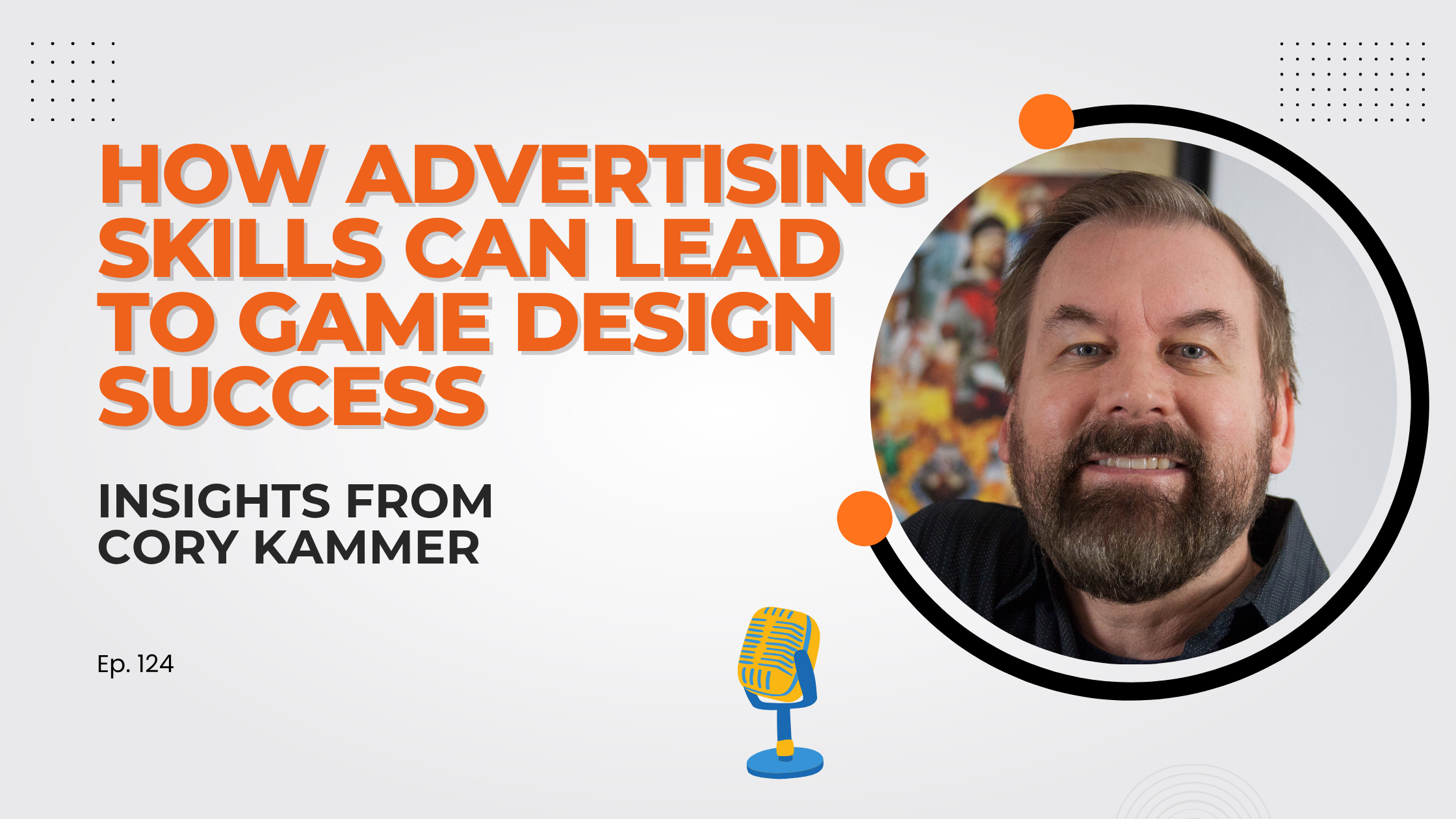
Welcome to an inside look at what it really takes to turn a love of games into a lasting business. Cory Kammer’s journey — from inventing games as a kid to building a successful board game brand — is packed with lessons for anyone dreaming of breaking into the toys and gaming industry, from leveraging Kickstarter to thinking creatively and pushing through challenges.
In this post, we’ll explore how Cory’s passion shaped his path, the realities of launching a tabletop game, and actionable tips for using technology, smart marketing, and global resources to your advantage. Whether you’re an indie creator or industry veteran, his story is the blueprint you didn’t know you needed.

#124: Transforming Dark Fantasy: A Veteran's Tech Journey – Toy Business Unboxed
Episode Highlight
- 00:42 Introduction to Cory
- 01:12 Childhood Game Inventions
- 02:05 Transition to Game Design
- 02:57 No Dungeon Master Needed
- 03:10 WitchBorn’s Core Concept
- 05:19 App Technology Integration
- 06:41 Enhancing Replayability
- 07:18 Crowdfunding Lessons
- 08:26 Cost and Shipping Insights
- 09:47 Manufacturing Challenges
- 26:06 Key Advice for Newcomers
- 27:03 Wrap-up and Resources
The Origins of a Gaming Innovator: Childhood Passion and Early Creations
Cory Kammer’s fascination with game design began at the age of five. Growing up, he often beat adults at Risk, demonstrating an early talent and determination. His childhood was marked by inventing his own versions of popular games, including a fantasy-themed Risk, which, while shelf-bound today, laid the groundwork for his later projects. His love for storytelling and strategy was further fueled by playing Dungeons & Dragons during high school—an experience that deeply influenced his approach to game design. He appreciated how D&D combined storytelling, strategy, and immersion, qualities he aimed to bring into his own creations.
Creating Witchborn: A Role-Playing Game with a Tech Edge
Witchborn, the flagship game from Cory’s studio, is an immersive dark fantasy RPG with miniatures that anyone can pick up — no dungeon master required. Instead, players use a companion app that drives storytelling, generates encounters, and adapts events dynamically, a concept Cory considers ahead of its time. The app boosts replayability through random encounters and expanding content without adding physical components. With a focus on heroism and adventure over traditional mechanics like leveling or treasure hunting, Witchborn is designed to pull players into the experience and keep them coming back.
Crowdfunding and Building a Business: The Kickstarter Experience
Launching Witchborn on Kickstarter was a steep learning curve. Cory stresses that understanding your true costs — especially packaging and shipping — is critical, warning that early estimates can end up being double or quadruple the reality. His advice: multiply any production and shipping estimate by at least four to avoid nasty surprises. Building solid relationships with manufacturers and shipping partners, and using tools like ShipStation, can keep costs in check. And when it comes to platforms like Kickstarter and GameFound, don’t underestimate their power to validate your game, raise funds, and grow a loyal audience.
Overcoming Challenges: Shipping, Costs, and Industry Complexity
Many indie creators underestimate how complex game production really is. Cory’s background in advertising and illustration gave him a head start, but managing art, marketing, and logistics requires a broader skill set than most expect. His advice: collaborate with emerging artists or overseas manufacturers to keep costs down — printing double-sided maps alone cut his costs by 80%. Custom components bring their own problem-solving challenges, and reaching audiences beyond the hardcore niche means leaning heavily on crowdfunding and conventions.
The Role of Community Feedback in Game Development
Community feedback has been instrumental in shaping the Witchborn game. Cory actively engages with players through online platforms, gathering insights and suggestions that inform game updates and expansions. This collaborative approach not only enhances the game’s quality but also fosters a loyal community of players who feel invested in its success. By listening to his audience, Cory ensures that the game evolves in ways that resonate with its players, maintaining its relevance and appeal. This feedback loop is a testament to the power of community-driven development in the gaming industry.
Marketing Strategies: Crowdfunding and Community Engagement
Crowdfunding is Cory’s most powerful tool for building an audience. Online groups and digital demos — especially during the pandemic — kept engagement alive and feedback flowing. Regular updates, PDFs, and app enhancements maintain backer interest over time. Nostalgia is also a surprisingly effective hook, with mature audiences often reconnecting with fond D&D-era memories. Ultimately, turning happy backers into advocates and repeat buyers is what forms the backbone of a sustainable business.
Future Plans: Refinement, Expansion, and Better Products
Looking ahead, the focus is on refinement — updated rulebooks, deeper storytelling content, refreshed apps, and new campaigns on platforms like GameFound. The priority is raising quality and meeting the expectations of a growing community. For newcomers, the message is simple: don’t fear failure or rejection. Perseverance and passion will carry you through the many hurdles of the toy and game industry. As Cory puts it, “Don’t have people tell you no. If you’re passionate and care, you can figure out a way to get it done.”
Final Thoughts: Turn Creativity into a Sustainable Business
Cory Kammer’s experience is a testament to the power of passion, resilience, and strategic innovation. From childhood game invention to global crowdfunded brand, he shows that success in the toys and game industry requires more than just creativity—it’s about smart planning, leveraging tech, and building relationships. Your next step? Focus on developing quality content, learn the mechanics of crowdfunding, and embrace collaboration—your unique ideas can grow into something that resonates worldwide
Connect with Cory Kammer
If you’re interested in learning more about Witchborn or connecting with Cory Kammer, you can reach out through the following channels:
- Website: Visit Witchborn’s official website for the latest news, game updates, and more.
- Linkedin: Connect with Cory Kammer on Linkedin for industry insights and professional updates.
- BoardGamegeek: Check out Cory Kammer on BoardGameGeek for reviews, ratings, forums, and community discussions.
Transcript
Jason Hsieh (00:42)
Hello, welcome to another episode of Toy Business Unboxed. Today we are joined by Cory, the creator of Witchborn, a game that combined the sort of RPGs with intense miniatures. And also he’s a veteran in advertising industry, turned into a game designer. And Cory will bring us into his journeys from his first Kickstarter campaign to the challenge of building his own board game from scratch.
So thank you so much for joining us on the podcast today, Cory. So can you kind of first start out by sharing with our audience, how did you start like creating this board game of yours?
Cory Kammer (01:12)
Thanks for having me.
Boy, it’s a crazy long story. Since I’ve been little, I was creating games. remember I was five years old, and my dad and my older cousins were playing Risk, if you know that old board game. And they said, you’re too little to play this. And I insisted, and I beat them all.
Jason Hsieh (01:35)
Yes, yeah.
Cory Kammer (01:42)
That time on, I just started inventing games. And the first one was once I figured out the strategy for risk, I had to build a better risk. And so I made a fantasy based version of that. And that was a lot of fun. It took many years, somewhere on a shelf. But my background is advertising and kind of the
Game changer for me growing up is when I learned to play D &D in high school. I’m just background in comic books and that kind of stuff. It was just the perfect game for me. It had the strategy and the intrigue and the storytelling, because story is so important to me. And after many years in advertising, The old guys are always the first ones to get laid off.
Jason Hsieh (02:34)
Sorry to hear that.
Cory Kammer (02:35)
We’re going into our 11th year here. And I know games really only have about a six month lifespan after working on Mattel for years. But we’ve managed to hang in there for 11 years. And I basically wanted to create a game that took what I loved about Dungeons and Dragons, but made it a little more accessible.
Jason Hsieh (02:57)
Can you explain to the audience the concept of the Witch-Born and is there any particular personal experience that you also drew from when you designed the game? And if you have actually the physical game with us.
Cory Kammer (03:10)
So the core set, this is kind of like the third version of it, but the core set is Enter Perdition with the pit. And that’s kind of where you start. And so I guess for me, it’s not so much about game mechanics that get in the way of playing role-playing games. know, people are players
are trying to defeat the system. They’re trying to come up with little loopholes to get unfair advantages in the game and that kind of stuff. And I just, I’m just about the story. I want everybody to be heroes and go and defeat the bad guys. And I want it to be a challenge and a strategy, but creating that much content for like a game like D &D, you know, I was a dungeon master for years.
And creating that much content is almost a full-time job. And so the big thing that I did with the Witchborn was I made sure that you didn’t need a dungeon master. So you play without that game referee. And there’s a series of apps that help with the storytelling. And so if last night we were playing in the wandering forest, this is a forest where
The trees are enchanted and they can actually move and block your way as you’re trying to escape the forest. And so it’s teammates working together to try and escape safely. the app comes into play because there’s little encounters that pop up. There’s things you notice, things that happen to you. The Witch Born are terrible undead creatures.
and you’ll run into them in the course of the game and you have to work together to defeat them and so forth. So it becomes much more about immersing yourself in that story rather than trying to reach 20th level or whatever, or amassing the most treasure or whatever. It’s really heroic adventures.
Jason Hsieh (05:07)
I see. also integrating the tech with your game. I think that was a pretty bold move. When you first started doing that, was a lot of other people in the industry also have tried to incorporate that into their game?
Cory Kammer (05:19)
So I can’t prove it, but I think we were kind of the first. And the reason being was we had like a deck of cards that had these random encounters. But you can only fit so much on a card, right? You can only fit so much detail. And if you want to put monster statistics and you want to have the monsters have motivations of what they’re doing, needed a way to make it run a little deeper.
So last night we were playing Wandering Forest and the encounters that pop up are totally random. So I’ll hit draw.
Jason Hsieh (05:54)
Mm-hmm.
You have the story, okay.
Cory Kammer (05:56)
And so it’ll have the information that I read to the players and then depending on how they react to it one person takes on the role of the marshal and they and they say well this happens you know and that’s explained down there and if you run into a monster Let’s go to one where we know there was a monster
There may be a picture. And then the statistics for that monster that you’re going to. And so what makes the app so important to the game is we can play that same adventure wandering forests 17 times in a row. And there’s so many different encounters
Jason Hsieh (06:21)
I see, okay.
Cory Kammer (06:41)
that can happen, it’s going to play differently every time. Or I can jump from Wandering Forest to Enter Perdition to The Pit to all these different adventures that we have. they’re always going to play different even though you’ve played it maybe once before. And you’re going to start to make friends with other characters and have comrades and work cooperatively together, which is really the ultimate goal of the game.
Jason Hsieh (07:05)
I see. Thank you for sharing that. And I know when you initially launched the product, think you also go through the crowdfunding and launch it and found it on Kickstarter as well. How was your experience working with Kickstarter and any story that you’d like to share?
Cory Kammer (07:19)
just recently done some analysis and Kickstarter has been my most successful way to raise funds to date. And I’ve learned a lot of things over the years. And I went to a seminar at GenCon before I launched my first Kickstarter. And I’ve done five now. And
I went to a seminar and they said, figure out all your costs. And they said, know, packaging and shipping and everything. And then, you know, the production and multiply that by a minimum of four. Cause that’s what your MSRP is going to be. And man, is that true? Cause the first couple of kickstarters,
My goal was to break even. was a hobby right? This wasn’t really a real business, you know, where I was making a lot of money or anything. I was just trying to break even because. And I lost my shirt, you know, I raised. want to say my second Kickstarter, I might have raised $20,000 or something like that, and it probably cost me 40 or 50.
Jason Hsieh (08:26)
Yeah
Cory Kammer (08:26)
to fulfill everything, you know, and it’s like, okay, well, I’m just, I’m just doing this out of the kindness of my heart. you know, you get, you get business smart after a while. But the other thing is you make relationships, right? You find somebody who’s enthusiastic about your product, and maybe they can get you a deal on printing, or they can recommend
you know, a better shipping source. Like when I broke into Kickstarter, like, I don’t know, ship, ship station existed, but ship station is like the greatest thing for an independent person because you can get Amazon rate of pricing and on shipping. And man, I was paying some, some of these big boxes, these things are, you know,
Jason Hsieh (08:57)
Ha, Yeah, it’s really big, yeah.
Cory Kammer (09:15)
10 pounds, know, there’s a lot in there. And, you know, I was paying 25 to $30 to ship those out. And so, you know, we ship station got it down, you know, under 10 in most cases. And so it, makes a huge difference, right on your, on your bottom line, you’re not working for free.
Jason Hsieh (09:35)
For sure. What are some of the major challenge that you encounter? It sounds like you mentioned about the shipping and also getting the right amount as far as the, you know, other particular challenge you face?
Cory Kammer (09:47)
Yeah, the hardest thing I think for most people is there’s a lot that goes into a game. You’ve got to know, you know, writing and marketing and photography and production and shipping. And I had kind of a head start because I was in advertising. This is like what I’ve worked towards all my life, right?
I started off as a wannabe comic book artist. And so I went to school for illustration. And so I knew illustration and I did some comics and I did many years illustration and I realized the computer was kind of where I wanted to be. And I kind of self taught myself to be an advertising art director.
And that’s where my career really took off. But then I learned, you know, I had the privilege of working with some of the greatest photographers in the entire world because I was working on big brands like Goodyear and John Deere and Kraft Foods and different things. And so I worked with these geniuses and I learned photography and so much from them. And so now it’s, you know,
Now I can take, you know, this is actually my daughter on the cover, right? You know, I’m doing the photography, I’m doing the retouching, I’m doing all that stuff. So a person that’s starting out on Kickstarter, might not have access to all that. But I will tell you that there are constantly people coming out of school who have great talents and
they’re looking for jobs and you might be able to snag a really talented person and say, hey, you know, I can’t pay you, but if you do all the art, I will give you X. Or if you do all the, you know, publishing or print production, I’ll give you X, you know? And so you can work out deals like that. I’ve, a lot of people have asked me for.
for advice, I’m like, well, I do it myself, but, you know, go talk to my friend here who’s gonna be doing a Kickstarter and he needs help with photography. And if you wanna be a photographer, you know, go do photography.
Jason Hsieh (12:05)
Yeah, and that’s also a different way to really leverage the global economy and you can always hire people from overseas with a much cheaper cost of living compared to the United States.
Cory Kammer (12:16)
Well, that’s that’s true. Like I’ve had I’ve hired miniature sculptors in Italy, you know, and miniature sculpting is very, very expensive because it’s a very time consuming thing. But, know, you find somebody who’s willing to do it for maybe 100, 200 dollars a figure. Now you can start to mass produce those and actually, you know, recoup the money.
Jason Hsieh (12:39)
I see. And I want to switch our interview and talk more about the business aspect of the board game as well. What are some of the things that surprised you when you first started your own game company?
Cory Kammer (12:54)
Yeah, well, everything surprised me, right? I am by nature a very shy person and that does not help you. You’ve got to be aggressive. You’ve got to get multiple quotes on things. You can’t be pushed over. They will tell you,
I don’t know this is a good example. They will tell you things can’t be done. The game uses really large maps. I will not even be able to show this on screen. But this is one panel and it folds out.
Jason Hsieh (13:34)
wow, it is very big.
Cory Kammer (13:36)
Or this way and that it’s double the height of that it takes up like an entire kitchen table. And the design and they’re all double sided too.
Jason Hsieh (13:42)
wow. Okay. Okay.
⁓ okay. Yeah.
Cory Kammer (13:47)
And so I can’t tell you how many people said that can’t be done. And I said, oh, where there’s a will, there is a way. And I ran into, it was actually a small company in China and they were eager and they said, give us this job.
and give us a month and we will figure out how to make this work. And they did it and it was a very simple, elegant solution. And to give you an idea of the cost savings of doing it that way, originally, when I first did the Kickstarter back in 2015, those giant maps were printed on vinyl. And they were output almost like a billboard or something like
that because I had experience doing that. And the vinyl maps were great. They rolled up into tubes, but they were a pain to ship because they were kind of oblong. And if you didn’t wrap them real good, they might pop open and get bent up. And they were going to charge me the same amount to two sided maps. Well, say this more elegantly to print a one-sided map, the best price I could get was $17.
print it two-sided, I wasn’t going to get a break. They were going to charge me $34. So to think to put a $34 thing in a set and know that you got to mark it up four times, it makes it impractical, right? Yeah. So these double-sided cardboard maps
minute I got that, it brought the cost down to $4 per map.
Jason Hsieh (15:36)
Whoa, that’s a significant cost saving. Yeah. 80%. Yeah.
Cory Kammer (15:40)
Yeah, and so it’s that kind of stuff that you just got to work and work and work and there’s so much to it, right? Like I do custom dice for the game. And so here’s some. Here’s a preview of some new stuff that’s coming out on the next crowdfunding. These are clear dice with.
kind of like cellophane in there. And if I shot some light through there, you look at it in sunlight, they’re really cool looking. But to find somebody who can do that kind of stuff, that’s half the battle. then do it effectively. Here was another, this can’t be done. I designed a really weird pip on these dice that wraps around.
Jason Hsieh (16:28)
Very interesting. Okay, for all of us, if you want to see what it look like, please visit our YouTube channel. It’s really hard to describe. Can you try to describe this dice that you’re holding up?
Cory Kammer (16:38)
Yeah, rather than little circles for the pips, it is little grooves. And so I’m holding up like the side with a six. And the side with the six, the little grooves wrap around to the side with a three on it. And there’s only three grooves on that side. And they told me that absolutely couldn’t be done. And I said, yeah, it can be done. And so again, find a place that is willing to.
Listen listen to you and and I don’t mind paying a little bit extra. Yeah, I get something that’s unique and different and Exciting and I mean a set of those you get five dice with those a set of those cost me about a dollar to produce And then I can turn around and sell it for you know $10.
Jason Hsieh (17:24)
Okay
Cory Kammer (17:29)
And so because it has a perceived value and so it’s profitable
Jason Hsieh (17:35)
Yeah, and I see your game scene kind of sing around like a dark fantasy game if I describe it.
Cory Kammer (17:40)
Yeah, the idea behind it, the WitchBorn are basically in game. There was this terrible thing called the Cataclysm and it opened a rift between worlds. And these dark spirits can enter our world and they can inhabit any fresh corpse. So it’s kind of like a zombie vampire.
Jason Hsieh (18:02)
Zombie vampire, okay.
Cory Kammer (18:05)
it’s very dark because you basically have to learn to band together and fight these things. And the goal of the game is to kind of take the world back from the witch-borne. What gets a little disturbing when you’re playing the game is if if one of the characters dies in game, like one of your friends dies in game, they become witch born and they turn on you.
Jason Hsieh (18:27)
that’s a very unique twist.
Cory Kammer (18:30)
And so it is, it’s very upsetting to players when they become witch born. So everybody controls more than one character because we know it’s inevitable that somebody is going to die. And that’s one of the things that’s decided by the app. If you get wounded.
Your arm might get lopped off. Your eye might get poked out. You might just be knocked out. That’s the most common thing. But very rarely, your character may die from a wound. You become Witch Born And it’s just a different kind of level to the tension.
Jason Hsieh (19:00)
I see’
I see. How would you describe your typical audience, the one that is currently playing your games and backing you on Kickstarter? It sounds like it’s more of a mature crowd
Cory Kammer (19:22)
Yeah, yeah, I mean,
Kids tend to grow up on video games. so sometimes they’re introduced to Dungeons and Dragons or a game like The WitchBorn later on, like in high school and stuff. And it’s been really interesting when we do conventions, we do as demos as we can, right?
Jason Hsieh (19:36)
Yeah.
Cory Kammer (19:46)
And I remember at Origins a few years ago, it was getting near closing time. And like this mob of teenagers rush into the booth. And they’re like, OK, what do we need? And they just start buying everything. There’s like six kids. what do we need? And they had just run a demo out in the game hall.
And they wanted to make sure to buy it before the hall closed so that they could take it home and play because they had been brought up on video games and they never really played anything like that. And now, you know, fast forward three, four years. Now a couple of those kids work for me. It’s they help me run demos at shows and stuff. So, but I would say the average audience is a little more mature like you know 30 plus.
Jason Hsieh (20:38)
⁓ okay, okay, okay.
Cory Kammer (20:40)
And it goes up into, we’ve got players in their 70s. I see. It speaks to something nostalgic to them because they grew up in D &D and that kind of stuff. And so they’re just trying to recapture that fun of when they used to
Jason Hsieh (21:01)
I see. And when you’re doing marketing, like what has worked well for you in reaching those audiences?
Cory Kammer (21:07)
The best thing by far has been crowdfunding. I think just recently GameFound announced that they are now the biggest crowdfunding site for games. And so I think I’ve got a Kickstarter coming out this year. And it’s going to put a nice bow on everything. I’ve got a prototype here.
Whaling Citadel is going to be the one. And then the backside of that one is Wandering Forest, which is going to be, you know, it’s a double-sided map again. That’s the one we were kind of testing out the other night. And so that’s going to come out. I’m probably going to do that one on GameFound. So that’s been sort of my best. And then, ironically, shows have always been a good way to build that new audience. What I find is, unless I find a way to keep those people engaged over the year, I really don’t hear from them again till the next show, know, till next year. Yeah. And so one of the great things about COVID
was we figured out how to take the game online. And so we play in regular groups online, and that is a great way to keep people engaged. I tell everybody at shows, owners are allowed to play online for free. They can use the maps however they want. all the tokens and everything are there. But if you want to
Jason Hsieh (22:14)
Yeah.
Cory Kammer (22:35)
join in on our scheduled games, please do. And that has really, really changed the way things work. I’m learning that in this modern age, people want PDF rule books rather than printed rule books. And so my early enter perdition books,
Jason Hsieh (22:51)
Yeah.
Cory Kammer (22:56)
down to probably my last 25 sets with books, and then I’m gonna go to all PDF versions. And the other great thing about PDFs is somebody finds a typo, somebody finds a weird loophole of how things should interact and it doesn’t quite work, and send out an update. And with my website, it just automatically broadcasts that.
Jason Hsieh (23:22)
that’s true. You don’t need to print it another one.
Cory Kammer (23:24)
It just broadcast that to all the owners and they’re
Jason Hsieh (23:28)
I see. OK, that’s very interesting. besides the new, it like you have a new campaign you are currently working on. What else do you have in the pipeline this year?
Cory Kammer (23:37)
So this is going to be a year of refocusing for me. I kind of made my business plan over the holidays when family was in town. I promised I wasn’t going to work because I work too much and spent some quality time, but can’t stop my brain from going. And the smartest thing for me financially would have been to put that
prototype up on, crowdfunding and get that gone in January. Cause that was the original plan. Yeah. I said, because I am running out of the printed books, I need to get my PDF situation, just squared away, get it perfect, get everything where it needs to be. And I’m a person who’s, I know I can’t be perfect, but I try and be perfect.
Jason Hsieh (24:14)
Yeah.
Cory Kammer (24:28)
And because we’ve got this great online following, that has become my play testing group, right? And I found out what works and what doesn’t work and what people don’t like and what people love and that kind of stuff. And I’m like, I’m going to rewrite all the books. I’m going to update. It’s not going to be just like a, you know, turn it into a PDF and say, I’m done. I’m going to look at everything and just say, what can I do to make this better?
And the books are going to be about two to three times as long as they were originally with a lot more story background that people can draw from. And so I’m going to get that done kind of in the first quarter, the second quarter, then I’ll be ready for that big crowdfunding push. We’ve got some trade shows along the way. And then those apps that I was showing you.
Those need a refresh as well. Even though there may be 50 optional things that can happen, I love to update those. And so people can’t memorize and know exactly what’s going on every time they play. You know, want to keep it fresh. And so that’s going to be some work. And again, that’s not profitable. That’s probably not business smart. But I think I owe it to my customers who’ve followed me for so many years to give them the best product.
Jason Hsieh (25:52)
I see that sounds like a very meaningful project for the brand for sure and as we’re wrapping up today’s interview if you have to share just one piece of advice with someone that’s getting started in the toys or game industry what would that be?
Cory Kammer (26:06)
Don’t have people tell you no. can always be done. And if you are passionate and you care, you can figure out a way to get it done. And if I listen to all the bad advice I got over the last 10, 11 years, this crazy little hobby that started in my basement would not be,
a brand being played in Europe and Australia and Japan and, you know, the United States and Canada, you know, it’s, something you got to be passionate about and push through.
Jason Hsieh (26:37)
For sure. Thank you for that’s a really good piece of advice there for the listener. And for our listeners, thank you so much for tuning into today’s episode of Toy Business Unboxed podcast. We hope you have enjoyed today’s conversation and find it insightful and inspiring. If you like what you have heard, be sure to subscribe to our podcast and your favorite platform so you never miss an episode. We really appreciate your support and we love it if you can leave us a review and share the podcast with your friend and colleague.
For more resources, tips, and the latest update we in the toys and game industry, visit our website at toy-launch.com. Join the conversation and connect with us on social media using #toybusinessunboxed. We’d love to hear your feedback and suggestions for future episodes. Until next time, keep innovating, keep creating, and keep bringing joy to toys. This is Jason Hsieh signing off on the Toy Business Unboxed podcast. We’ll see you in the next episode. Thank you so much, everyone.