
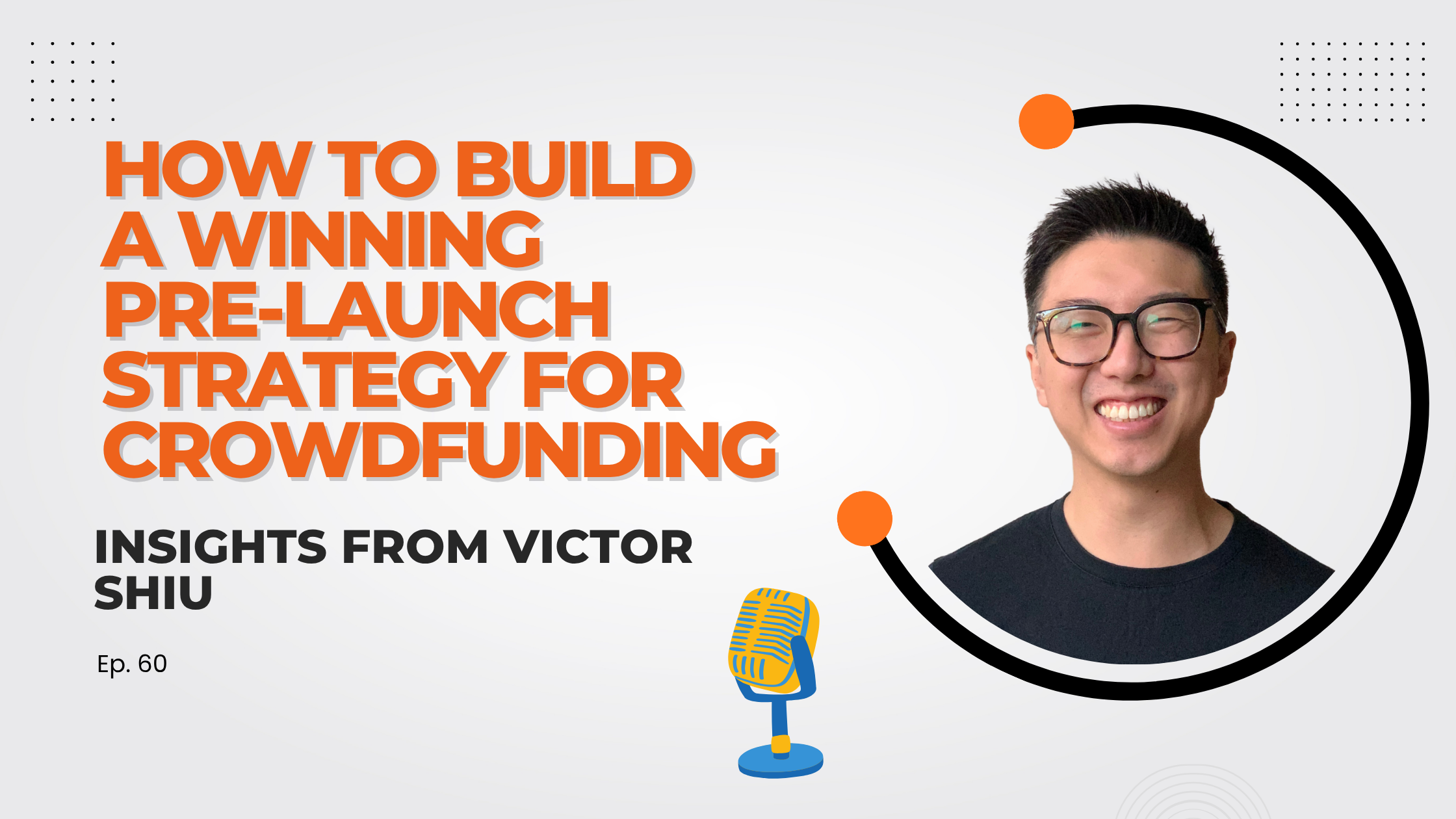
Welcome to another insightful dive into the intricacies of the toy and game industry. On this episode of Toy Business Unboxed, we explores the world of crowdfunding, delving into strategies and insights with Victor Shiu, co-founder of LaunchBoom. LaunchBoom is renowned for their success in crowdfunding, having raised over $150 million. Victor offers valuable lessons for toy entrepreneurs looking to embark on their crowdfunding journey.
Episode Highlight
- 00:00 Introduction to Toy Business Unboxed
- 00:45 Crowdfunding in the Toy Industry with Victor from LaunchBoom
- 01:36 Victor’s Journey into Crowdfunding
- 03:15 The Evolution of LaunchBoom
- 08:27 Why Crowdfunding?
- 12:18 Pre-Launch Strategies for Crowdfunding Success
- 16:21 Predicting Campaign Success
- 27:02 Post-Crowdfunding Strategies
- 30:14 Final Advice and Resources
Introduction to Crowdfunding in Toys and Games
Victor Shiu discusses his journey into the world of crowdfunding. LaunchBoom began as a small digital marketing agency, quickly realizing the potential impact of crowdfunding on new creators. The agency’s success started with a Kickstarter project for an innovative aquarium kit called Eco Cube. This campaign laid the foundation for LaunchBoom’s focus on crowdfunding, specifically in the tech and design spaces, eventually expanding to board games.
The Evolution of Crowdfunding
Victor explains how LaunchBoom transitioned from a full-service agency to a consulting model. This pivot allowed them to make crowdfunding more accessible and affordable for creators, especially those with limited upfront capital. Going against the industry norm, LaunchBoom decided against taking a percentage of the raised funds, choosing instead a flat fee approach to empower creators without diminishing their margins.
Why Choose Crowdfunding?
Crowdfunding offers several advantages over traditional manufacturing. It allows creators to gauge market demand before financial commitments to production, thereby minimizing risk. Victor emphasizes how crowdfunding empowers creators with control, offering them leverage when dealing with publishers or potential investors.
Strategizing for Success
Victor highlights the misconception that success comes simply from launching a product on platforms like Kickstarter. The key lies in preparation. He advocates for a robust pre-launch phase, leveraging marketing efforts to build anticipation and secure an audience before the campaign goes live. Paid ads play a critical role in LaunchBoom’s strategy due to their scalability and predictability.
Predicting Success with Data-Driven Strategies
An integral part of LaunchBoom’s success is their ability to predict campaign outcomes with a high degree of accuracy. They apply a unique methodology that involves testing ads to measure purchase intent, thus making informed decisions on budget allocation. This strategic approach minimizes risk and maximizes the potential for campaign success.
Budgeting and Transitioning Beyond Crowdfunding
Victor shares insights on managing budgets effectively, underscoring the importance of viewing marketing expenses as an investment. Post-campaign strategies include utilizing distribution channels such as Amazon and local game stores to expand market presence.
Advice for Aspiring Crowdfunders
Victor’s key advice is not to rush the launch. Adequate preparation in the pre-launch phase is crucial. Allow ample time—preferably six months—to establish a robust foundation of support before launching the campaign.
Conclusion
This episode of Toy Business Unboxed offers invaluable guidance for entrepreneurs considering crowdfunding as a path to bring their innovative creations to life. With practical insights from Victor Shiu and an understanding of effective strategies, creators can approach crowdfunding with confidence and clarity.
To stay updated with the latest episodes of Toy Business Unboxed and embark on your own journey into the toy business, don’t forget to subscribe and follow the podcast. If you found this episode insightful, please leave a rating and review, and share the podcast with fellow toy enthusiasts. Let’s embrace the world of toys together, staying curious and continuing to innovate.
Guest Contact Information
If you’re interested in learning more about LaunchBoom or connecting with Victor Shiu, you can reach out through the following channels:
Website: LaunchBoom.com
Email: Please visit the website for contact details
Social Media: Please visit the website for social media links
Other resources/books: “Crowdfunded” – available on Amazon
Transcript
EP060_03-20-25_Victor Shiu
Intro: [00:00:00] Welcome to Toy Business Unboxed, your gateway to the secrets of the toy industry. Here, Jason Hsieh, a toy entrepreneur and expert in the field. “Every product we develop is really inspired by some of the real life experience that we have with our son.” “60 percent of all toys last year were sold on Amazon.”
“Be passionate about it. Because it’s a road. It’s a journey.” “Like when you have an idea that you think is gonna somewhat change the world, make things better, I’d say go for it.“
Jason Hsieh: HJello. Welcome back to another episode of Toy Business Unbox. Today we’ll be diving deep into crowdfunding within the toys and game space with Victor, co-founder of LaunchBoom, a powerhouse agency behind of a lot of crowd founding success. They have raised over $150 million over their career [00:01:00] in crowd founding.
And Victor is not only just a game designer and marketer, he’s also a father who understand how to make great play experience come to life and he had work with hundreds of creators to fine tune their Kickstarter and Indiegogo strategy to help them launch and scale with confident. So thank you so much for joining us on the podcast today, Victor.
Victor Shiu: Yeah, thanks for having me.
Jason Hsieh: I think this is a very big topic and there’s a lot of different things we’ll be discussing, but first of all, if you don’t mind sharing a little bit about your stories on how do you got into doing what you’re doing like right now with LaunchBoom and all the different marketing campaign that you guys run?
Victor Shiu: Yeah. So honestly when we first started it was, we were just a bunch of guys in college. Like just straight outta college. We started a little digital marketing agency. I was making videos that my business partners were making websites and stuff like that. And we had a friend, I had a friend come up to us and he was like, he, we were helping him like take pictures of fish and stuff. It was like, he’s Hey, I have [00:02:00] this idea. This idea is like this. Little kit, this aquarium kit, and has a filter that uses plants to filter the water, so you never need to change the water out again.
And we’re like, whoa, that sounds really cool. And he’s Hey, do you guys do Kickstarter stuff? And we’re like, yeah I backed a few Kickstarters. It’s just, it was fairly fresh at the time. Like fairly new. There weren’t that many Kickstarters out. There was a few big successes and so it was getting a little bit more cloud and we’re like, yeah, we could. We could dive in and try to figure out
Jason Hsieh: What year was that?
Victor Shiu: This was like 2013. Like 2012, 2013. He came to us, I think, end of 2012, and we started this process or maybe. It’s hard to figure out that timeline. So we went ahead, we did that. We made the video, we made the page. It did a few things there and he raised like $70,000 for his, for Eco Cube. That was Eco Cube. That was our first foray into Kickstarter and crowdfunding and after that, we helped another person out launch a [00:03:00] hundred thousand dollars campaign on Indiegogo. And we kept doing our own mixture of stuff. We were making videos, YouTube, like we were helping people run YouTube channels. We were making websites. We were doing just like all the gamut of digital marketing. And it came to a point where we were like, wait what do we actually wanna do with this? This is not a business. Like we’re just doing random jobs at this point. And so we went back and we thought, okay let’s find something that we can focus on. Let’s find a way to systematize it so that we can continue to repeat that and get repeated results and be able to just really get good at one thing. And we reflected and we’re like, okay what, was the thing that we enjoyed the most? What of all the things that we do, what was the one thing that we enjoyed the most? Who were the people that we enjoyed working with the most?
And it came down to our crowdfunding clients. It was Kickstarter, Indiegogo those were the people that we loved working with. We love working with new creators. They had so much passion in [00:04:00] them. It field our passion. And then there was also something great about just seeing that number go up. Seeing very tangible results. The work that we did brought tangible funds raised and changed people’s lives. Like this friend of ours who was still in college when he launched was able to create a whole new business. Built that up. And actually he now works with us, so he. But it was really cool ’cause we gotta see like these people really build these businesses, taking them from nothing to something that’s amazing and changing their lives and we love being a part of that.
I’m like, okay, cool. Let’s go ahead and let’s rebrand. Let’s call ourselves LaunchBoom. Because we, with the boom, let’s really dial in the system that we use to help these guys launch and let’s really push this to be really good at it. So that’s what we start, that’s how we started diving into crowdfunding. And it started in the tech and design space. So like a lot of tech products, a lot of design products going into like apparel even, and just a bunch of different [00:05:00] stuff. We didn’t really dive into games at that time, but over, yeah, over the course we eventually launched a few games and then that started to pick up, we started as an agency, so we did everything for everyone. That was really expensive. So this is like the second stage of our story. It was like, cool. So we started, we were doing all this work and we got to a place where we realized because we were making the video, we were running the marketing, we were doing the ads. We were doing all the messaging and really dialing, in. It came to a place where we were either working with companies with a lot of funding. I’m like, why are you doing crowdfunding at this point?
Jason Hsieh: Yeah. Yeah.
Victor Shiu: Or we’re working with people that we love, but then they need to bet like their house on us. I’m like, that’s a lot of risk for all of us. Essentially not a lot of people could afford us. It’s like you really had to put in a large investment in order to have this full service agency. And so we decide to pivot [00:06:00] and go into consulting. So we have a system. It works. It’s very repeatable and it’s proven again and again. And we can walk you through that whole system and we will show, and we can work with you to make sure that not only is the system working for you, but also we need to pivot. We can pivot If there are some things that you have questions about, we can go and answer that and we can walk you through that whole thing.
And when we did that’s when we were able to make the program much more affordable. And was able to start servicing game clients ‘ cause games people that make games are definitely a lot like what we found are just a lot less funded.
Jason Hsieh: Yeah.
Victor Shiu: Like a lot less initial amount of money. Capital just sitting around than say something a. Product or something like that. It’s just something that we found. And so because of that, we were able to dabble into games. And with that launched some really big successes like botsy, like kelp and a few other ones.
Jason Hsieh: And one more thing I think your business model is very unique compared to, because there’s also other marketing agency in the cloud founding space. Most of them will take a percentage of [00:07:00] the for the fund raise, but your company currently do not take any percentage of the fund raise as, well.
Talk about the decision that was behind that, because that’s very different than the rest of the industry.
Victor Shiu: Yeah, so we used to take a percentage as an agency. We did all the work. We took that percentage, and when we pivoted. We decided let’s not do that ’cause it really hurts the creators or we felt it just, it doesn’t leave a good taste in our mouth. And it’s also something where it’s you just raised all this money so you can start your business and now we’re gonna take a rip off of that. And just really and decreased your margins, which essentially like kneecaps your ability to start the business and keep it going.
So we decided as a consulting service, we’re just gonna take one flat upfront fee, and that’s it. You’re doing the work. So you take home everything that you raised. And we’re here to guide you. We’re here to show you how to fish. But you get to keep the fish. You get to eat the fish yourself in its whole entirety.
Jason Hsieh: I see, Yeah, that’s very, definitely very different than the rest of [00:08:00] the other similar marketing company in the crowd founding space. And I think there’s more and more like marketing company popping up with the crowd founding space as well as the there’s more and more money to be raised d founding, but I think because you have so many years of experience, one thing I want to go back a little bit and talk about as a game designer.
Why do they even wanna consider doing crowd founding in the first place instead of going through and just try to do the direct to consumer themself?
Victor Shiu: Yeah. So this, question actually broaden out to like just why crowdfunding? With traditional means of starting a business that involves a physical product. You need a manufacturing order, you can do it yourself. You can try and make it yourself. Okay, cool. Make a hundred copies of this. Okay, cool. And then try to sell that. Or you can go to a manufacturer and try to make it printed that way. Things with manufacturers is, yes cheap per unit cost, but you do need a minimum order quantity. And usually that costs quite a lot of money. And let’s say you [00:09:00] either situations, say you make it yourself or you just, you buy a thousand units, 1500 units, whatever from manufacturer. Okay, cool. Now you have a thousand units of products sitting in your garage or seeing a warehouse, which you’re paying for on a monthly basis. And where are your customers? Now you have to find your customers, correct? Like you need to move that inventory or else you’re losing money. And you just sunk in a bunch of investments into that to make that happen, if you even have the ability, to go and initially order that. So crowdfunding does a few things. First, you find customers before you order your manufacturing order.
Second, those customers then fund your ability to order that manufacturing order. So especially for a board game, a tabletop game you want to like ordering that amount, like a, good amount of board games is gonna cost you a good amount of money. So if you don’t want to put in that. You don’t wanna put in that risk of investment upfront to like order games before you know that people want that game.
Crowdfunding’s a great way to [00:10:00] go. The other thing is you need to know what the market demand is. So going into crowdfunding allows you to see, okay, I actually have customers, I can actually make this work. Other alternative means of publishing a board game would be going to a publisher. But the thing there is one, publishers take a pretty large rep, you pretty much end up with nothing a lot. It’s, like signing away your game to someone else. And they have every ability to change the game to whatever they want. Whatever they think matches their audience better. They also have the ability to just not run, sell your game at all. They have the rights and then they’re like, you know what? We tried a few dollars here and we’re not seeing anything. We’re just gonna shelve this.
So it’s very possible that though you sold your game to a publisher, it never comes into existence. And so crowdfunding takes that away like, allows you to have that control for yourself. And on top of that, if you crowdfunded, you now have more leverage for the publisher. ‘Cause you’re showing them market demand. [00:11:00] You show that you actually have customers that want this. You have an existing list of customers. You have your minimum order quantity as well that’s been funded already. So there’s low risk. Lower risk along all these sites you have and you can keep this going. And if you run marketing for it, cool. Now you have marketing assets that you can show it to your publisher, be like, Hey, if you guys need help with distributions. There’s a bunch of assets here that we know has driven demand and driven real customers, real purchases.
All those things. That’s leverage. And this applies for board games to publishers. This applies to tech products for investors. That’s the power of crowdfunding. You have the ability to find your product before it’s made so that decreases risk. You have the ability to measure market demand and get real customers before you get your product made, which decreases risk significantly more. And all that decreased risk and proven demand gives you a lot more leverage if you want to sell or get investors or find a publisher or [00:12:00] just continue to run this business yourself, it gives you that kickstart that you need to get a business rolling and actually make a living off of that.
Jason Hsieh: For sure. And based on your years of experience, what are a few top things that every single entrepreneur should do before they even consider launching their own Kickstarter or crowd founding campaigns?
Victor Shiu: Oh, there’s so many things. So one of the biggest misconceptions with Kickstarter with crowdfunding is you get your product. You put it on the platform and you’re like, all right, money comes.
Jason Hsieh: That’s not,
Victor Shiu: that’s it. Like they, there’s a lot of people that still think that. And the reality is that’s just not the case anymore. It used to be, there’s definitely a lot of examples of people that did that back when Kickstarter was fairly fresh. Honestly, around like that 2012 time like that happened. When Covid hit that sort of happened for some, a few board games as well. A few tabletop games had that effect where people just threw it on the platform. They got a few influencers to pick up on [00:13:00] it and then just exploded. And so that did happen. And so that’s where that misconception comes into play. But the reality is, now with so much competition in the space, that’s not gonna happen. You can’t just take a product, throw it on there and just expect it to make money. You need to put in the efforts to build your own list of potential backers. Usually this is in the form of an email list or followers on your campaign. We do something that we feel is a little bit more predictable than either of those options, which is asking for a small deposit upfront. And building that list up so that way you have strong certainty that when you launch, you get that first initial momentum.
So we wanna make sure we do something called a pre-launch. You’re doing a lot of marketing efforts before you launch so that people will know about you and know about your campaign before you launch. And so when you do click that button, there’s this explosive [00:14:00] momentum on that first day and that first week, and that will then pull you up onto the top rankings, so Kickstarter, so people can more easily discover you. And on top of that, if you decide to continue marketing during that campaign, you have a lot less stuff, you have a lot less weight to lift, essentially. Because that funded mark, that higher raise. Increases that conversion rate because there’s a lot more trust involved now that there’s proof that other people want this, it usually gets other people to feel safer to know that this is a decision that they feel comfortable making. It’s just a psychological thing where people that campaigns that are funded are more likely to get more funded. And so that’s, it just makes it a lot easier. So the biggest thing to make sure that you do before you go and launch a kickstart campaign is to do a pre-launch before your kickstart campaign. And if you need help with that to reach out to a professional or reach out to an expert about it, you can reach out to us. We’ve actually written a book I [00:15:00] should have it here. I’m not prepared.
Jason Hsieh: You have a book, right? Yeah.
Victor Shiu: Our CEO wrote a book called Crowdfunded. Yes, it is on Amazon. It is very affordable. We do not make money off of it because we charge whatever Amazon charges us to make it. Which is about eight bucks.
Jason Hsieh: Yeah.
Victor Shiu: And if you want the digital version, I think it’s a dollar or there should be a way for you to get it for free if you just reach out to us. But yeah we wanna just give out that information. We also have a blog and there’s plenty of other blogs out there. Stone Meyer has a blog. Stone Meyer is a publisher. They make, they made sth, they also made wingspan or they publish wingspan. They have a great blog. Another one, there’s plenty of other podcasts and blogs out there that can educate you about it if you just need some help there. And of course you can just reach out to us, read crowdfunded, we spill all the secrets there and reach out to us if you have more questions or if you want some more actual like one-on-one help and stuff like that.
Jason Hsieh: Of course. But for those of the listener and also viewer that haven’t read the book. Like in a nutshell, can you kinda explain like [00:16:00] your unique processes just on the high level because I think one thing that’s very unique when we talk before the interview today is you have a very unique way of predicting the campaign success before the campaign is launched, which is, I have talked to a lot of people in industry. Not a lot of people have that kind of expertise. Can you explain just on the high level, how that whole process work?
Victor Shiu: Yeah. So one of the, one of the challenges we ran into when we first started doing crowdfunding was predicting the conversion rates of the email list that we would collect. So we would do the pre-launch. We knew that a pre-launch was key to success. This is something that we knew from the very beginning. We saw other campaigns, like, how did this campaign do so much better than all these other ones? And it came down to the pre-launch. So we knew we had to focus there, and in the beginning we did what everyone else did. We created a landing page. We knew how to do that. We ran facebook, Instagram ads. It was awesome back then. It’s not, it’s still good. We still do the same. [00:17:00] And we would run them there, collect their emails. Cool. Build a huge email. Let’s try to get your CPL cost per lead, cost per email down as low as we can, and then just scale scale, Get a butt load of emails, click that launch button and boom. Issue is we found very quickly, emails are super volatile.
We’ve had some campaigns with a 10%, even like a 15% conversion rates on emails, which is crazy good. You’re like, oh my gosh that’s, amazing. And then we saw huge success there and we’re like, okay, cool. This is repeatable. And then we had a lot of clients collect same amount of emails, spend like $10,000 on collecting emails. And nothing, 1%, 0%. Like conversion rates. And especially with that 0%, when you have that huge volatility, it’s just not good. I don’t we do not wanna be telling clients to spend money on this great ad to collect and just spend to have it [00:18:00] amount to negative roas for you to just get a return of nothing. And basically say all that money you just spent is now dead. It’s, gone. We did not want to do that. We were a performance based database agency. We wanted to make our decisions off of data. And we wanted to make sure that we had predictable results, something that we can actually deliver on what we promised our clients. And so we started to brainstorm about ideas on how to qualify that email.
How to make sure that the emails that we’re collecting are quality emails are people that are actually willing to purchase and back when you do click that when, you do launch. And at this time, one of our editors actually found was like, we’re all backing Kickstarters at this point. She got an ad and put down her email and then received this thing where it’s hey, put down this dollar to reserve your spot. And we’re like, this is a genius idea. I know a lot of people think we’re, they’re like, oh, long term came up with the idea. It’s I’m gonna give credit what [00:19:00] credit is due. I don’t even remember which campaign it was, but someone else came up with the idea and we looked at that and we’re like, we need it. That’s genius. That’s a great way to qualify purchase intent. Because it’s not a big ask. It’s $1, but it does mean that you need to take out your credit card and be willing to pay for something.
Jason Hsieh: Yeah.
Victor Shiu: Even if it’s just a small, little transaction.
Jason Hsieh: Yeah.
Victor Shiu: And this is something that’s it works, it’s just, so we tried it out. We’re like, okay, let’s just test this out. And when we tested it out, we saw much more predictable conversion rates. It depends on the price of the product, but typically. It would be between like 35 to 45% is what we usually predict. Put on a conservative level, but we’ve seen conversion rates up to 55% for people that put down that dollar. And so we saw that it was very consistent. We saw, like we saw the correlations with price point and stuff like that, depending on the product. And we just kept doing it. And with that, our predictive [00:20:00] analytics became extremely accurate, where we could basically tell from running pre-launch ads. Whether or not this campaign is something that we should keep, like this campaign or this ad was something we should continue to pour money into to scale because it’s predicting this kind of return on ad spend or it’s something that we need to optimize and scale back or kill.
And with that, that just gives us the ability to spend with confidence. And when you’re able to do that and develop a list where it has a strong predictability. Predictable conversion rate and predictable amounts of funds raised well that allows you to basically say this pre-launch ad is gonna get you this kind of roas, this kind of pre-launch ad is gonna get you this kind of return on ad spend for anyone that doesn’t know. Basically how much money would you get back for the money that you’re spending on marketing? What multiplier are you getting? And with that, we are now able to launch successful campaigns, one after the other. Be able to advise clients to really talk about their business goals about that. It’s okay, what [00:21:00] is your goal for this campaign? What is that margin that you are working with?
Jason Hsieh: Yeah.
Victor Shiu: And are we achieving that or are we not? Do we need to pivot or can we scale? Scaling, cool how much do we want to scale that with and when we launch? We know how much they’re generally about to, they’re going to raise on those first few days, and then from there you can keep moving forward.
Jason Hsieh: Okay. Okay. Yeah, that’s a very unique process that you guys are currently doing and to based on the data and based on the analytic that you have analyzed. And I think th also a lot of people that have tried to done crowd founding campaign themselves before that they struggle with. It’s I don’t know how well it’s gonna go and like, how do we do all the preparation before as well.
And besides pay ads that sounds like that’s one of the pivotal strategy that you work with the creators. Any other like strategy that you also suggest them to do? Of course there’s pay ads, there’s emails, any other marketing strategy you also help them with?
Victor Shiu: So we actually primarily focused on paid ads [00:22:00] because it is scalable, it’s very measurable. And you could do it really quickly. You don’t need to build it over time and then with this methodology where we’re able to measure the purchase intent of the person putting down an email we are able to predict what this return on admin is. And so scale with confidence. That said, if a client, if someone wants to do organic mediums or even do influencer stuff you could send them a link to your landing page track that we have a complete, we have a whole like web app essentially that allows you to not just build a line page, but track all these things, build custom tracking links. And so you could track, okay, what, how many leads are these? Is this particular strategy bringing in for you? how many reservations are you getting? What’s that purchase intent of the leads that you’re driving in? And then that can help you actually determine whether or not this is a avenue, a channel that you wanna continue to invest in.
So we’ve had clients that got viral. An influencer picked them up, they went viral and then we were able to track, okay, this is actually driving a lot [00:23:00] of purchase intent for you. A lot of reservations and then that actually paired really well. But their paid ads, ’cause their paid ads was, weren’t doing very well until that those paid ads, like how they got viral, was an influencer actually one of those ads thought it was hilarious, and then posted about it. And that got them really popular. And that got reposted. And reposted. And reposted. Now that they’re running ads, we were like, oh, I know about that. And so their ads improved drastically to get them more reservations and was able and had multiple channels. And so you could do that. Just understand that the whole idea here is not about any one channel being superior to the other. It’s about being able to track the results of that channel. To see really how successful is this channel, how much measurable, what are the metrics of it? What’s the measurable, like intent out of it? Or results out of it. if you’re going for influencers, make sure that you know how to measure the impact of them. If you’re going for organic measure, make sure you know how to measure the impact of it. And one of the biggest mistakes that people fall for both of them is the all for vanity [00:24:00] metrics. Metrics are basically metrics that make it sound good. But don’t actually mean anything for your business, for sales. So it’s likes it’s views. Cool, I got 10,000 views on this video. Great.
Jason Hsieh: Doesn’t mean anything.
Victor Shiu: How many of those 10,000 views equal sales? So with this, if you get those, if you go that way, just make sure you have a way to track. What kind of results are getting you for, and if you’re in pre-launch, make sure you have a way to track that purchase intent or at least some sort of ability to predict your return on that investment. Whether it’s an investment in time or money. And that’s honestly, that’s why we like paid traffic because it’s just so easy to measure. Whereas the other ones are just a little bit more different.
Jason Hsieh: What would be the budget you recommend for the entrepreneur that’s thinking about doing this? How much budget should they set aside just from the pay ads of on the app budget?
Victor Shiu: Okay, so budget is a interesting question. ‘ cause what we usually recommend is you set aside what we call a testing budget. We usually recommend is about like 1500 to $2,000 for [00:25:00] testing. We don’t always spend that much to know whether or not you need to pivot or not. It could be less than that, but that’s generally the amount of budget we would recommend to just understand what is the demand for your product, what is the demand in the way that it’s currently positioned with messaging or with the ads that you have for it? And do we need to pivot? Do we need change to create it? Do we need to change the positioning? Do we need to change up how your product is? Yeah. Either position or even like what it delivers.
And that’s kinda the start from there. There comes a scale, and when it comes down to budgets for marketing, you have to understand a marketing is meant to be a multiplier. So you can’t be expecting to raise a million dollars by spending $10,000. Because that’s, I don’t think even cryptocurrency can do that. that’s kind an insane amount of return.
Jason Hsieh: Yeah.
Victor Shiu: You have to think about it as an investment, and as a multiplier. If you have a smaller budget, that’s absolutely fine. Just expect a smaller raise. Because you’re expecting a [00:26:00] multiplication of that. But the ability to pull in more spend. That’s great. Let’s see what that multiplier is first. So we’re gonna test, we’re gonna see what that multiplier is. We’re going to increase spend and see if that stays that way and if it lowers, which can happen. Are you still okay with that? Do you wanna keep spending or do you just kinda wanna keep it consistent here? So it is a moving target. It’s, I will not say, put this much money or Put this much money. It’s really up to what you are comfortable with and just understand that it is supposed to be a multiplier. It’s not supposed to be a fixed thing. And you need to carry that mindset, not just for crowdfunding, but into your business. ‘Cause you can’t think about marketing budget as this fixed cost thing it scales with your business because Yeah, it’s a multiplier. Yeah, it’s a multiplier. It’s what fuels you. It’s what gets things continuing to move and multiply and grow.
Jason Hsieh: Very well put and that’s a very good explanation. Based on your experience running and funding so many successful campaign, the people that have been working [00:27:00] with that have already raised successful fund.
How do they transition to other channel, like Amazon for example, what are some of the things they should consider?
Victor Shiu: after a Kickstarter campaign or whatever crafting platform you use, game found, backer Kip, Indiegogo, whatever you get your funds. And you now need to get your stuff made. There is something that’s in this interim period called Late Pledge. I’m not gonna dive too deep into it to it, but essentially it’s a, you continue to take pre-orders while you’re making your product. When you finally get inventory in place, you have multiple options. You can you deliver to the people that you promised to your backers. You could go to different distribution hubs, like just talking strictly about tabletop games. You can go to distributors who will then go and buy a set amount of games like at a major discount because they need to keep their margins. They will sell it to local game stores. They have Amazon as a channel, they might throw on Amazon. Whatever. You could do that. You can also do run your own e-commerce store like Shopify. So our [00:28:00] Shopify store, start doing that with Shopify. Most of that traffic will be driven through paid traffic often. Or if you have organic clouts or like you’re posting stuff on TikTok or like Insta or something like that. It’s prob you can also drive them to your Shopify site that way. Very similar to crowdfunding. Just keep, make sure you track it, track your sales that way. And then there’s always Amazon. So you can go on Amazon, you can start your own thing. Amazon has a lot of tricky stuff to it. It’s very nuanced from my understanding, it’s nuanced. I’m not experienced with it. Talk with Jason. That’s what he’s good at.
But you do that. And the thing here is people were like, oh, do I choose one or the other? It’s you can just do all of them all of ’em at the same time. The biggest thing here is like you gotta make sure you stay on top of your inventory. You stay on top of that and all, every single thing you do here is work in some regard. So it’s not as yes, it could be essentially passive if you have it all working for you, but it is gonna take a lot upfront work, whether it’s making your Shopify site, getting Amazon set up just getting relationships built up with distributors. But essentially, if you want to run your own business this way, [00:29:00] you have three very clear channels that you can run and they all support each other. You go through a distributor that doesn’t do Amazon, ’cause you’re running your own Amazon or you’re running with Jason like that distributor sends it to game stores. People go to the game store, they see the game, and then maybe they’ll go up and on their phone and then search it on Amazon and Cool that’s another channel. It’s and when people see on Amazon, there’s a lot of reviews there. It looks legit, and then maybe they see an ad on Insta or something like that. And they go to your Shopify store or they see your, they go to your Shopify store and they check Amazon, and then maybe they do both of those and they go to the game store like, I’ve seen this game, and they buy it there.
In all other situations, you’re still getting that sale. And it’s good to have all of that spread because having that spread just means more people seeing your game getting to know about your brand and increasing your chances of getting that sale. So then that transition it can happen immediately. Once you can inventory, you can start working on it as you’re getting inventory. Alternatively, you could just try to sell yourself to sell your game to a publisher if you just don’t wanna take care of that. [00:30:00] Again, you lose a big rip.
Really, how much do you want to take home and how much work are you willing to do to take home that amount?
Jason Hsieh: Yeah. Yeah, thank you for the breakdown of all the different paths the creator can do after the crowdfunding campaign. And wrapping up today’s interview, what would be your one piece of advice that you give to someone that is about to launch their first crowdfunding campaign? That they have never done it in the past?
Victor Shiu: Yeah. Don’t rush the launch. Spend time in pre-launch. Reach out to us just to start a conversation, just to see if, just anything that you’re missing. But number one mistake that we see people make is they rush the launch. They launch before they’re ready, before they have enough followers or emails or VIPs or whatever. If you rush to launch and you launch before you’re ready and you don’t have that LaunchBoom effect, it becomes a lot more difficult for you to get funded. For you to have a larger raise or even to have any source, have a successful campaign at all.
Jason Hsieh: [00:31:00] Yeah. And probably won’t even hit the goal the, funding goal.
Victor Shiu: Yeah. That’s like the biggest thing is if you launch before you’re ready, it’s, and you don’t get funded. It’s very unlikely that you will get funded. Like it’s likely just gonna fail.
Jason Hsieh: And I have a follow up question on that. Based on your experience, I think you say it is about two months or three months ahead of time, they should start getting ready before the official launch. Is that pretty accurate?
Victor Shiu: Honestly, if you wanna talk with us, try to talk to us like six months before six months Minimum four months. The reality is that it is going to take like about a month to set up and then test. And then two to three months to scale. If you try to rush that, we can try to see if we can rush it, but you are gonna trade in your performance and your volume for that. And what I mean by that is you’re gonna trade in your return that multiplier that we’re been talking about. And you’re gonna trade in the total amount of funds that you potentially could have [00:32:00] raised. In order to speed up that timeline. You kinda see it as like you have volume, that’s like amount total raised. You have performance that’s like the multiplier and you have time. You choose two. You choose time. Sometimes you lose both of these. You try to speed it up too much. So that’s the thing that we, you have to really keep in mind. Don’t rush the pre-launch, don’t rush the campaign.
Jason Hsieh: Okay. That’s a very important piece of advice. For our listener and viewer, where is the best place for people to find more information about you and your company?
Victor Shiu: Go to LaunchBoom.com and slash games if you are a game. So if you have a game company LaunchBoom.com/games. I will also send a link, I’ll get a link out so that, that way it’s like you can just click it and hopefully we can post it in a description or something. But yeah, go launchboom.com. Reach out to us if you wanna hear, if you wanna know what our book is. It’s called Crowdfunded, go on Amazon. Just find it there as well.
Jason Hsieh: Thank you so much for all the resources and all the wonderful knowledge you have shared, and that’s actually definitely an [00:33:00] industry I would like to learn a little bit more on myself since that’s not something we specialize in, and that’s something your team definitely have tons and tons of experience.
And for our listener, thank you for tuning into this episode, Toy Business Unboxed Podcast. We hope you have enjoyed today’s conversation and find it insightful and. If you like what you have heard, be sure to subscribe to our podcast on your favorite platform so you never miss an episode.
We really appreciate your support and we love it if you can leave us a review and share the podcast with your friend and colleague. For more resource tips and the latest update, we the Toys and Games Industry, visit our website at toy-launch.com and join the conversation and connect with us on social media using hashtag #ToyBusinessUnboxed.
We’d love to hear your feedback and suggestion for future episode. Until next time, keep innovating, keep creating, keep bringing joys to toys. This is Jason Hsieh signing off on the Toy Business Unbox podcast, and we’ll see you in the next episode.