
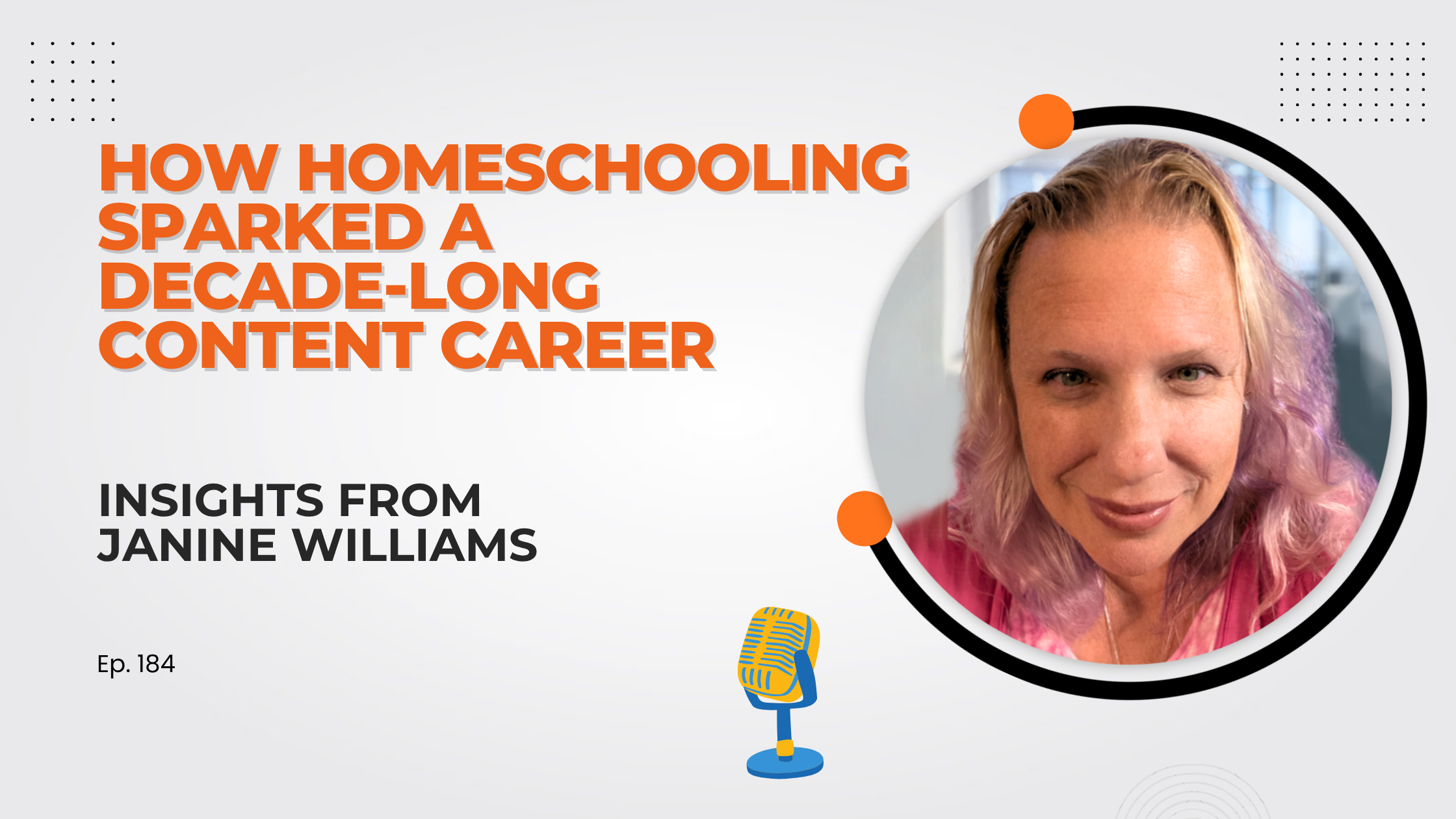
Welcome to another episode of the Toy Business Unboxed Podcast, where host Jason Hsieh sits down with Janine Williams, the board game reviewer and content creator behind Geek My Games. Janine has spent more than a decade covering tabletop games, RPGs, and educational tools, and her platform grew out of a simple need to keep her own kids engaged while homeschooling. In this conversation, she shares how content creation changed the toy industry, what publishers get wrong when working with influencers, and how games help her family navigate ADHD together.

#184: Why Micromanaging Kills Your Influencer Partnerships – Toy Business Unboxed
Episode Highlight
- 00:42 Why she started creating content
- 03:08 A decade of industry change
- 04:07 Picking the right platform
- 09:26 What brands should look for
- 14:15 Games build focus and attention
- 15:57 Raising a teen with ADHD
- 20:17 Why micromanaging kills content
- 22:40 Janine’s goals for 2026
- 23:34 Advice for new creators
- 24:33 Where to find Janine
From Homeschool Necessity to Content Career
Janine Williams never planned to build a content career. She was a homeschooling mom trying to keep her kids engaged, including one child with ADHD, and games like M is for Mouse and Number Chase became her secret weapon. When other homeschooling parents started asking what she was using, she realized there was an audience for it. She began filming occasional videos with her kids, and what started as one video a month slowly grew into Geek My Games.
The Board Game Industry’s Decade of Change
Janine has watched the tabletop industry shift dramatically over the past ten years. Independent creators no longer need a publishing company to bring an idea to life, thanks to tools like Kickstarter and The Game Crafter. Board games have also moved from niche hobby shops into mainstream retailers like Target and Walmart. Janine sees this shift as one of the most exciting changes she has witnessed in her time covering the industry.
Where Brands Should Actually Focus Their Marketing
When it comes to picking a platform, Janine says there is no universal answer. She encourages publishers to study companies with similar products, whether that is a kids game, a heavy strategy title, or a puzzle, and see where those brands find traction. She points to TikTok as an underused platform for board games, even though many publishers still lean toward Instagram. Longer-form platforms like YouTube, she notes, are often better suited for showcasing more complex games.
What Publishers Get Wrong About Working With Creators
Many publishers reach out to her without ever bothering to look at her actual content, she says. She’d rather build a smaller number of focused relationships with brands who genuinely understand her audience and her niche. What she wants are publishers who watch what she publishes and engage with it once it’s live, not ones who send a product and vanish. For her, the relationship only works if it goes both ways.
Why Creative Freedom Matters More Than a Script
One publisher pushed for scripted, word for word reads and endless rounds of video revisions, and she eventually cut ties with them entirely. The impact was obvious to her audience: viewers said the content came across as an ad, and she lost followers as a result. Her take is that creators bring real value precisely because they infuse their own voice and perspective into whatever they’re promoting. Jason echoed this, noting that turning an influencer into someone just reciting a script kills the authenticity that makes influencer marketing effective to begin with.
How Board Games Build Focus in a Screen-Saturated World
Janine believes tabletop games offer something screens cannot: sustained attention and real engagement. She points out that short-form content is built around quick dopamine hits, while a board game asks players to invest their attention in one experience over time. She has seen firsthand how matching the right game to the right person, whether a child or an adult, increases both social connection and the ability to concentrate. In a media landscape built for distraction, she sees board games as a rare counterbalance.
Building Deeper Publisher Relationships and Longer Content
Looking ahead, Janine wants to narrow her focus to a smaller group of publishers she can build real relationships with over time. She also plans to create more long-form content, since her favorite games, the mid-to-heavyweight strategy titles, do not translate well into short clips. She is especially interested in creating more content around mega games, a category she feels remains largely uncovered. Above all, she wants to keep finding the specific niche within tabletop content that feels most true to her.
Advice for Newcomers in the Toy and Game Industry
Janine’s advice to new creators is to find real joy in the work before anything else, because burnout follows quickly once that joy disappears. She encourages anyone entering the space, creator or publisher, to study other people already doing well in the industry and figure out what resonates. She also stresses that relationships matter more than transactions, whether that means a publisher researching a creator’s channel first or a creator showing up consistently for a brand. For Janine, sustainable success in this industry comes down to genuine passion and genuine connection.
Conclusion
Janine Williams built her platform out of a simple homeschooling need and turned it into a decade-long career covering board games, RPGs, and educational tools. Her story is a reminder that authenticity, not scripts or algorithms, is what keeps an audience engaged. As she continues to narrow her niche and deepen her publisher relationships, she remains focused on the same thing that started it all: finding games worth sharing with her own family.
Connect with Janine Williams
If you’re interested in learning more about Geek My Games or connecting with Janine Williams you can reach out through the following channels:
- Linktree: Visit Geek My Games’ Linktree page to find more related platforms.
- Instagram: Follow Geek My Games on Instagram for visual updates, game previews, and creative inspiration
- Facebook: Follow Geek My Games on Facebook for updates, discussions, and behind-the-scenes content.
- YouTube: Subscribe to Geek My Games’ YouTube channel for demos, tutorials, and exclusive game content.
- TikTok: Follow Geek My Games on TikTok for clips, highlights, and behind-the-scenes content.
Transcript
Jason Hsieh (00:00)
Welcome back to another episode of Toy Business Unboxed podcast and your host Jason Shea. Today we are joined by Janine, a long time board game reviewer and content creator who had been covering tabletop games, RPGs, educational games for more than a decade. And her journey really began with homeschooling, but her platform had really grown into something much bigger. And she being a very unique perspective shaped by supporting, you know, family navigating different issues herself. And today we’ll be talking about how
Media has been really expanding in the tabletop industry and how even some of the niche game are gaining some mainstream attention as well to the power of influence of marketing, et cetera. So thank you so much for joining us on our podcast today.
Janine Williams (00:40)
Sure, thanks for having me.
Jason Hsieh (00:42)
Yeah. So first of all, I know you have been doing content in the industry for a long time, but what make you even want to start creating content for it? What was the story behind your origin, so to speak.
Janine Williams (00:53)
Well, I have loved games ever since I was a kid. Board games have always been like my jam. But I was a programmer for several years and then I decided to be a homeschooling mom. And trying to keep my kids engaged when doing homework and learning different things was difficult at times, especially with my one kid who’s ADHD. And I found that games is a really great educational tool and it’s expanded so much in the last
I don’t know, every day keeps expanding, right? I started finding these educational games. And then when I went to my homeschooling groups, I found that there were lots of other people that had the same problems and they started like wanting to know what I was using, the tools I was using that I was, you know, the games that I was playing. And I was thinking, this might be kind of fun to just kind of make a channel and put it out there and just see how it goes. You know, in the beginning I did like one video a month or every two months or when I had time. And I always tried to include the kids in it.
Jason Hsieh (01:37)
We need
Janine Williams (01:46)
To show that there were actual kids using these tools. And it kind of just grew from there.
Jason Hsieh (01:52)
I see, I see, I see. Do
You still remember the first game that you ever done the content for?
Janine Williams (01:57)
I’d have to go back and look. No, I don’t think I have. I remember some of the first couple of games that really stuck to me as educational. There was one called M is for Mouse that was all about teaching the kids the sounds of the first letter in a word. And was so much fun. Like I was so tired of these stupid roll the dice and move your
Jason Hsieh (02:04)
Was it.
Okay.
Hmm. I
Let’s see.
Janine Williams (02:18)
Person kind of games. And now there’s so many new different types and the kids loved it. And there was another one called Number Chase. I think that was the other one of the very first games that you started using as an educational tool where the kids could learn not just numbers, but greater than, less than, even, odd. And even an odd, I’ve noticed with kids is a really big struggle. It takes them longer to understand the whole even odd thing than the other thing.
Jason Hsieh (02:20)
Ha ha ha.
Yeah
Hmm. I see.
Janine Williams (02:44)
Those games really kind of put me out there and said, you know what? I really feel like other people can use these tools to help learn with their kids, even if they’re not homeschooling parents. You just start playing these games with your kid. They’ll be miles ahead.
Jason Hsieh (02:53)
Hmm.
I see. Yeah. Thank you for sharing that. And since you have been doing this for such a long time, what have you seen in the media landscape changes for the board game industry over the past 10 years?
Janine Williams (03:08)
So much, so much. So many more people feel like it’s feasible to be able to create content, content and games. You know, the average person now can say, hey, I’ve got this idea for a game and I don’t necessarily need a publishing company right away. I’m going to start putting it together myself and they can create that. You know, I mean, so much more, kids, more people in the USA. I mean, board gaming was much more bigger in the rest of the world.
Jason Hsieh (03:25)
Yeah.
Mm-hmm.
Janine Williams (03:33)
Up until
10 Or 20 years ago. Now you can find a lot of these games at Target and Walmart, whereas you never saw that before. And I think that’s just amazing.
Jason Hsieh (03:43)
I see. Okay. Thank you so much for sharing that. And like out of all the different social media platform you’re using, do you still feel like there’s one platform that gives more visibility than others? So which one do you recommend for like brand owners or game creator if they want to get more visibility on their games and the product they are making? What would be some of your suggestion for like any particular strategy or platform that you would suggest them to focus on?
Janine Williams (04:07)
I think it really depends on what it is that you’re trying to market. You know, is it for kids? Is it for adults? Is it a light game, a heavy game? Is it a toy? Is it a puzzle? What exactly is it? but you want to go the same direction as whatever it is that you’re looking at. So find a product that’s similar and look at those publishers and see where they’re advertising.
Like TikTok has really grown huge with board games, but for some reason, a lot of the publishers don’t really look to TikTok just yet. It’s still kind of a downplayed platform and maybe Instagram is probably more popular, but I feel like TikTok has some great advantages on its own. You know there’s lots of different ways to do it. Some people are just YouTube creators you know, and that’s maybe for the longer content. I would find…
Jason Hsieh (04:25)
Hmm.
Okay.
Mm-hmm.
Janine Williams (04:52)
Another product that’s similar to what you’re doing, look at how they are marketing and publishing it, and maybe focus on those platforms.
Jason Hsieh (04:58)
That’s a really good piece of advice. It’s called competition research. Yeah, for sure. And I think there’s also, you know, some game that all of sudden becomes super popular. You know, I think the competition is also getting a lot harder as well. As you know, there’s a lot more new game coming out every single year because of the reason that you just mentioned, it’s a lot easier for common people to launch game without like a huge
Janine Williams (05:02)
Yeah, right. Yeah, exactly.
Mm-hmm.
Jason Hsieh (05:25)
Like you don’t really need to own the publishing companies in order to publish your own game nowadays. There’s a lot of tool, Kickstarter, like Gamecrafter, you can create like a prototype really quickly and very easily. So it’s definitely a bit harder.
Janine Williams (05:36)
Right, right. You know, I used to be able to say
That I had almost all the games, you know, like the ones that were popular. And now I can’t say that. I see games constantly every single day or toys or puzzles or whatever that I don’t have or I’ve never heard of. And I was like, where has this been? You know, and I’m a collector. So it’s very difficult not to run out and get every single thing that’s on the market for me. But you can’t anymore because there’s so many products. It’s just, it’s just too hard.
Jason Hsieh (05:51)
Okay.
Yeah. I see. Yeah.
Is there a particular genre of the game that you like personally more than the other?
Janine Williams (06:06)
I play all of them, all of them, party games, word games, puzzles. I mean, I do it all, but my very, very favorite is middle to heavyweight euros. I really like diving into a game and being able to come up with a long-term strategy that will maybe take three to four hours or even longer sometimes. I really enjoy that.
Jason Hsieh (06:20)
Strategy
I see, see, I see. And as far as your own channel, like what are some of the content that you’re trying to create? if you’re looking into the content that’s resonating right now in 2026, is there any particular content you’re focusing on? Like are you focusing more on short form or long form or any particular type you are particularly interested in?
Janine Williams (06:45)
Well, I’ve really just started really diving into this in the last couple of years, like really saying, okay, I’m going to make this a focus. And it’s very difficult. Like there’s so many different areas I have interest in. And so I’m really starting to narrow it down a little bit, but it’s difficult. I don’t know that I’ve come up with just one area yet. I’m working on it and I’m doing research, but I’m really kind of just seeing different areas and seeing which ones.
Jason Hsieh (06:50)
Yeah.
Yeah.
Hmm, yeah.
Janine Williams (07:08)
Have the most traction, which ones seem to have my audience have the most captivation and interaction with, you know? But I mean, quite a few different areas. Mean, the RPG world is exploding with so many different people wanting to create games focused around storytelling. You know, the homeschooling world, I mean, there’s so many more homeschoolers now. You homeschooling used to be looked down upon like, how are your kids gonna be socialized?
Jason Hsieh (07:15)
Hmm, okay.
Janine Williams (07:32)
Well, you know what, my kids talk more than I do. So, you know, I don’t think there’s a problem there. It really depends on how you educate them. If you socialize them and get them out in the world, you know, and there’s no excuse not to be socialized anymore, you know. So, I mean, the homeschooling world has blown up and there’s so many educational games. I was looking at one the other day that was about, you know, compounds, you know, and the elements and, you know, creating those compounds, which I always struggle with in school. But, you know, if there was a game, maybe I would have done better.
Jason Hsieh (07:35)
I see.
Mm-hmm.
Janine Williams (08:00)
You know, so there’s a lot of different areas to really focus on. And I’ve been trying to do probably in the last couple of months, a little bit more of the longer form content on YouTube as well, just because my favorite games, you know, the middle of the heavyweight are just really hard to showcase on short form content. And like a minute or two, it just doesn’t work. Yeah. Yeah.
Jason Hsieh (08:10)
A Lager form.
Show phone content, yeah. Yeah, yeah, yeah, yeah, yeah. Didn’t work. Yeah, yeah, yeah.
I mean, you couldn’t read in, you explained the rule properly in the show phone content. Yeah, yeah. Yeah, for sure. And I think both me and you I assume you’re also attending GAMA this year, correct? So, yeah.
Janine Williams (08:27)
Right, right, right. Can go like, okay, here’s what it looks like. There you go. And that’s pretty much it.
Yeah, yeah, I get to go
To the expo this year for the first time. I’ve never went and I’m really excited. There’s several publishers that I’m looking forward to meeting with and other content creators that I know that are going to be there. And there’s so many classes to take. I’m so excited. You’re going to be there too, right? You’re going to be on one of the panels.
Jason Hsieh (08:43)
Mm-hmm. Mm-hmm. I see. I see.
I see. Yeah. I will be also the, yes, yes, yes. And actually one
Of the speaker, as well, I’m speaking in one of the sessions, but my follow-up question to that is you as a content creator, which booths are you going to? And I kind of want to ask this question for the publishers is like, because the publisher all want to get more media attention as well. How can the publisher position themselves? Either they are small publishers, they are one man team or big company. From your perspective?
What kind of brand do you actually want to feature on your content? How can the brand and the publisher stand out among the competition as well, from your perspective?
Janine Williams (09:26)
Well, the first thing I do is I look to see who’s all attending and then I look at just the publishers and then I narrow down some of the stuff. I like to see if they’re like advertising anything new. A lot of them will say, Hey, we’ve got this new thing coming up or this secret thing that we’re doing. And that might sound interesting. And so I’ll research those and then I’ll start to reach out ahead of time. But for them, I mean, it works both ways. Love love when publishers reach out to me and say, Hey,
Jason Hsieh (09:30)
Mm-hmm. Yeah.
Yeah.
Okay.
Mm-hmm.
Janine Williams (09:52)
I have looked at your channel content and I think this product that I have might just really go well. I can’t tell you how many times too that I get reached out by publishers that want to work with me and they don’t really even look at my content. So they don’t even really know what I do. And I’m like, okay, I don’t really do that. Or that’s not really where I’m headed. I mean, can do it. I’ve done stuff like that before, but…
Jason Hsieh (10:08)
Yeah. You do, yeah.
Yeah.
Janine Williams (10:17)
I’m really lately, as you can see in the last year, I’ve really focused on this area. So if there’s a publisher that really can research, you know, go and just do some, you know, like searching on the social media networks and find ones that you think might work out. But I love when they reach out to me too. I know other content creators care about like, you know, incentives, like, you know, prizes and stuff like that. Not me. I’m more or less, I would like to…
Jason Hsieh (10:25)
Be her head.
Janine Williams (10:43)
Really develop a relationship. This is what I’m working on now actually to develop some smaller, just a couple more focused relationships with publishers. I want them to know my content. And when I create something for them, I would love to see them engage and put it on their channels as well. Like if they really want me to help them, you know, then they should appreciate my content and want to.
Publish it as well. Like I don’t like publishers that just say, okay, and then I never hear anything else. Like I don’t even know if they’ve published my work or where it went, or if I could see it or you know. So it’s a two way relationship and I want it to grow. Later on down the road when something big comes out, like maybe I’ll be one of the first people to be on the edge of that new game that they’re publishing and help to create content for it. You know.
Jason Hsieh (11:26)
Hmm. Yeah. Yeah.
Yeah. I think the media and publisher relationship really need to be a two-way street. Need to reach out, obviously, some, also need to do their own due diligence to make sure they are partnering with the right content creator that the brand can resonate with. So I think that you bring up a very, very important point. So you don’t just reach out to random influencer or creator without even checking out what they are creating to begin with. So that’s very important.
Janine Williams (11:53)
Right, right. And I
Think too that there’s so many creators out there now too that are willing to just, you know, take a free game for content that it’s more important to research now. If you just want a whole bunch of people to make content and you don’t care what kind of content it is and just have your game out there, then okay, that’s fine. But if you really want someone to support what you’re doing and really like what you’re doing and constantly bring it to the table and put it out there for you and do it over time, over and over again,
Jason Hsieh (12:08)
Yeah. Yeah.
Janine Williams (12:21)
Then you need to find that creator that really speaks to your product.
Jason Hsieh (12:21)
Yeah. Yeah.
For sure.
And also building that relationship in the long-term. So the way that we do it for some of our clients, since we also do influencer marketing for our client as well, is to reach out to a lot of the influencer. And sometimes they just kind of filter themselves out as well, because sometimes you can see how responsive the influencer are. Do they actually reply to your email? if they do so, did they actually do anything about it? Because the influencer also get busy. They receive like 20, 30, 50 products.
Janine Williams (12:44)
Mm-hmm.
Jason Hsieh (12:51)
Like on a weekly basis, sometimes sit in their garage. Yeah. Yeah. Yeah.
Janine Williams (12:52)
I have a big stack on my table behind me of games that I have to review and I, yeah, all the time.
I actually canceled a membership to one publisher and they’re still sending me games.
Jason Hsieh (13:02)
I see.
Yeah, yeah, yeah. So I think that’s something the publisher also need to understand. Sometimes it’s not the influencer doesn’t want to respond. They are also overwhelmed. So you just need to kind of gently remind them, say, I sent you the product a month ago. Is this still sitting in your garage? What happened to the game? I sent you. You need to kind of remind the influencer as well. Otherwise, just like you say, you have a pile..
Janine Williams (13:06)
So yeah.
Right. Right.
Yeah, and I’m fine with that because I do
Forget I have a lot on my plate and I try to keep lists and when I get stuff, even if I don’t want it, I try to create content for it, at least a little bit to help the people out because I have a hard time saying no, but I really am very passionate about this field. So I want to help them. But yeah, yeah, I often get overwhelmed. Yeah.
Jason Hsieh (13:29)
Yeah.
Yeah,
Definitely a lot. It also depends on the board game. Some games are a lot harder to review. For example, the more complex, euro style heavy game that you just mentioned, you need to actually understand the rule that, that itself can take you like 30 minutes to an hour to understand the rule properly before you can do a content for it too, right? Sometimes even more. Sometimes even more. Two hours to teach it. So yeah, it is also a lot of time commitment on the creator side.
Janine Williams (13:54)
Mm-hmm.
Even more, even more. Some of the ones I just did took like two hours to teach. Yeah.
Yeah.
Jason Hsieh (14:12)
So I think sometimes the brand need to understand that. So, and I want to go back to a previous topic that you mentioned. You talk a lot about cognitive engagement when you come to board games. How do you feel like the board game really help children to develop focus and problem solving skills?
Janine Williams (14:15)
Yeah.
Well, I’m kind of a hypocrite because I am using social media for my engagement, but there’s a big part of me that really hates the phone and it being everywhere. And in today’s world, it’s very difficult to step away from that. I mean, you see people in restaurants with their phone right next to them and checking them all the time. And these kids, these kids are just so…
Jason Hsieh (14:39)
Yeah, yeah.
Yeah.
Yes. Yes, yes.
Janine Williams (14:51)
They get these dopamine hits from that, you know, that’s that short form content and just one after another. So it’s very hard to compete with that. So the fact that this board game industry has really opened up to a whole bunch of different themes and topics and different types of games, I feel like really helps that engagement. Because if you can match up a game or a theme, even in the game with a kid or an adult even that really can.
Jason Hsieh (14:53)
Yeah.
Yeah.
Janine Williams (15:16)
Get into it, really invest their time in it, then that right there increases the engagement, not just with the people sitting at the table, the interaction, if you’re a family member or a teacher with a student, but also with their engagement with actually being able to concentrate. Because it’s been proven, especially with all this social media, that over time, our attention span is diminishing.
Jason Hsieh (15:24)
Yeah. Yeah, yeah.
Mm-hmm.
Yeah.
Janine Williams (15:40)
And I think
It’s really important to have that engagement that’s away from screens and away from the computer and away from your phone. And I feel like board gaming, you know, in the toy industry really, really does that.
Jason Hsieh (15:51)
Yeah, that’s a really good solid point. That’s something I think I also struggle with. As a parent, I have three kids and everyone is always on the iPad after they finish their homework, But yeah, it’s definitely a struggle. And one more thing I also want to follow up on since I also have kids with ADHD and so do you. In the ADHD household, what have you seen games do differently compared to other forms of entertainment?
Janine Williams (15:57)
Mm-hmm.
Yep.
Mm-hmm.
Well, my one ADHD kid sometimes has a harder time relating to his brothers, for example. And if we can find a game as a family, it not only brings us together, but if we can find one that he can engage with and really pay attention to, so he’s not distracted so easily, it not only helps him focus more and increase his focus and retention time, and that skill, so he’s better at homework and other things.
Jason Hsieh (16:23)
Hmm.
Yeah.
Mm-hmm.
Janine Williams (16:40)
But it also benefits the relationship with his brothers, especially I’m seeing them be able to connect a little bit more, joke a little bit more, laugh a little bit more together. And I really enjoy seeing that too, you know, as a family.
Jason Hsieh (16:43)
Mmm.
I see.
Yeah, that’s wonderful that
You can create that. How old are your kids again?
Janine Williams (16:56)
They’re all teens now. I’ve got an 18 year old who’s probably going to go off to college or somewhere next fall. And then I have a twin 15 and a half year olds who are learning how to drive. But one of the twins is the ADHD one.
Jason Hsieh (17:01)
Okay. Yeah.
Okay, okay
I see. See do they still play board games in their teens now. Okay.
Janine Williams (17:15)
Yes, yes, because I mean,
I started it when they were really little. So it’s still a thing. And even though I’ve gotten some pushback as I’ve gotten older, mom, I don’t want to play games again. You know, I kind of use it as an incentive when they like forget a chore. Well, you didn’t do a chore. So now you have to do another chore or you can play a game with me. So that’s, that’s how I get games to the table. You know, how do get your kids to play? Well, I blackmail them.
Jason Hsieh (17:19)
Yeah.
Yeah.
I like that. I like that. Yeah.
Okay, I like that strategy. Mean, it’s nothing wrong about it. It’s just trying to have some good quality family time instead of just everyone’s paying their phone all the time.
Janine Williams (17:42)
Is what I’m doing.
It does, it does. It brings us closer
Together and they all like different types of games. So that helps me get to these games that I got from the publishers to get to the table, you know, when I’m struggling to find the time to do that, you know, and I do it when they owe me money too. So I’m like, well, you can work off $5 if you play this game with me and it’s 20 or 30, if you play a long game with me.
Jason Hsieh (18:01)
Mm-hmm.
I see. See how you are… That worked. That’s a good strategy to have more family game time. That’s really important as well, for sure. And I guess my next question, obviously we talk about the household and the impact of the game for the kids and also for the teens.
Janine Williams (18:16)
It works.
Hmm.
Yeah.
Jason Hsieh (18:30)
But I want to kind of switch focus to talk a little bit on adjusting on the creator side. I know as a creator yourself, there’s also a lot more competition, just like the publisher is facing right now. For the creator that’s entering this media space today, what opportunity do you still see that for the newcomer that they can still come in and create content and still like try to make a living for themselves on so forth?
Janine Williams (18:40)
Mm-hmm.
Well, it’s very, very difficult because the field is so saturated. You know, there are quite a few content creators out there. I think that I would probably tell people to really find something that you enjoy, a niche somewhere, and really focus on that. It’s something actually that I’m still trying to do. Like, I’m touching a lot of different areas right now, but I’m still trying to figure out where I really want my niche and my focus to be. But there’s so many…
Jason Hsieh (18:58)
Yeah.
Enjoy. Yeah. Yeah. Okay.
Focus to be AC.
Janine Williams (19:19)
So many different areas now that you can focus on. They’ve created, you know, I mean, there’s new and different types of games. Like I mentioned before, there’s new types of RPGs, there’s new toys, there’s new types of puzzles that are made just for kids or just for like, you know, aging adults or, you know, that kind of thing. There’s like, you know, we have kids that have the neuro divergent, you know, issues.
Jason Hsieh (19:31)
Yeah.
You
Janine Williams (19:43)
There’s games and toys that just focus on those, you know? Find out like what you’re most interested in and focus on that. Because if you look at other content creators, and this is how I started, was like, this guy does this, I can do this too. Well, yeah, I can do it. But if you really want to stand out, you need to find something that you’re good at, you’re passionate about, and that is different than what everybody else is doing, I think.
Jason Hsieh (20:01)
You’re unique.
That’s very important. And people can tell when they are watching your content is like, if you’re passionate about the game or the specific genre you’re talking about, people can feel that too. So they are more engaged.
Janine Williams (20:17)
I agree. I agree.
Which leads me to, and I don’t know, real quick side thing here, but I was listening to some of your stuff, one of your podcasts, something you were talking about a while ago, and you were talking to publishers, I think it was, and you were telling them not to micromanage their content creators. And that, I wanted to like yell and do a cheer when I heard that. I was like, that’s so…
Jason Hsieh (20:28)
Yes. Yes, yes, yes.
The influencer, yes, yes, yes, yes.
Janine Williams (20:41)
I love that because I had
Jason Hsieh (20:42)
Yeah.
Janine Williams (20:43)
This one publisher once that I just don’t work with anymore at all because they micromanage and micromanage and they wanted to edit my videos and edit my videos. I had people that wrote on there and said, this sounds like a commercial I’m out. And I lost followers because I got so like, listen, if you want a professional marketing firm, then go ahead and hire one. I mean, content creators are unique and wonderful because they’re all.
Jason Hsieh (20:48)
Yeah.
Yeah.
Janine Williams (21:08)
Individuals and they have their own view and way of doing things.
Jason Hsieh (21:10)
Be their own voice. Yes. Yes. Yes. Yes. Yes. Yeah. That’s a very, very good point because
If you are micromanaging the influencer, you lose the authenticity that the influence is really good at. They share their voice. Yeah. Yes. Yes. Yes. Yes.
Janine Williams (21:23)
Right, right. And that’s what people respond to. That’s why content creation
Is so important and so big.
Jason Hsieh (21:31)
Yes, a 100%
And unfortunately, some, I guess, older people in the industry doesn’t really understand that. Oh, you need to read word for word. This is a script. I hire you to read it. You’re like the actor. It’s like, no, you’re not hiring an actor. You’re hiring an influencer to influence and show your games in the positive light. But if you take away all the creative freedom from the influencer, they just become another like ad. They become an actor
Janine Williams (21:36)
Mm-hmm.
Right, right.
Right.
Jason Hsieh (21:58)
Reading from the script and
Janine Williams (22:00)
Yeah, yeah. And
I made a good amount of money off this company. And by the end, I was like, I’m done. But it also ended up making me put a clause in my contracts that talk about editing and how many times they’re allowed to do edits. And, you know, so I learned it was a great learning experience, but it was not something that I want to repeat.
Jason Hsieh (22:05)
Yeah.
Yeah,
But that’s a very good lesson to share with our publishing friends that’s listening to the show to make sure they don’t do that. You’re turning off the influencer that even want to work with you going forward. So very, very, very good point. So, but looking ahead into 2026 and beyond,
Janine Williams (22:29)
Right, right.
Jason Hsieh (22:35)
What are some of your goals for your media company and all the things you are doing as far as content creation?
Janine Williams (22:40)
I think I want to focus more on some niches, some different areas. I’m not sure what those are yet. I have a few ideas. I want to develop some relationships with publishers. Like I want to kind of narrow it down and pick a couple of publishers that want to form a relationship with me and my content and really have somebody that I really can focus on and promote that I really feel passionate about. I want to do some more long format content because I love
Jason Hsieh (22:45)
Okay.
Okay.
Janine Williams (23:06)
The longer, heavier games. I think that putting some more stuff out there is good. I want to do some more content on mega games because there’s hardly anything out there and they’re amazing. I think those are just some of my goals. Have a whole long list, but yeah.
Jason Hsieh (23:08)
Okay.
Hmm.
I see, I see, I see. And as we’re kind of wrapping up today’s conversation here, and thank you so much for sharing all your experience and your knowledge. If you have to just share one piece of advice with someone that’s getting started in the toys and game industry, what would that be?
Janine Williams (23:34)
Well, for creators specifically, would say that make sure you find something that there’s joy in. Don’t ever let it become a job or work because if you get to a point where people are like, taking that joy away from you, you know, you need to find satisfaction or joy in what you do at the end of every day, no matter how much work it is or how stressed you get. And if that’s gone, then you might as well just go find another job, you know, work for somebody else. There’s no point.
Jason Hsieh (23:42)
Yeah.
Yeah.
Yeah, that’s true.
That’s true. That’s true.
Janine Williams (23:57)
But for
Anybody else that’s in the toy community, pay attention to the different content creators and find out the ones that you really, really like and focus on that and see if that’s the area that you want. And whether you’re a publisher or a creator, that goes along the same wavelength. Really try to form relationships with other people in the industry that have the same vision as you, because I think that’s really important.
Jason Hsieh (24:20)
Mm. Mm-hmm.
I see. Yeah, that’s a very good piece of advice. And for our listener and audience, I want to learn a little bit more about you and what you do. Where is the best place for people to find you online?
Janine Williams (24:33)
Well, my channel is called Geek My Games and I’m on almost all the social media channels. I’m on TikTok, I’m on Instagram. I have a Linktree, you know, I’m on YouTube. I do short form content and long form content. I’m on Facebook as well. So Geek My Games at any of those social media outlets.
Jason Hsieh (24:47)
Okay, perfect. We’ll make sure we put that in the show
Note. And thank you again for your time today, sharing your story and your knowledge with the rest of our audience.
Janine Williams (24:58)
Of course, thank you so much for having me.
Jason Hsieh (25:00)
And thank you for our audience for tuning into this episode of Toy Business Unboxed podcast. I hope today’s conversation give you some fresh insight and inspiration for growing your own toys or game brands. This podcast is proudly brought to by Toylaunch, a leading marketing and growth partner for toys and game companies. At Toy Launch, we help brands scale on Amazon and beyond through full service account management, advertising, SEO, creative, catalog optimization, influence marketing, and more.
If you’re looking for a proven team that understands both the toys and game industry and the e-commerce marketing, we’re here to help. If you’d like a personalized breakdown of your brand, your opportunity, and your next best step, you can schedule a free consultation session with us. Just visit toy-launch.com/schedule. If you want to connect with other toys and game founders, join our free communities, toys and game launch pad. And for more resource updates and industry insight, visit us anytime at toy-launch.com.
Until next time, keep innovating, keep creating, keep bringing joy through toys. This is Jason Hsieh signing off on the Toy Business Unboxed Podcast. We will see you in the next episode. Thank you so much, everyone.
Janine Williams (26:04)
Thank you.
Grow your toy brand’s content reach
From SEO blog content to influencer outreach — we handle the full content engine for toy and game brands.