
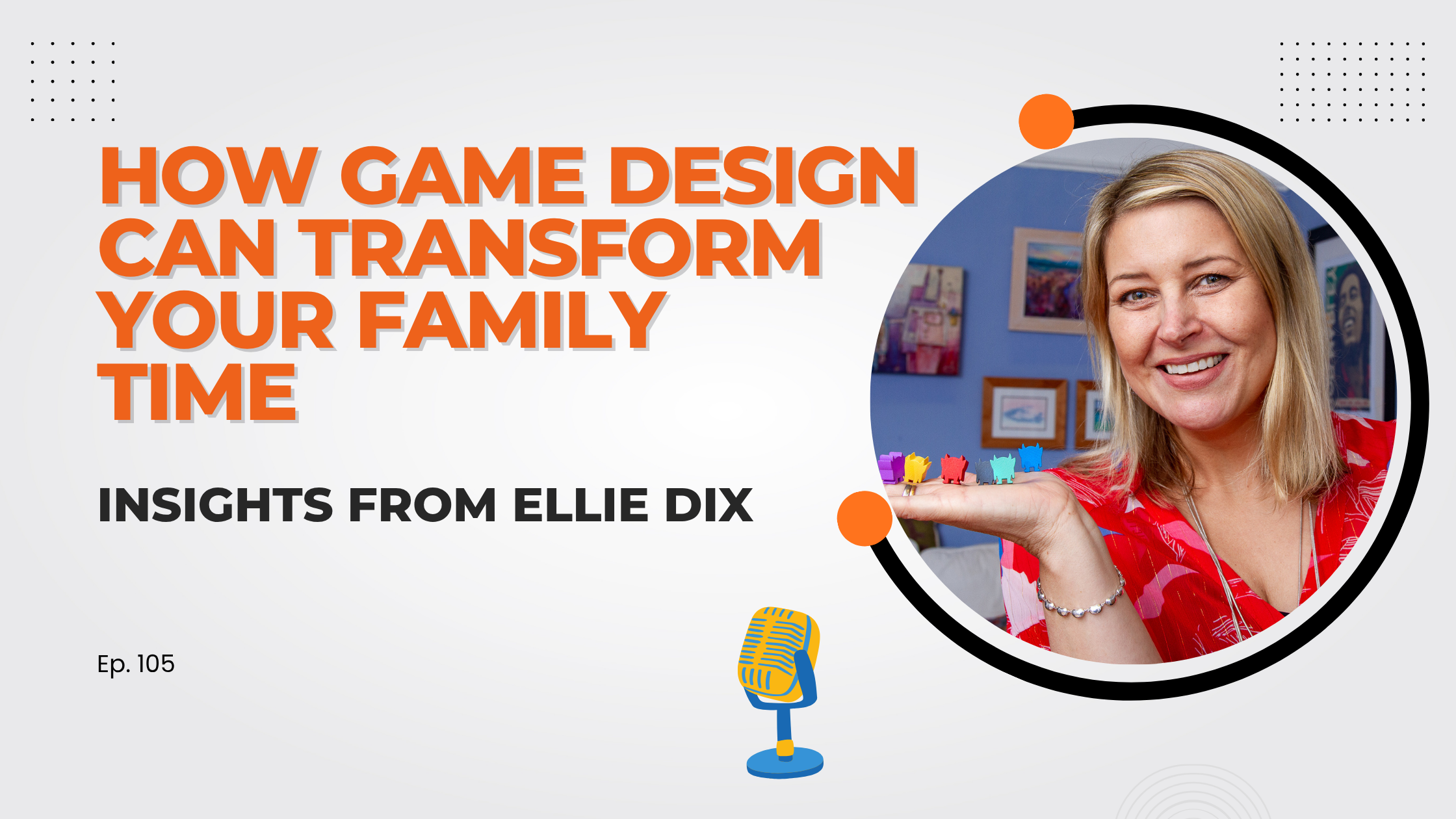
Welcome to a deeper look at how to navigate the ever-evolving board game industry. Whether the goal is self-publishing, licensing, or building long-term partnerships, understanding the landscape can make all the difference. In this post, discover practical strategies for designing engaging games, exploring different industry pathways, and building meaningful relationships—featuring insights from experienced designer and publisher Ellie Dix.

#105: Designing Joy: From Classroom to Boardroom – Toy Business Unboxed
Episode Highlight
- 00:00 – Intro
- 08:43 – What Sparked a Journey into Board Game Design
- 01:03 – Ellie’s Personal Experience and Transition
- 02:00 – What Sparked Ellie’s Love for Board Games
- 03:04 – Ellie’s Entry into Game Design
- 03:27 – Influence of Teaching on Game Design Philosophy
- 04:03 – Behavior Management Consultancy Experience
- 05:59 – Challenges Faced by Self-Publishers
- 12:11 – Advice for Designers Considering Self-Publishing
- 13:50 – Reasons for Transitioning to Licensing
- 24:04 – Pitching to Mass Market Game Companies
- 28:24 – Ellie’s Successful Kickstarter Campaigns
- 34:35 – Final Thoughts and Advice for Toy Entrepreneurs
- 35:21 – Conclusion and Contact Information
The Foundation: Why Passion and Connection Matter in Game Design
Ellie’s background as a teacher and behavior management consultant strongly shapes her approach to game design. She recognizes that gameplay influences behavior, especially in shared, joyful experiences.
Her design philosophy emphasizes inclusivity, avoiding long turns, player elimination, and negative mechanics like “take-that,” instead favoring quick or simultaneous play to keep everyone engaged. By focusing on positive, accessible gameplay, she creates experiences that encourage participation and meaningful social interaction.
Designing for Behavior: How Understanding Psychology Shapes Your Games
A background in teaching and behavior management informs a design style focused on player experience. Prioritizing inclusive mechanics, minimizing downtime, and avoiding negative interactions helps create engaging and positive gameplay that encourages participation.
From Self-Publishing to Licensing: Navigating Industry Transitions
Ellie’s early experience in self-publishing revealed the challenges of managing design, manufacturing, marketing, and distribution alone. Realizing the demands, she transitioned to licensing, allowing her to focus on game design while publishers handled production and sales. This shift highlights how understanding industry needs and building strong relationships can create a more sustainable and focused career path.
Building Industry Relationships: The Power of Community and Networking
Building genuine relationships is essential. Attending trade shows, joining playtest groups, and engaging in communities help grow a strong network. More importantly, nurturing connections over time—through trust, collaboration, and consistency—opens more opportunities.
Strategies for Pitching and Getting Your Games Discovered
Understanding what publishers are looking for is key. Studying their catalogs, attending conventions, and tailoring pitches helps create a stronger impact. Clear communication, thoughtful follow-up, and highlighting what makes a game unique all matter. Most opportunities come from building trust over time, making relationships just as important as the pitch.
Leveraging Crowdfunding and Building a Sustainable Game Design Path
Crowdfunding is a powerful way to fund projects and build an engaged audience, especially for emerging designers. Smaller campaigns offer a low-risk way to test ideas and grow a fanbase. Choosing between self-publishing and licensing depends on your strengths, while consistent quality and strong relationships support long-term success.
Advice for Long-Term Success in the Game Industry
Success in the game industry is built on long-term relationships, continuous learning, and genuine passion. Investing in meaningful connections, consistently improving craft, and staying adaptable—whether through self-publishing or licensing—are all key to growth. Focusing on what brings the most energy and motivation helps sustain the journey, while patience, resilience, and steady effort ultimately lead to lasting success.
Conclusion
Whether you’re self-publishing or licensing your designs, success in the board game industry hinges on more than just mechanics. It’s about cultivating relationships, understanding your own energy and passions, and continuously adapting to industry needs.
Ready to take the next step? Dive into communities, attend events, refine your pitches, and most importantly, keep designing games that bring people together. The industry is waiting for your unique voice and vision.
Connect with Ellie Dix
If you’re interested in learning more about The Dark Imp or connecting with Ellie Dix, you can reach out through the following channels:
- Website: Visit The Dark Imp’s official website for more information and updates.
- X: Follow @EllieDixTweets on X for more updates.
Transcript
Jason Hsieh (01:24)
Hello, welcome to another episode of Toy Business Unboxed podcast. In this episode, we’re thrilled to speak with Ellie, a game designer, an author, and an advocate for the power of play. From her early obsession with board games to founding of The Dark Imp, Ellie has dedicated her career to create innovative games that bring families together. We’ll dive into some of her personal experience as self-publisher and her transition to pitching game design to publishers, et cetera.
So thank you so much for being on our podcast
Ellie Dix (01:53)
lovely to be here. Thanks, Jason.
Jason Hsieh (01:55)
Yeah, so I want to start out with today’s interview. What got you started? What sparked your love to get into the board game industry? And how did that lead to starting designing some of the board games you sell?
Ellie Dix (02:08)
I’ve always played board games. I’m from a big board game playing family. And so it’s been like an integral part of my life for as long as I can remember. I think that’s a similar story to a lot of people that end up designing games, that it’s just, you can’t really imagine your life without games. So, and it becomes a way of relaxing, a way of connecting with people. And so it was a natural thing to sort of go into.
Having said that, it took me ages to get into it. I guess the other thing about games is that I’ve never really been very good at small talk. So in social situations, I always prefer a focus. I sing in a choir. I love seeing my friends at the choir because we’re all singing. And then we’re chatting in between songs. And it’s the same with games. We’ve got something that we are all doing together, an activity.
a shared focus to enjoy together. In terms of how I got into it, well, I mean, I was a teacher and I started designing games for the classroom primarily. And then when I was running an education company for other teachers to use in the classroom. So that was my first real forays into game design. And it just sort of went from there.
Jason Hsieh (03:26)
Hmm, I see. And how does your experience as a teacher really influence some of your game design philosophy?
Ellie Dix (03:34)
Well, guess because I played a lot of games with learners in school. I saw how different it was for them when they were playing a game than it was if they were doing any other kind of learning. Really, the whole demeanor changed as soon as I said, well, let’s just play a game. And there’s something very freeing about that. They forgot that they were learning and were able to just take
part in whatever the game was. So that was really interesting to see. also learned a lot because I ran a behavior management consultancy with my husband, training teachers how to manage behavior better. So I learned a lot about how to influence the behavior of others with your own behavior and the choices that you make and how powerful
how powerfully you can influence behavior in a positive and also in a negative way, you know, what kind of behaviors in you are going to trigger other people or perhaps make them feel more at ease on the other side, you know, that helped with my understanding of what makes a positive game experience and also what makes a negative game experience. So
The natural for me was to go into games for families or for, you know, a wide group of people, a wide age of people, games that spark joy, games that create experiences that bring people together rather than sort of pull them apart. So that’s what I definitely try and do to create games that are memorable experiences that spark joy, spark…
conversation and where people can feel at ease when they’re playing, hopefully, as well as feeling excited and driven to do well. But that experience side of things is really, I always think about that when I’m designing a
kind of experience do I want my players to have? And so that’s when I was in school, that really helped me to understand
the sorts of things that are going to influence that, think.
Jason Hsieh (05:43)
I see. That’s very interesting when you mention about the behavior side of the things.
you actually implement some of those strategies as far as behavior-wise in some of your board game design as well?
Ellie Dix (05:59)
I mean, there’s definitely things that I avoid not always there’s always some games where I might throw those things in there’s some things that I try and avoid all the time if it’s a game for families because for example, I will try and make every turn quick either simultaneous play or quick because Sitting around watching other people make prolonged decisions is some
that many, many people really don’t like and it can change how you feel about a game. That sort of game works for some people, particularly some gamers, but we’re talking about families here. We’re talking about average family player. They don’t want to be sitting around and waiting for lots of people to be involved. I mean, it’s kind of a classic. Another classic example is player elimination. We don’t want one of the members of the family to be out
of the game a long time before the others because then they’re not taking part in the experience. So, you know, if you want people to take part in the experience, then you have to make sure it’s inclusive and that you can feel like you’re all still in it until the end of game. You don’t want someone to feel like they’re too far behind that they can’t catch up. sometimes. So the other thing I do is I tend to avoid take that games, although
You can see on the shelf behind me is a game called A Midsummer Night’s Fair, which is a game I’ve got out with Game Right. And it’s all about take that. So I either avoid it completely, so there’s none of it in the game, or it’s all got to be about that, so everybody knows what the experience is before they’re going in there. I think that the worst thing is that you can be building up a strategy, doing all these cool things for yourself.
you’ve spent ages kind of building up an engine or something, and then someone just comes and removes some of it and steals something. And then that messes with how you feel. If it’s all about, I’m going to mess with you and you can mess with me, then it’s a different sort of thing.
Jason Hsieh (08:03)
Okay, yeah, that’s definitely a good way to put it. also what I know your company also have evolved over time since its exceptions. think during the pre-interview, also mentioned about initially you are trying to do self-publishing a lot of your game. Can you share some of the challenges that you face when you are trying to do self-publishing?
Ellie Dix (08:25)
I mean,
I think it’s probably the same challenges that almost any self-publisher of games that is also designing the games would face. That you have to do so many different kinds of jobs that you have to really be good at all of them, which is one thing, but then also want to do all of them and give each of those the time they need.
That I think is the biggest challenge that it’s natural for people to focus on the things they want to do and the things they enjoy doing and the things that they know they’re good at doing and to just keep pushing those jobs to one side that maybe they’d rather not do and Unfortunately when you are self publishing and it’s just you you have to do all those things Whether you want to do those things or not. So I think that is huge challenge for anyone that’s self publishing
To add to that, my first games came out about three months before the pandemic hit. So that was, you know, it was a difficult time. did, I then kind of changed a bit about what I was doing and looked at games that could be downloaded and played with people in different locations. And they went really well, but those were like small print and play games that are still very popular on my website.
And apart from that, guess, yeah, the biggest challenge I had was that I wanted to design all the time. So, I mean, it’s back to that thing of what you prefer doing, like design. That was the biggest challenge. and also I decided that I was going to try and gain an audience outside the regular sort of board gaming hobby world.
Jason Hsieh (09:56)
focus here.
Ellie Dix (10:09)
that because I was creating games that I hoped would appeal to families that maybe, know, my kind of initial reason for creating the company and doing what I was doing was because I wanted to create better. I saw so many people playing such terrible games that I really wanted to add to, you know, the sort of
availability of some better games for families. And I was extremely naive in terms of what that would mean and how easy or difficult that would be. So I was trying to get an audience outside gaming, I was working, I was trying to book in hotels that I hoped would put games in there. You know, in in
Jason Hsieh (10:57)
wow. okay.
Ellie Dix (10:59)
Yeah in rooms because I’ve got a bunch of games that I do sort of on coasters And these are lovely giveaways. I was talking to bars and pubs and hoping that people would play in restaurants I was you know talking to self-catering accommodation because I hoped that they would be interested in creating game boxes for their you know holiday rentals. So and that was a huge challenge and just
very depressing because I was trying to forward in a market that wasn’t really ready or didn’t really know that they might even be looking for that kind of thing. So it was naive and it was a bit gung-ho and it ended up being quite hard-going. I some successes but not enough to make it more interesting.
Jason Hsieh (11:27)
So just get that.
And you’re trying to do all that by yourself as well back then. So that’s a lot to juggle, like you mentioned. Because a lot of the designers I interviewed, like what you just shared, people enjoy doing design, but when it comes to marketing, they really don’t know how to really market the game to the right people correctly. Because that’s, just like you say, that requires a whole different type of skill set.
Ellie Dix (12:11)
Yeah, I I usually I often say to designers who are thinking about self publishing. Well, look, you might enjoy design, but do you also enjoy marketing? Because the design is going to end up being probably 5 % of your time and the marketing is going to end up being about 80 % of your time.
Jason Hsieh (12:31)
Because
that’s how you put the food on the table.
Ellie Dix (12:34)
And then the other 15 % of the time you’re going to be, you know, dealing with manufacturers and dealing with art and all of the other kinds of things that go into creating the product. But the bulk of it is going to be marketing. So are you interested in becoming a marketer? And if you are, then great. And if you’re not, then maybe don’t do it. You see, I think part of my problem was that I’d already run a successful business, which we sold. And so I was used to
running marketing, I was used to having, you know, all sorts of different strings to my bow. The thing that took me by surprise was how much I loved designing games. I knew I do the other things. But as soon as I started getting into game design, I was like, where have you been all my life? I wish I’d been doing this. And I can’t believe I’ve just spent the last 15 years not designing games.
Jason Hsieh (13:25)
Ha ha! ⁓
Ellie Dix (13:30)
So it became the overriding passion that everything else kind of paled into insignificance really.
Jason Hsieh (13:37)
Yeah, that kind of lead perfectly to my next question is like, why do you make the decision to shift from self publishing to I think right now you focus more on licensing your design and what have you learned from that transition?
Ellie Dix (13:50)
Well,
the reason is exactly that. Now, instead of spending 5 % of my time designing games, I’m spending 80 % of my time designing games. The other 20 % is still marketing, but it’s a different kind of marketing. If you want to actually be successful in terms of having published games on the shelves, you do have to make sure that you are spending time
pitching and getting your games ready to pitch and that is all the marketing side. That’s the sales and marketing aspect. You’re just not selling a game to an individual customer and end customer. You’re selling it to a publisher. So the relationship piece is very important. So it’s not that there’s no sales and marketing if you do that, but you are designing most of the time. And that’s why, so that I can spend all of my time doing the fun stuff and not
not the rest. But, you know, I suppose it’s also about what gives you energy in terms of it’s not just about what you’re good at or what you enjoy doing. It’s about the kinds of activities that give you energy. We all have certain things that we could keep doing and keep doing and keep doing and never get tired of. ideally, that’s the bulk of your job, not a tiny bit of your job. And we also have things which
you can do, but over time are going to sap your energy and make you kind of burn out. it’s about making sure that most of the stuff you’re doing is giving you energy and that the stuff that will burn you out is small.
Jason Hsieh (15:21)
Yeah, that’s very important. That apply to not just designer but any kind of entrepreneurship.
Ellie Dix (15:27)
It’s same with anything. It’s like universal. And of course it’s a privilege to be able to choose to work in a role that is fundamentally, primarily what you’re good at or what gives you energy. I think even for people that are having conversations with their employers about which bits of their job
they want to do and which bits of their job can maybe be, you know, even internal shifting around a team. It’s a really good thing to think about. In terms of other things that I’ve learned in the transition, relationships are super important. Relationships with other designers, with publishers. There’s nothing like having a strong
community around you and feeling like you’re part of the overall game and toy community. It’s a strong place to be. It’s an exciting and innovative place to be. And I want to be part of it. So I think that when people know that you’re doing that, that you’re in there, and you’ve got time to devote to that, then that’s
you know, it’s a natural sort of thing that’s happened since I’ve transitioned into working with publishers, it’s become so much more important than just doing it on my own. And I don’t really care what other companies are doing. I’m just going to forge my own way and sell stuff to the people I find. It’s very important to me to have allies and relationships and a good network within the community. There’s always more to learn from people.
And I love learning.
Jason Hsieh (17:06)
Does that also change the way you’re designing games? Because now you’re more thinking from the publisher point of view and different publishers also looking for certain type of game. They want to put it into their kind of portfolio, so to speak. And how do you balance their vision versus your own creativity when you’re designing new games?
Ellie Dix (17:25)
do both. make sure that if I have an idea for a game, I’m going to do it, whatever. I make sure I don’t always spend all my time making games that are either commissioned or specifically for a brand or even targeted because of a wish list. I do some of that. I do a fair amount of that, but probably…
an equal amount of, I’ve had this cool idea that I want to pursue. And that balance for me is really important. Sometimes in the year, I’m spending more time working on projects for specific publishers, and other times it’s different. I design for brands which aren’t necessarily anything to do with the game industry, but they might just want to board game. That’s a very different experience from designing a
a game that’s been commissioned by a board game publisher. And I mean, I think when you’re designing your own games that you don’t really have a publisher in mind for, sometimes finding that match is difficult. So there’s going to be a lot of pitching before you find the right person, because it’s all about finding the fit. But, know, I’ve pitched games, well,
the one that I’ve pitched more than any other, I pitched 50 times to 50 different publishers. And I carried on pitching because it’s a great game. And I knew it was just a matter of time before it found its fit. And they are so excited the publisher is coming out next year. They’re so excited. it’s just, you it’s wonderful because I knew it was going to happen. ⁓
Jason Hsieh (18:40)
Woah okay, ⁓
Ellie Dix (19:00)
There were lots of people that enjoyed playing the game. I everybody that tested it enjoyed it. It got shortlisted multiple times with different publishers and then never quite made it to contract. So it’s like, I’m going to keep going with this one because I know people love it and it found its fit. So that’s great. So you do have to be prepared to keep pitching. Or the other thing is, of course, that sometimes publishers don’t really know what they want.
How can I know what they want if they don’t know what they want? Often they say, well, we’ll know it when we see it.
Jason Hsieh (19:33)
That doesn’t help.
Ellie Dix (19:34)
It’s
not that helpful. we just have to make, I think actually it’s important from a designer point of view to kind of be aware of trends in the industry. So if you can go to events and have a look at what’s happening and the games are getting people excited, that’s important. And so that you can see the way things are going to make sure that you
doing your research about different publishers is really important so that you’re not showing them things they might not be interested in. And then, you know, I mean, I think if you’re designing for brands like the non-gaming brands, that’s a totally different thing because they lack game expertise. And the whole thing feels totally different. In terms of what I do, there’s three distinct things.
designing games for brands that are like a project that I’ve been given that I’m being paid to do. Designing commissioned games for publishers and then designing games on a whim that I then go and pitch to people. And it’s totally different for the three different things really.
Jason Hsieh (20:41)
Which one do you do the most out of the three currently?
Ellie Dix (20:44)
I think I probably do 25%, 25%, 50%. So most out of that is, you know, designing my own games and pitching them. that because then I can work on what I want, but I do love having the others as well. It’s a dream to get a commission from a board game publisher.
Jason Hsieh (20:49)
Oh okay.
Ellie Dix (21:05)
You know, working on a game with Buffalo games, which is coming out next year, which is a commission and it’s so exciting. And they’ve got such an amazing team. And you’re working with people who really get it and you’re working with people who’ve been doing it for such a long time. And you know, they’re going to bring the vision to life. It’s really exciting. Yeah.
Jason Hsieh (21:24)
Do you have any other tip for other people that’s looking into pitching games idea to publishers?
Ellie Dix (21:30)
Yeah, loads. Make sure you know who you’re pitching to. And I mean, do the research on the publisher. Don’t show them a big game if they only publish little ones. If they’ve got a box size like oink or something, don’t show them something that won’t fit into that box. If they produce party games, don’t show them a solo game. If they produce puzzle games, don’t show them a party game.
You know, think about what they produce, who their audience is, and make sure you’re only showing them things that they might be interested in. As a caveat to that, you can always say, I’ve got this thing I don’t think you’ll be interested in at the end of a pitch. Or say, I’ve got this kind of game and this kind of game. It’s not really what you normally do, but…
Are you do want to take a look because often they do want to depart from what they’re doing, but take as your basis, their core business and you won’t go far wrong. Practice your pitch. Don’t rock up having never delivered your pitch to anyone or to yourself or to out loud. Make sure you’ve got it down. You’ve got it quick. Focus on the hook of your game. So you’re front loading your pitch with what makes your game innovative.
and interesting and different because if you hook them in in the first 10 to 20 seconds, they’re going to listen to you for longer. Always think about the fact that this is a long-term relationship. It’s not about getting this game signed in this meeting. If you go in with that kind of attitude, you’re almost always going to fail. I mean, I’ve never had a game signed up then and there.
in a pitch. focus on how can I develop a relationship with this publisher that I can pitch to them on an ongoing basis for the next 10, 20 years, not just now. And follow up, always follow up. If you say you’re going to send them a prototype, send them the prototype. If you say you’re going to send them a sizzle reel, send them the sizzle reel. And then
Jason Hsieh (23:20)
Hmm.
Ellie Dix (23:32)
don’t just sit there and not do it. It sounds obvious, but so many people go into a pitch and then don’t properly follow up. Give them a month, get back to them. Give them another month, get back to them. Where are we? Are you interested? Where, you know, I’ve got other people looking at this game. And be relentless really in your follow
Jason Hsieh (23:48)
yeah. And how will you suggest people that’s kind of new to this to actually find like the actually reach out to the publisher and try to even schedule the pitch to have a chance to talk to someone from their side?
Ellie Dix (24:03)
Well, it’s different for different publishers. If you want to pitch to mass market game companies, there are several events that you might want to attend. In the UK, there’s Mojo Pitch, which is brilliant. And in the US, there’s People of Play in Chicago. These are events that are designed to bring publishers and designers together. That’s what they do.
more the hobby game market that you’re aiming for, go to conventions, go to Gen Con in the US, go to Essen in Germany and meet people at these conventions. Send them emails beforehand or contact them through their contact forms or whatever to try and schedule meetings ahead of time. I think the other thing is don’t overlook your designer community. Join Playtest
groups, make sure you become, you know, in regular contact with and friendly with all of your local game designers, because these are people who already have connections, who will able to put you in touch with publishers. And for many people, it’s an easier start in to get to learn, you know, to get a friendship group and a working
relationship with other designers than it is to find the publishers.
Jason Hsieh (25:22)
Yeah, that’s true. That’s a good place to start. And the referral always helps instead of like a cold outreach approach.
Ellie Dix (25:30)
Honestly, people are happy to do that if they know you. So run a playtesting group in London with another designer and people that come to the playtesting group, they bring their game, I try their game, I test the game, everybody else tests the game, I see that they’re coming regularly.
And then they might say to me, you got any advice for pitching? And I’ll say, yeah, I’m going to give you a bunch of contacts. They don’t ask for that. But I’m going to give you a bunch of contacts because I can see that you’re putting everything into this, you’ve made a bunch of changes, that you’re very responsive, that you’re obviously interested in it. I think it’s a good game. And here are some publishers that I think might
know, might be interested. So, you you don’t, yeah, your designers are going to be the first port of call, I would think, for many, many people.
Jason Hsieh (26:22)
I see, I see. So you kind of mentioned about a couple of different ways, like going to trade shows, participating in some local play testing events. Any other suggestion or advice that you will give to the listener on foster a stronger connection within the gaming community?
Ellie Dix (26:40)
Well, I mean, I think that people want to know that you’re going to be there for the long term. So there’s a big difference between designer having one game and basically obviously marketing it to a designer wanting to become part of the board game industry.
The way that you approach any kind of conversation with another designer or a publisher is going to be obvious which side of that you’re on. So I would say make sure that in any conversation, you’re really thinking about long-term Of course, can have relations, we can kind of start to spark these relationships and foster connections online as well. There’s lots of online play testing groups.
all sorts of social media communities online that you can be part of. There’s lots happening on LinkedIn, there’s lots happening on Blue Sky in particular, and it’s definitely a vibrant community in these places. So if you’re not able to attend events where you could start to meet other people, because that is probably the number one way,
then you can do those things online. You can attend sort of proto spiel, you know, in the US, kind of prototype play testing, you know, conventions for unpublished games. You can attend those and at those you’re going to meet a lot of other designers and they do things online, proto online. So those are the kinds of things that you would probably be doing.
Jason Hsieh (28:07)
Yeah, and a lot of the board game designer I speak with also have fairly good experience with some of course some have more success, some have less success with crowdfunding, which is very popular within the board game industry. What is your experience with some of the crowdfunding platform?
Ellie Dix (28:25)
Well, I’ve done, I’ve run three successful Kickstarter campaigns when I was self-publishing. But to me, you know, for me, that’s not, that’s really about being a publisher. Now, of course, there’s a spectrum, there’s a line, you know, that you could be all in on the publishing massive big games with loads of miniatures, or right down the other end, you could be publishing print and play, roll and write games.
which is yes, you’re going to run a Kickstarter campaign for yes, you still need to do all the marketing for, but in terms of the financial risk, it’s much, much smaller because you haven’t got a physical product. You’ve got digital files you don’t need to have a high target. Now, if you’re doing something like that, it’s a really, really good way of designers starting who want to self publish to start to get a
handle and to start to build an audience. That’s really about building an engaged audience than necessarily a network. Because if you are a jobbing designer where you are pitching and you’re doing, you’re not self publishing, maybe work for hire and you’re signing licenses, then you don’t really need to worry about that side of things. But if you want to
Jason Hsieh (29:26)
true.
Ellie Dix (29:45)
to start to foster an audience who you hope will buy your product, then that’s an easy way to start by doing roll and write or very easy print and play games where people don’t need to cut out a bunch of stuff.
Jason Hsieh (30:00)
Yeah, I think just going back to your point in early part of today’s interview is choosing your path and which way you want to go. Either go self-publishing or you want to go with the licensing and also deciding on which one, just like you mentioned, give you more energy that you enjoy doing.
Ellie Dix (30:17)
think it’s perfectly valid to not know which path is right for you and to experiment. I that’s exactly what I did. But also there are plenty of designers who do both in some way or other that have some games they’re pitching to other publishers and then they have some games that they’ll bring to Kickstarter themselves. Maybe they feel like they can run one Kickstarter a year or one Kickstarter every other year or…
Kickstarter is just for Roll and Write games or whatever it is and that they want to do that and maybe in the future they’re thinking about creating a bigger publishing company. But they also want to design other games that they’re going to pitch to other people. So I don’t think you necessarily need, it doesn’t necessarily need to be an either or. It can be a both, but I think it’s about being realistic.
about how much time you have and what you can achieve because when you try to do too much you invariably don’t do anything particularly well and that’s the danger. So working out what your focus is, having a goal and then reassessing your goals regularly to make sure you still want to do what you originally wanted to do.
Jason Hsieh (31:27)
For sure. And for this final part of this interview, I know you are also an author and you wrote a book called The Board Game Family. Can you kind of talk about a little bit about what people can expect from your book and what they can learn?
Ellie Dix (31:39)
There it is. It’s a game designed, it’s a game written for parents and it’s really about how you can have positive board gaming experiences at home. So part about behavior and influence positive behavior to have good game experiences. And it’s partly about choosing the right sort of games for your family, because it’s not just about
my behavior changes your behavior, but it’s about what game we’re putting on the table to make sure that that experience has the best chance. I wrote it because I had heard so many people, whenever I talked about games to people who aren’t kind of in the game industry or aren’t board gamers, like hobby board gamers, they would say, ⁓ we don’t really play games with our kids because they always cheat or…
or we have to let them win, or we don’t want to read rules, which is the biggest problem. So I was very motivated to help people solve those problems, the kind of, you know, they always cheat kind of problem. How do you solve that? What can you do as the adult in the room to…
Jason Hsieh (32:37)
Okay.
Ellie Dix (32:52)
to make sure that cheating isn’t that attractive an option for the example, with that, are you always rewarding the winner of the game? If you’re rewarding the winner of the game, even if the reward is you saying, well done, that was amazing, great work, whatever, a reward. That praise is a reward. So, you know,
⁓ Is your focus as an adult inadvertently creating a situation where the child really wants to win to please you in a way? So, know, or why else do they want to win so much? What is it about it? And what can you do to minimize that cheating when it really has kind of kicked in? How can you create good winners? You know, people that are
humble in victory and cheerful in defeat. How do you do that? Well, you model that yourself. And we all know about competitive parents and how they might choose to play a game. And I think also there are a lot of people playing quite terrible games, which exacerbates the problem.
Jason Hsieh (33:56)
Yeah, and also I think it’s also on getting off of the screen since you know, I have three kids myself. They use quite a bit of electronic.
Ellie Dix (34:05)
Really, really hard. It’s really hard. The book contains a bunch of tips about Okay, so they’re not interested in playing a board game because they want to do x y or z How can you hook them in? What kinds of things can you do to be stealthy? About you know, how can you how can you crowbar the odd game in and start making it part of the fabric of your family? And yeah, that’s what the book tries to do
to help parents have positive board gaming as part of their family life.
Jason Hsieh (34:36)
Yeah, yeah. Okay, thank you so much for sharing that. And as well, wrapping up today’s interview, if you have to share just one piece of advice with someone that’s getting started in the toys and game industry, what would that be?
Ellie Dix (34:48)
Well, I mean, I’ve said it already, but think long term, learn from everybody, make sure you make those relationships and keep nurturing them with designers and with publishers. That’s probably the, you know, if you actually want to create a career or part, you know, even if it’s a side thing that you’re doing alongside a regular job, then that’s the best way of doing it. If you really want to be part of.
of the community, join all these different things, like you know, expand your community, get be actively part of the design and the publisher community.
Jason Hsieh (35:22)
Okay, thank you for sharing that. And how can people find you online?
Ellie Dix (35:25)
Yep, ⁓ my website is thedarkimp.com I’m on blue sky @thedarkimp. And I’m on X still at the moment on @EllieDixTweets.
Jason Hsieh (35:36)
I see. Okay. Thank you so much. And thank you so much for being on our podcast today. And for our listeners, thank you for tuning in to this episode of Toy Business Unboxed podcast. We hope you have enjoyed the conversation and find it insightful and inspiring. If you like what you have heard, be sure to subscribe to our podcast on your favorite platform so you never miss an episode. We really appreciate your support and we love it if you can leave us a review and share the podcast with your friend and colleague. For more resource tips and the latest update within the toys and game industry,
visit our website at toy-launch.com. Join our conversation and connect with us on social media using hashtag toybusinessunbox. We’d love to hear your feedback and suggestions for future episodes. Until next time, keep innovating, keep creating, keep bringing joy to toys. This is Jason Hsieh signing off on the Toy Business Unbox podcast and we’ll see you in the next episode. Thank you so much, everyone.