
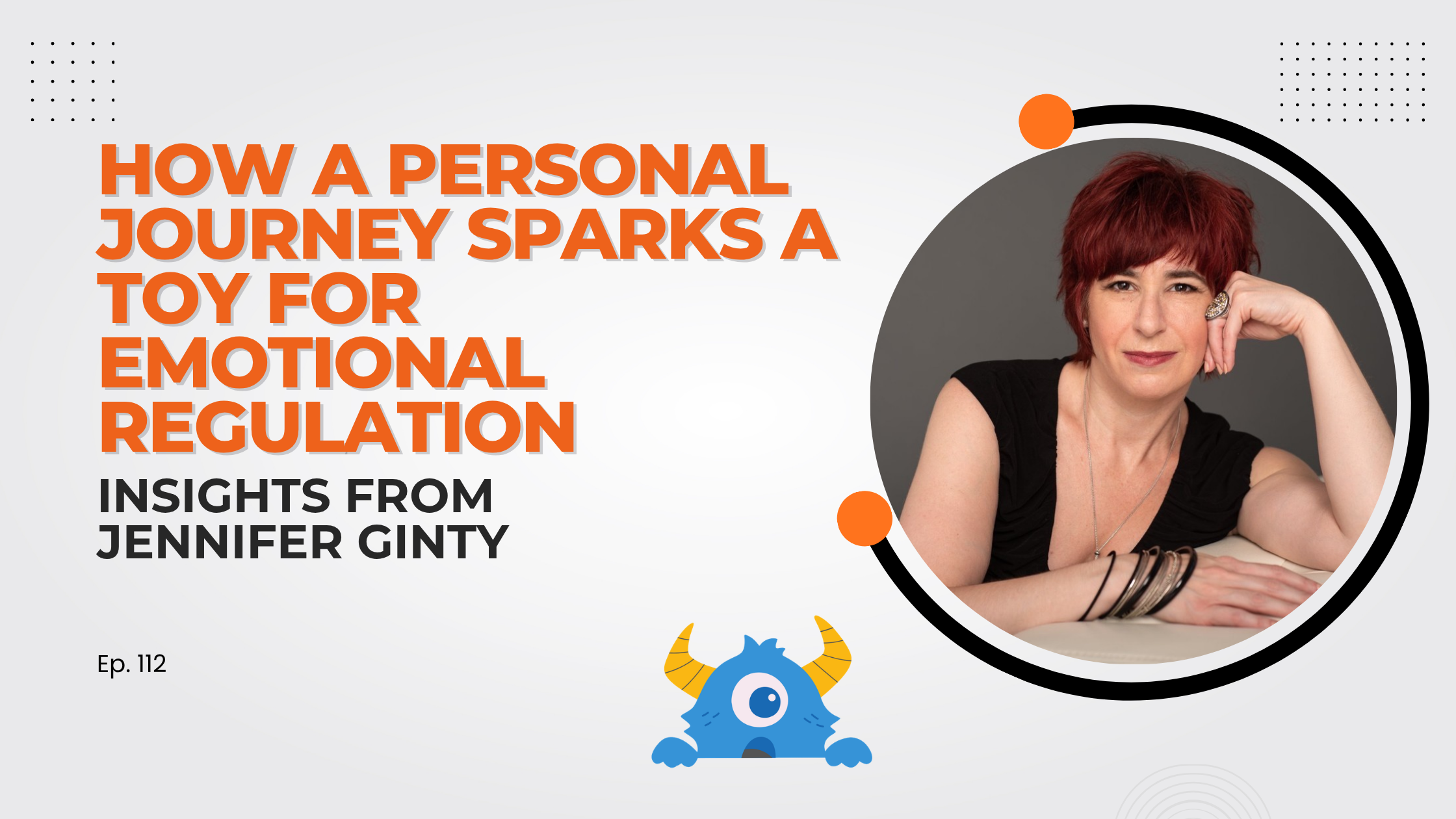
Welcome to a story about how personal struggles can inspire innovative toys that make a real difference. In our latest episode of Toy Business Unboxed, you’ll learn how one entrepreneur turned her experience with PTSD into a powerful tool that helps children express their emotions—and what it takes to bring a product like this to market. It highlights the importance of emotional regulation, the journey of product development, and how play can support emotional learning. Whether you’re a toy creator, parent, or social worker, these insights can spark meaningful innovation in your work.

#112: Playful Solutions for Big Emotions – Toy Business Unboxed
Episode Highlight
- 00:42 – Introduction to Toy Business Unboxed
- 01:12 – Introduction of Jennifer and My Moody Monster
- 01:23 – Jennifer’s Background and Inspiration
- 02:40 – Turning the Idea into a Business
- 03:00 – Getting Support from SBA and Accelerator Programs
- 04:17 – Demonstration of Moody Monster
- 21:18 – Conclusion and Contact Information
- 05:24 – Educational Content on Emotional Regulation
- 07:41 – Product Development Journey
- 09:37 – Testing and Feedback from Families and Therapists
- 10:16 – Impact on Autistic Children
- 12:36 – Importance of Emotional Expression for Kids
- 14:27 – MESH Certification Process
- 17:33 – Social Mission and Use by First Responders
- 19:20 – Final Thoughts and Advice for Toy Entrepreneurs
The Inspiration: Turning Personal Experience into a Purpose-Driven Toy
Jennifer Ginty, a mom and toy innovator, faced emotional challenges tied to childhood trauma, PTSD, and depression. That struggle sparked a creative idea: a plush toy kids could rip apart and reassemble to release big feelings. From concept to creation, she designed a plush monster with Velcro limbs—allowing users to express anger or frustration, then put it back together to regain calm and communicate. The idea reflects a key truth: emotional regulation is often physical. For children—especially those with special needs—having a tangible outlet can greatly support their well-being.
The Journey to a Market-Ready Product
Developing My Moody Monster took four years, highlighting the challenges of creating emotion-focused toys. Jennifer navigated issues with materials and manufacturing, relying on referrals to find the right partners. She also stresses protecting a brand early, having defended her trademark against larger companies. Now, she’s pursuing MESH certification to add credibility through testing and safety validation.
Implementing Play for Emotional Learning
Jennifer emphasizes that play is more than fun—it’s a vital learning tool. Her “Moody Talks” YouTube series helps kids and parents build emotional vocabulary and coping skills. Because children often feel emotions before they can express them, toys like Moody offer a healthy outlet while supporting conversation and emotional growth. She encourages caregivers to model regulation, use play to teach, and help children name and release their feelings.
The Power of Play in Trauma and Special Needs Contexts
Jennifer’s partnerships with social workers and first responders reflect her mission to provide trauma-informed tools for children in tough situations. Moody is used in ABA centers, foster care, and hospitals as both a calming aid and communication tool. Tested with children on the spectrum and in trauma centers, it helps non-verbal kids express emotions through touch, sound, and rebuilding—creating a powerful alternative to words.
Practical Tips for Parents and Educators
While toys are wonderfully supportive, they work best when complemented by adult guidance. Jennifer emphasizes the importance of teaching children emotional vocabulary through tools like Moody Talks—a series of videos where children learn about emotions in relatable, kid-friendly language.
Empowering Emotional Growth Through Play
Supporting emotional regulation isn’t just about ‘fixing’ feelings—it’s about empowering children with the confidence and skills to navigate their internal world. As the toy industry continues to innovate, integrating emotional health into play not only benefits individual children but also fosters healthier, more resilient communities.
Practical Advice for Toy Entrepreneurs
Aspiring toy innovators can learn to take time refining prototypes, recognizing that perfection doesn’t happen immediately. Protecting intellectual property early helps prevent legal issues, while building a strong network—through industry connections or online platforms—can create valuable opportunities. Aligning products with standards like MESH certification adds credibility, and focusing on purpose-driven design ensures toys meet real emotional or developmental needs.
Final Thoughts: From Personal Struggle to Industry Innovation
Explore Jennifer’s work at My Moody Monster or follow along on social media for updates and resources. For those inspired to create emotional regulation toys, consider certifications like MESH and connect with industry leaders advancing play and wellbeing.
Key takeaways include how personal challenges can spark meaningful innovation, the steps to develop and protect an emotionally focused product, the role of play in helping children regulate emotions, and practical insights for entrepreneurs entering the social-emotional space.
Connect with Jennifer Ginty
If you’re interested in learning more about My Moody Monster or connecting with Jennifer Ginty, you can reach out through the following channels:
- Website: Visit My Moody Monster’s official website for more information and updates.
- Instagram: Follow My Moody Monster on Instagram for behind-the-scenes content and updates.
- Youtube: Subscribe to My Moody Monster’s Youtube channel for more stories, and full videos.
- TikTok: Follow My Moody Monster on TikTok for quick tips and engaging short-form content.
- Facebook: Visit My Moody Monster’s Facebook page for community discussions and announcements.
Transcript
Jason Hsieh (00:43)
Welcome to Toy Business Unboxed, your gateway to the secrets of the toy industry. Here, Jason Shea.
Jennifer Ginty (00:51)
A toy entrepreneur and expert in the field.
Jason Hsieh (00:54)
of we develop is really inspired by the real life experience that we have with our son. 60 % of all toys
Jennifer Ginty (01:03)
last
year were sold on Amazon which is incredible. passionate about it because it’s a road. When you have an iPhone and you want do things better, I’d say go for it. We’ll guide you through the design, marketing and monitoring. Now let the unboxing begin.
Jason Hsieh (01:07)
out and
through the enchanting world of toy manufacturing.
Hello, welcome to another episode of Toy Business Unboxed. Today we’ll dive into a topic that affects every family, helping kids manage their emotion. Our guest Jennifer is a single mom entrepreneur and the creator of My Moody Monster, a plush toy designed to help children express and process their feelings. Inspired by her own journey with PTSD, Jennifer had made her mission to give families tools for emotional regulation and open communication. Thank you so much for joining our podcast today, Jennifer.
Jennifer Ginty (01:56)
Thank you so much for having me, Jason.
Jason Hsieh (01:59)
So will you mind sharing with our audience on how do you even got into the toys and game industry, a little bit of a background about yourself?
Jennifer Ginty (02:07)
Sure. Well, I am a single mom and I live with complex PTSD and major depressive disorder from childhood trauma. And I, you know, I just kind of fell into wanting to create my first toy. I was frustrated with my own symptoms of my PTSD and my emotions. And one day I was in a group therapy session and I said, I wish I had a monster that I could.
rip apart and throw across the room and bang against everything. And the people in the group were like, yeah, you should have that. And, you know, I went home and I’m not a seamstress. not, I can’t really use a sewing machine very well, but I put together this plush monster and I made them with their arms and legs and head with Velcro so that I could rip them apart.
Jason Hsieh (03:03)
⁓ Okay, yeah, okay. That’s how you come up with the idea.
Jennifer Ginty (03:08)
Yeah, you know, it started out with just, my own frustrations. And I realized as I was using my monster that they could be a really good help to other people, you people who are also dealing with big emotions, especially children.
Jason Hsieh (03:25)
Mm-hmm. I see. see. I see. And can you also walk us through your process on making it into an actual business? Because it sounds like it’s just like an idea for you. Why do you actually spend the time to actually create it and take some of the journey you have when you have gone over so far?
Jennifer Ginty (03:44)
So I decided when I decided I wanted to share my monster with the world, I first got in touch with the SBA because I thought I want to be a small business. So let’s go to the SBA. And when I spoke with one of the members there, they said, you really need to get into an accelerator program, something to help you really build onto this. And so they introduced me to a group. ⁓
in that started in Massachusetts called E for All, Entrepreneurship for All. And they did have an accelerator program. And I had come up with this monster right as soon as COVID hit. So it was kind of this time where I had a lot of time to focus on this product and to really expand it into something that I could share with the world.
Jason Hsieh (04:23)
Hmmmm
Jennifer Ginty (04:39)
So I was in the accelerator program and I had mentors and a cohort and I really put together a business plan and I really refined what I wanted this monster to be and that’s where my Moody Monster came in.
Jason Hsieh (04:55)
I see, see, I see. Yeah. And do you have an actual sample of the product that you can show us? This is my video. Yeah, for our listeners that want to see what the product look like, please also check out our YouTube video as well. Yeah, please show the product and how it works.
Jennifer Ginty (05:01)
I do.
So you can rip Moody’s head off and throw it across the room. You can pull off their arms and legs and bang them against the furniture. But the best part about Moody is you can put them back together again. And this is a perfect time for communication for kids. Parents can sit down with their kids and say, what happened? What can we do next time to better cope with those big feelings you’re having?
So it gives an opportunity for parents to help their children to grow an emotions toolbox.
Jason Hsieh (05:44)
Yeah, for sure, for So do you also provide any other educational content on how can parent help kids with emotional regulation? Because I also have a case on the spectrum. Sometimes emotional regulation has always been an issue with my son sometimes. What would be your recommendation, our listener that’s also dealing with ⁓ emotional regulation issues?
Jennifer Ginty (06:09)
Well, yes, I do have on my YouTube channel, my Moody Monster, I have Moody Talks. And yeah, so each month I picked an emotion that I wanted to talk about. And then the first week I talk about what are the words that we use when we think about this emotion. Because the best way to understand how difficult that emotion is, is by using your words. So if you’re having anger,
emotion coming up. Some people use the word mad. They use different words and we need to learn what the intensity is by using the words we have. So when we also talk about body sensations, we feel what those emotions and things that happen when we feel that emotion like how we might react. And then the next three weeks, I talk about coping skills that I learned myself.
with my own mental health. Talk about those coping skills that I learned that have helped me to build a coping skills toolbox.
Jason Hsieh (07:09)
I see, I see, I see. And why do you think it’s so important for the kids to have a physical way to express their frustration?
Jennifer Ginty (07:16)
Yeah, you know, I, when my kids were little, I used to call my little cavemen because they were born with all these big feelings, right? We’re all born with these big emotions that we don’t know what to do with. And those emotions come with body sensations and needs that we may have. So an angry child may need to get that, that out in a physical way.
more so than just talking about it. And a lot of therapists will tell people if you really need to get out that, you know, emotion, punch a pillow, you know, maybe hit, you know, take a pillow and hit it across around the room. So what I did was I created this buddy to do that for them. again, it’s a signal to the adults in the room that this kid needs
some help with their feelings.
Jason Hsieh (08:09)
Yeah, for sure, And I want to go back one step and talk about the product development stage that you also went through because that’s every one of us in the toy and game industry. Developing a product, you sometimes take the longest. How long does it took you and what was your process?
Jennifer Ginty (08:25)
It took me four years to get a prototype that I was happy with. And a couple of manufacturers that I worked through. you know, and sometimes the, manufacturers didn’t want to continue to work on the prototype because I was asking for the stickiest Velcro they could possibly find to make it really difficult to pull it apart. And you know, some of them just didn’t want to, you know, continue the endeavor.
Jason Hsieh (08:30)
whoa, okay.
Jennifer Ginty (08:51)
to find that until I found my manufacturer that I use now. so yeah, it took four years to develop the final prototype and then get into testing.
Jason Hsieh (09:02)
Huh, OK, that’s actually unusually long based on my experience. What is some of the major reason? it sounds like you switch a few different manufacturers. Is that why it’s taking longer than usual?
Jennifer Ginty (09:14)
Yeah, you know, because I’m not a part of the toy network. You know, I was such a beginner. I really didn’t know where to reach out for manufacturing. So it was a big networking thing for me. And my trademark lawyer finally was able to recommend someone that she knew. And that’s when I found my manufacturer.
Jason Hsieh (09:24)
⁓ I see.
Got it, got it, got it, got it, got it. And did you look into using platform like Alibaba, like you can find Chinese suppliers using the Alibaba marketplace? Have you tried that?
Jennifer Ginty (09:47)
I looked into it, but again, it was that idea of working back and forth and getting the prototype that I really felt was the best for my brand.
Jason Hsieh (09:58)
True, Got it. Yeah. I see. And also there’s always going to be a communication gap. I guess the minor advantage that I have is because I also speak Chinese, so it’s a little bit easier to communicate with the manufacturer directly. that kind of speed up some of the development for us sometimes. So, but I think you have to create a very interesting product so far. What are some of the like common
feedback that you’re getting from the retailer and the people that’s using the product.
Jennifer Ginty (10:26)
Yeah, when I did testing, that was such an eye-opening experience for me. And I tested with families and teachers and counselors and therapists. So I went through a couple of different groups that I wanted to test it out. And families were having a great time communicating with their kids. Moody really became a buddy.
for a lot of kids. a lot of the parents would then ask me to get another one because the kids didn’t want to share Moody. Yeah.
Jason Hsieh (10:55)
Yeah, I see, see. Yeah. Any
interesting story that you could share?
Jennifer Ginty (11:01)
Yeah, absolutely. I didn’t realize it, but autistic kids really do like Moody. And one of the autistic kids that tested, they really were very happy with the feel, the sensations of Moody, because he’s very soft, but also has all that stitching on their face and on their hands and their feet. So the texture was really great for them.
And then the ripping sound was so interesting to them. it was, it was really that again was another eye opener for me. was a whole group of kids that I could help better by, you know, having them learn to communicate. Many kids who are nonverbal were better able to communicate with their adults that were they were with. And I did actually have ⁓ Moody in an ABA.
center. okay. Yeah. And they asked for more and more of them. The kids were taking them home instead of keeping them at the center because they’d get attached and were able to verbalize when they were upset.
Jason Hsieh (12:08)
And for our listeners that doesn’t know what ABA Center is, can you briefly explain what ABA Center
Jennifer Ginty (12:13)
It’s an autism behavioral center. So they really work with the kids, the autistic kids to better like build ⁓ a behavior skills toolbox and are better able to communicate in that sense.
Jason Hsieh (12:30)
Yeah, actually also stand for applied behavior analysis. I’m very familiar with it because my son did many years of ABA therapy when he was younger as well. So I know exactly what you’re talking about because that’s what I have some personal experience with. Yeah, with the ABA standard that my son used to go to before. And there’s always different tool, different toys, different games, the therapist or the, you know, the
It’s called a BCBA. They will try to facilitate and put different items and have the therapists to use to interact with the kids. And just like you mentioned, for a lot of the nonverbal autistic kids, emotion regulation is definitely a huge issue. sometimes different types of meltdowns, different types of tantrums that you experience. So based on your experience, like,
How can parents use play to teach kids about emotion?
Jennifer Ginty (13:25)
Well, I think that we need to step back and figure out how we deal with our own emotions. know, a lot of us were taught not to show our emotions, right? Don’t be an angry girl or don’t upset your grandmother with your sadness, that kind of thing. So we didn’t learn ourselves how to show our emotions and how to better understand them.
Jason Hsieh (13:33)
Okay.
Jennifer Ginty (13:52)
So I think that play actually can help both the child and the adult in that situation to learn how to communicate together. And a lot of my parents and therapists, they say that they use Moody themselves. Therapists say that they use with the adult, with a parent, they’ll use Moody as a stand in for their child.
Jason Hsieh (14:09)
Okay.
Jennifer Ginty (14:19)
So they can kind of role play to figure out how they want to interact with their child with a specific topic or some issue has come up in the family.
Jason Hsieh (14:30)
I I see, see. And while some of the signs, maybe parents can look out for it to see their child struggling with emotional regulation.
Jennifer Ginty (14:38)
Yeah, there’s a lot of ways that you can understand your children. But again, I feel like parents need to put the oxygen mask on first so that when they’re interacting with a child that has big feelings, our children trigger us as well. We get feelings when our children have big feelings. So if we put the oxygen mask on,
first and regulate ourselves using coping skills that we’ve learned for ourselves, we can then approach our children with an open, you more open communication.
Jason Hsieh (15:12)
Yeah, and I think there’s also a trend in the toys and game industry. There’s a whole like MESH certification. I don’t know. Have you heard of it?
Jennifer Ginty (15:19)
Yes,
yes, I’m actually going through the MESH certification right now.
Jason Hsieh (15:22)
okay. Okay. Okay. Yeah. I think your product would be a really good fit for it. And for those listeners that doesn’t know what a MESH certification is, I’m trying to remember, I think it’s mental, emotional, social health. I think that’s what it stands for. And it is a special certification for the toys that, you know, kids with emotional regulation or behaviors and this kind of issue that we’re talking on the podcast today and that you can apply for and get
certified. actually, the people that created that certification, Dr. Amanda Gummer was also on our podcast before, so I’m very familiar with her program as well.
Jennifer Ginty (16:03)
Yeah, I met with Amanda and she’s fascinating and she was such a wonderful person to talk with. So anyone who is working in the socio-emotional space for toys, Amanda is a great person to speak with.
Jason Hsieh (16:16)
Yeah, and I think that’s definitely there’s a need and a gap in the, you know, in the industry itself, especially post COVID. I think we have more emotional problem than before. I mean, myself included, feel like I’m more easily, I’m more stressed out than before.
Jennifer Ginty (16:33)
Well, you know, kids, they spent a certain amount of time, especially the kids that are just growing social emotionally alone or just with their siblings.
Jason Hsieh (16:45)
Or just with the iPad.
Jennifer Ginty (16:46)
Right. So they missed out on that learning opportunity in like preschool and kindergarten. yeah, I think that it COVID really did do a number on all of us.
Jason Hsieh (16:57)
For sure, And since you mentioned about the MESH certification, can you also kind of walk or share to our listener that are interested to learn a little bit more about the certification based on your experience so far? Like, can you kind of share like how does that process look like for you?
Jennifer Ginty (17:12)
Yeah. So they just received my three Moodys in England. So I spoke with them earlier today and what you do is you send in samples and they’ll go through the process of they’ll test it with kids. They test it themselves based on criteria that there is. And so far I’ve already received some feedback on how I can better build
a parental advisory for also telling children more about how to use Moody, that kind of thing. So I’m getting a lot of great feedback and being able to build a better Moody.
Jason Hsieh (17:54)
Okay, got it, got got it, got it. Yeah, and thank you for sharing that. And for some of our listeners that might be interested to learn more, think that that would be a wonderful program to also consider. And I think also your product is also being used with the first responders and also social workers as well. Can you talk a little bit about that as well?
Jennifer Ginty (18:18)
Yes, yes. My social mission for Moody is to get them to social workers, to first responders and medical treatment centers for kids in trauma. I know a lot of kids, especially just now with the California fires, they’ve lost everything. And first responders are the first people that see many of these children. And I’d love for them to be able to give them a Moody, a buddy to help guide them through.
this traumatic time for them. The same with social workers. They’re seeing so many kids go into foster care and the kids get just a big trash bag to throw their things in before they leave. And I would love for them to have Moody as a buddy to help navigate that time for them. And then also kids who have cancer treatments, who have difficult medical treatments, who need someone to hold on to during that time.
Jason Hsieh (19:09)
Mm-hmm. Yeah. Thank you for sharing that as well. So actually one of my kids went through the cancer treatment a few years ago as well was leukemia. So I know so familiar with that. I through quite a bit of different, you know, trauma, you know, with my own family over the years as well.
Jennifer Ginty (19:27)
I’m so sorry that your family went through that.
Jason Hsieh (19:29)
Yeah, well, she’s in full remission now. But when she was doing the chemo, I know that for two and a half years, was definitely very tough for her and also for the rest of my family as well. So thank you so much for doing that and helping kids that’s facing different trauma issues and also facing the cancer. Cancer treatment is definitely one of the hardest things that kids need to go through.
And she’s actually very heartbroken as a parent to see the kids going through all that.
Jennifer Ginty (20:03)
I can only imagine. Wow.
Jason Hsieh (20:04)
So, yeah, so thank you so much for doing what you do and as well kind of wrapping up today’s interview, what would be some of the advice you give to other entrepreneurs that’s starting, know, that’s new to the toys and game industry that you would like to share with them?
Jennifer Ginty (20:19)
I think taking it one step at a time is really important. Like I said before, my prototype, I did not stop until I was fully satisfied knowing that this doll was going to be appropriate and would stay together even after use. So they get a lot of use. from the testing, I’ve found out that you can throw them in the…
the washing machine and they’re still going strong. So things like that I think are really important. I don’t think it’s a matter of waiting for perfection. I think you’re never going to get to perfection. None of us will, right? So getting it out into the world when you’re truly satisfied with the product is important. And the other thing I would say is protect your brand.
Hmm. Very important. That was one of the first things I did when I got my logo. I got my trademark lawyer and I actually had to fight Monster Energy drink. What? Yeah, they’re trademark bullies.
Jason Hsieh (21:18)
or my
because you also have the word monster even though totally different product ⁓
Jennifer Ginty (21:26)
Yeah, yeah, they were not, they were unrelenting. And they’ve done this with so many people, small businesses. And I was lucky enough to have a trademark lawyer who knew how to, you know, wrangle them and, and get in there and figure out what I could actually do. They even wanted to change the, I had a lime color in and they refused to allow me to use the lime color in my logo. had to change it.
Jason Hsieh (21:54)
got a drink though. my God. Okay. I didn’t know that. Okay. Okay.
Jennifer Ginty (21:57)
So protect your brand. think that’s really important, especially coming out the gate.
Jason Hsieh (22:02)
I see. Thank you so much for sharing that. So, and thank you for sharing the valuable experience. Where is the best place for people to find you online?
Jennifer Ginty (22:10)
Yes, so you can find me anywhere at My Moody Monster. That’s my URL, mymoodymonster.com. And I’m on all the socials and YouTube as My Moody Monster. And the other part that I have on YouTube that I hope people will take a look at is I do Moody Storytime.
And I read books about big emotions. So you can actually press play on one of them and it’ll play a bunch of them. So if you’re looking for bedtime stories, that kind of thing to share with your kiddo, that that’s available as well.
Jason Hsieh (22:43)
I see. Okay. Thank you for sharing that. We’ll make sure we put that in the show notes as well. So for our listener, thank you so much for tuning into today’s episode of Toy Business Unboxed podcast. We hope you have enjoyed today’s conversation and find it insightful and inspiring. If you like what you have heard, be sure to subscribe to our podcast on your favorite platform so you never miss an episode. We really appreciate your support. We’d love it if you leave us a review and share the podcast with your friend and colleague. For more resource tips and the latest update we in the toys and game industry,
Visit our website at toy-launch.com. Join the conversation and connect with us on social media using #toybusinessunboxed. We would love to hear your feedback and suggestions for future episodes. Until next time, keep innovating, keep creating, keep bringing joy to toys. This is Jason Hsieh signing off on the Toy Business Unboxed podcast. We’ll see you in the next episode. Thank you so much, everyone.