
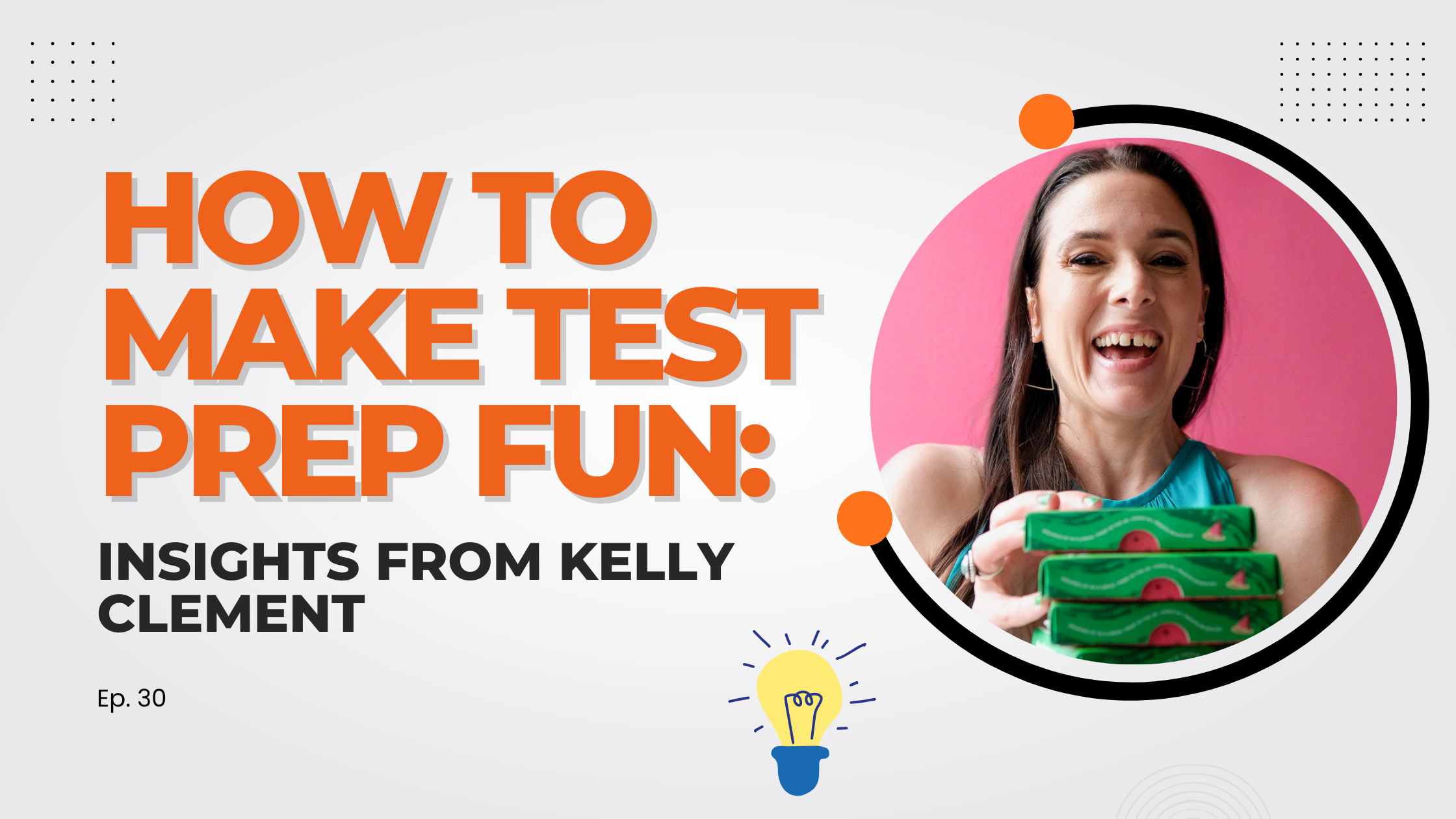
Welcome to another insightful episode of Toy Business Unboxed, the podcast where we dive into the marvels of the toy industry. This episode promises to illuminate the minds of aspiring toy makers and educators alike. In this episode, we sit down with Kelly Clement, an inspiring educator and entrepreneur who is revolutionizing test prep for younger students through her award-winning product, Watermelon Math.
Episode Highlight
- 00:00 Introduction to Toy Business Unboxed
- 00:43 Meet Kelly: Educator and Entrepreneur
- 02:37 Challenges in Test Prep for Younger Students
- 06:10 Comparing Education Systems: UK vs. US
- 10:29 Introducing Watermelon Math: A Creative Approach to Test Prep
- 14:54 Designing and Developing Educational Products
- 26:11 The Importance of Networking in the Toy Industry
- 31:28 Conclusion and Final Thoughts
Meet Kelly Clement: An Educator Turned Toy Innovatorical School
Kelly Clement has dedicated her career to the education sector. Initially a classroom teacher, she transitioned into test prep, focusing on private school admissions exams for younger students. Her journey took her from a middle school classroom in the U.S. to the bustling streets of London, where she specialized in preparing students for standardized tests. Along the way, she launched Watermelon Math, a product designed to help children ages 9-13 feel more confident as they prepare for these competitive exams.
The Unique Challenges of Test Prep for Younger Students
Standardized tests can be a source of significant anxiety, especially for younger students. Kelly shares that these exams not only test academic skills but also impact a child’s identity and confidence. The pressure can be immense, affecting how children perceive their academic abilities. Kelly’s mission is to alleviate this pressure by creating tools and resources that make learning a more enjoyable and less stressful experience.
Comparing Education Systems: The U.S. vs. The U.K
Drawing from her experience in both American and British education systems, Kelly highlights the differences. She notes that while the British system is more test-focused, there’s a greater emphasis on holistic student development in the U.S. This comparison sheds light on the varying educational priorities and how they impact student learning and development.
Introducing Watermelon Math: A Blend of Design and Education
Watermelon Math is more than just a set of flashcards; it’s a thoughtfully designed educational tool. Kelly explains the meticulous design process, emphasizing the importance of aesthetics in making learning engaging. By creating visually appealing and tactilely satisfying flashcards, she aims to make studying a pleasant experience, enhancing memory retention through positive sensory associations.
Innovative Future Plans
Jason suggests incorporating interactive elements like QR codes and turning Watermelon Math into a trivia game, adding layers of engagement and interactivity. Kelly appreciates these ideas and shares her vision for further enhancing her product, acknowledging that such features would indeed make learning more playful and effective.
Behind the Scenes: The Journey of Product Development
Creating Watermelon Math was no easy feat. From hiring illustrators and graphic designers to perfecting the packaging, Kelly’s journey underscores the complexities of bringing an educational product to market. She stresses the importance of networking and learning from industry experts, which was crucial in overcoming the hurdles she faced.
The Role of LinkedIn in Professional Growth
LinkedIn has been an invaluable platform for Kelly, helping her connect with professionals in the toy industry and gain insights into various aspects of product development and marketing. Through active engagement, she’s built a supportive community that has been instrumental in her entrepreneurial journey.
Community Feedback and Success Stories
Despite being relatively new, Watermelon Math has received positive feedback from students and teachers. Kelly shares heartwarming stories of children enjoying the flashcards and educators incorporating them into their lessons, validating the product’s effectiveness and appeal.
Conclusion
As we conclude, Kelly offers invaluable advice to those entering the toy industry: network extensively. Building a robust network is not only crucial for learning and growth but also provides the much-needed support and camaraderie essential for entrepreneurial success.
For those interested in learning more about Kelly’s ventures, you can find her on LinkedIn under Kelly Clement or visit her website at http://www.mindeducation.com. She’s also active on Instagram @mindeducation.
To stay updated with the latest episodes of Toy Business Unboxed and embark on your own journey into the toy business, don’t forget to subscribe and follow the podcast. If you found this episode insightful, please leave a rating and review, and share the podcast with fellow toy enthusiasts. Let’s embrace the world of toys together, staying curious and continuing to innovate.
Transcript
EP030_06-12-24_Kelly Clement
Intro: [00:00:00] Welcome to Toy Business Unboxed, your gateway to the secrets of the toy industry. Here, Jason Hsieh, a toy entrepreneur and expert in the field. “Every product we develop is really inspired by some of the real life experience that we have with our son.” “60 percent of all toys last year were sold on Amazon.”
“Be passionate about it. Because it’s a road. It’s a journey.” “Like when you have an idea that you think is gonna somewhat change the world, make things better, I’d say go for it.“
Jason Hsieh: Hi, welcome back to Toy Business Unboxed. This is another episode. I’m your host, Jason Hsieh. And today I’m thrilled to have Kelly, an inspiring educator and entrepreneur, dedicated to reimagining test prep for younger student and she also own the reward winning product called [00:01:00] watermelon mass which is designed to help kids age nine to 13 to feel calmer and more confident as they prepare for the private school administration exam.
And thank you so much for joining us on the podcast today.
Kelly Clement: Thank you for having me. And I, love that intro music. It was connecting me with my inner 80s and 90s, music fan.
Jason Hsieh: Okay. Yeah. This is version one. We’re working on a second.
Kelly Clement: I like it. No, I like it.
Jason Hsieh: Can you tell the audience and our listener a little bit about your background and what inspire you to focusing on helping younger student with test prep?
Kelly Clement: Yes, thank you. And thank you for having me, Jason. So I have been an educator for my entire career. This is chapter two of the career. So firstly, I was a regular classroom teacher for middle school, for the first 12 years of my career. And then I moved to London in 2011 and that’s where I pivoted [00:02:00] into specializing in test prep. I specialize in private school admissions exams for the younger set of students. So most people, when they think about test prep, they think about SAT, ACT, maybe GRE. These are very popular, very big exams. But the exams that I work with are similar standardized exams, but for younger students. So my students are applying to middle schools and high schools at the competitive level. So I started specializing in that in 2011. And then I’ve been doing that ever since. And then last year I just launched my first product, which we’ll talk about and that’s where we are.
Jason Hsieh: What challenge do you typically see for kids in that age group when they are trying to prepare for the test? I can imagine maybe anxiety is one of them.
Kelly Clement: Yes. I don’t think standardized tests falls on anyone’s list of like things they like doing. There’s a few people. But for the most part, most people put standardized tests on the not like list. And then especially [00:03:00] as you get even younger, students nine, 10, 11 they’re developmentally so very different from high school students who are preparing for college admissions exams. So there’s still kids, really and this is a, lot of pressure and a lot of, as you were saying, a lot of anxiety and it comes at a time where they’re still trying to figure out who they are academically. They’re trying to figure out their strengths, they’re trying to figure out their weaknesses, they’re trying to figure out. Am I as smart as my big brother? Am I as smart as my big sister? Where do I fall in class? And so these exams come at a potentially harmful time for them because it can really affect their, identity and their confidence as a student. This is why it is my total honor and privilege to dedicate myself to this. Because I want to make the experience as painless as possible and also like empowering and actually give them something to think wait, I can do this. That’s why I’m committed to it.
Jason Hsieh: Actually I can relate to that quite a bit because I’m from Asia. I’m from Taiwan and my wife [00:04:00] In Asian country, every single thing is a test. Every single middle school, high school is all tests. There’s no such thing as free pass. Every single high school, you need to take a test. My personal experience when I was 15, I took the entry level exam for the high school. It’s called Songshan High School, which is ranked number nine in the entire school system in, I think Taipei, where I was from. However, it wasn’t good enough for my parents. As an Asian parent, it’s either you are in top three or you are a failure. I got sent overseas to study abroad. In Canada, that’s my childhood. So I actually have quite a bit of trauma around me being a failure as a student. And I feel like my parents I don’t know if I can share that openly on the podcast, is, I feel like I got abandoned. Because I wasn’t good enough on the test and that was the only way for me to validate myself as a kid. I only got into [00:05:00] number nine instead of top three and I feel like a lot of my confidence and self esteem, was almost destroyed because I didn’t do a very good job on test that and unfortunately that is so common in Asia. That’s just so, common. It’s almost heartbreaking for me to see that and also experience that myself firsthand as a kid back then. That was many years ago, but I still have a little bit of trauma. Maybe I need to do some more therapy about it.
Kelly Clement: Of course. No and that’s very as you say, it’s very common in Asia, but it’s a very common reaction. It’s very natural. And that’s part of why I want to try as much as I To soften the experience because I, can’t change the larger system. The system exists as it is. And as we know, as adults you can look back on those experiences that test didn’t mean all that much. Look you’re growing up to be a very successful,
Jason Hsieh: that’s all you have. That’s that entire, like being almost.
Kelly Clement: It’s hard to see beyond that and know [00:06:00] to be a successful business person or entrepreneur or whatever you’re going to be. There’s such a bright light and such a bright future ahead of. All of my students, no matter how they’re going to do on this exam.
Jason Hsieh: Can you also share with the audience, what is your experience comparing the UK education system versus the US?
Kelly Clement: Yes, I was working at the American school in London when I was there for the first year and so my experience in London was still in the American system, however, I had students coming from the British system and I was working with them one on one. And I could see that the systems are very different. As someone who is educated in the American system and someone who was has been a teacher in the American system when you go to another country that has the same language, you can’t imagine how many differences there will be. I think when you go to a country that seems very different language, different culture sometimes the differences seem very obvious at the outset. But yes, for England in the us it would seem we’re pretty similar. The differences [00:07:00] honestly I was there for 10 years and I was still being blown away by. All the differences even on a weekly basis, there were still things that were surprising me. Wow, we are so different. And I think one of the things, and of course, this is just from my perspective, it could be not totally right, but I feel like the the British system is actually a lot more test focused than the American system.
Jason Hsieh: Oh, really? Okay, I didn’t know that.
Kelly Clement: The Asian system. It’s a more traditional kind of system that’s just culturally that tracks.
Jason Hsieh: I have a question to ask you on that. Yeah. So it’s very, common in Asia. Every single kid go to cram school after regular school. In my experience, when I was in middle school, I’ll go to school from 9 to 5, then from 6 to 10, or 6 to 9, I go to a second cram school to study for the test. Every single day, and on the weekend too. That’s a norm in Asia. How about in UK?
Kelly Clement: No, not to that extent. I [00:08:00] feel as you maybe as you move further east in the globe, it gets more intense. Ending with Asia. I think the UK is somewhere in the middle of those two points between us and you and Asia. But, students are very there’s this emphasis on taking on a lot of information memorizing a lot of content and being responsible and being held accountable for large amounts of content. Whereas from my perspective as an American, having been in the American system for most of my career, it does feel like we have less of an emphasis on just a bunch of content and more of an emphasis on, thinking and innovating, honestly, like that’s just the american ethos, like that’s how we’re built as a country, we’re always trying to change things and always looking ahead and always innovating. And so that comes through in our education system as well. There’s a lot of tradition that’s very valued and respected and revered in the British culture. And that comes through in the education system as well.
I feel like there is a little bit more of a [00:09:00] forgiveness, for a whole student in the U. S. System. Obviously this is going to change from place to place, from state to state, school to school, private public. We have so many variations. But at least in the schools that I’ve taught in and in the schools that I mostly have experience with, it’s more the kind of thing where, okay, if the student isn’t exactly meeting the standards or meeting the needs or meeting the expectations, there’s still room for that student to have success. Because there are other ways that we can find success and meet the student where he or she is.
Jason Hsieh: One of the examples I can think of is one thing we don’t have in Asia that we have here in the U. S. is the community college system, which you can go two years and transfer back to a regular university. When I first heard of that, I was like, whoa, that’s cool. That’s pretty impressive, actually, to almost give people a second chance that couldn’t get into the university through the regular SAT or the regular administration system. A second chance to go to a company college, two years, study, then transfer to a regular college. That’s [00:10:00] not even an option in Asia.
Kelly Clement: Yes. And also it gives people an option to figure out what they want to do because honestly, this is so early in our lives to make a decision about what we’re going to do, what we’re going to study.
Jason Hsieh: Is that also a system in UK like that?
Kelly Clement: No, not that I know of, but I don’t know for sure because the students that I was working with tend to be younger, so I don’t quite follow them all the way up to that point in their education, but I don’t. I think so, because it seems like they’re choosing their specializations even earlier than we do in the American system.
Jason Hsieh: I want to transition the next part of the interview to talk a little bit about the product that you created. And I know your product emphasized on creativity and design and also trying to be educational and help the kids with the test prep that you’re focusing on and I think you have the product with you, too. Will you mind sharing your product and go through your design process?
Kelly Clement: This is watermelon math. It’s a deck of flashcards. And most math flashcards deal with math. Math facts, this is math vocabulary. [00:11:00] The cards have been designed with design in mind, with colors and fonts and I’ve been very thoughtful about those. those choices because this is how I got into the toy industry, the toy space. When product designers are creating toys, obviously they’re thinking about all the aesthetics, right? Because the kid’s going to play with a toy when it’s appealing for various reasons. When it’s nice to look at, when it’s nice to touch maybe it will have sounds or whatever my flashcards don’t, but it has to appeal to the senses. That’s what I wanted to do with the product. I wanted it to appeal to the senses because when you are connecting what you’re studying with a pleasant experience, you’re more likely to remember what you’re studying when you’re connecting while you’re studying with some sort of senses. So when you’re seeing color, when you’re when you’re looking at something and you’re feeling a little bit of emotion because it’s cheerful, you’re more likely to remember things. So that’s what I did. I just designed these [00:12:00] vocabulary, math vocabulary cards. With those ideas in mind.
Jason Hsieh: You consider to add like maybe a QR code component to each car so people can scan it and watch a YouTube video that kind of explain each of the concept in depth?
Kelly Clement: That would be a great idea. That would take a lot of work.
Jason Hsieh: Yeah, it’s a lot of work.
Kelly Clement: Maybe that’s on the road map.
Jason Hsieh: It’s just making the internet, I guess the user experience even more interactive and more like playful because the last thing you can think of is, playful when you’re studying for a test.
Kelly Clement: Exactly. Yeah. Exactly. That’s a great idea. I have in my second print run, I do have a QR code coming up for the deck just to give some more ideas for ways to use the deck. But maybe in round three there’ll be some individual QR codes with some interactive
Jason Hsieh: Have you ever considered to turn it into a trivia game, which you can battle with your friend? It’s trivia game, it’s like question one and everyone need to race to answer the questions and they get points. So it’s like a [00:13:00] competitive flash card game that’s educational and designed for test prep.
Kelly Clement: I love that. That would just be leveraging the power of connection. And that would that would be very motivating for kids as well. That’s a great idea.
Jason Hsieh: Can you explain this test that this car is specializing in because before I met you, I haven’t, I never heard of that test.
Kelly Clement: Yes that’s very normal. So there are private middle schools and high schools in the U. S. Obviously, and there are loads of them, but some of them are more competitive than others. And so it’s really just this most competitive level of middle and high schools that require a particular exam called the I. S. E. which stands for the independent school entrance exam, and that exam is typically most, the schools can determine at what age level they require it. But for the most part, it’s for kids applying to grade 5th. And above. Sometimes upper elementary in some schools, sometimes middle school and other schools. So kids applying to 5th grade are currently in 4th grade so they’re [00:14:00] 9. And they’re working to this exam.
Jason Hsieh: What does this test consist of besides math?
Kelly Clement: There’s a verbal reasoning section, and there’s a reading com, a reading comprehension section, an essay, and then there’s two math sections. It’s pretty intense. It’s like a two, two and a half hour exam. It is not. Not a little game.
Jason Hsieh: It’s pretty much almost like a mini SAT.
Kelly Clement: It is. Yeah.
Jason Hsieh: Okay. And is the test multiple choice or is it?
Kelly Clement: It’s multiple choice.
Jason Hsieh: You also need to write the essay out as well?
Kelly Clement: There is an essay, and it’s a 30 minute essay at the end of the multiple choice portions. And yeah, hopefully down the line, I’ll have some materials for that as well, because there’s not a lot of resources because the exam is so so specific and there’s not nearly as many students across the country doing this versus the SAT or the ACT. There just isn’t the breadth of materials for it. That’s why it’s something I want.
Jason Hsieh: How do you come up with the design and can you walk us through it?
Kelly Clement: For a long [00:15:00] time I had the ideas in my head. I have zero talent when it comes to drawing, or when it comes to, absolutely none. My brain is very visual, and I can see the things, but I have no talent to communicate it from my brain to the paper. I guess we just can’t be good at everything. So for a couple of years I was thinking about it, like, how am I even going to pull this off? Where do I even start? As entrepreneurs, we see these big projects and we think, I don’t even know where to start. I decided finally to, just start looking on LinkedIn and start adding a bunch of people on LinkedIn and various industries like design people, illustrators. Just all kinds of things I had to do with the toy industry and had to do with game production I just started adding a bunch of people on LinkedIn just so I could start learning about it so I could see what they were posting and You know how it is like one thing just leads to another and another So I was adding in illustrators and then finally I just reached out to a couple and I reached out to a few illustrators and said, Oh, I have this small project in mind. And one of the illustrators, she and I talked [00:16:00] and it seemed like a good fit and I’ve stuck with her since the beginning. She has been amazing. Her name is Juliana and. She just she is that person who can take the ideas from my head to the paper. And so the design process has been very collaborative. I explain to her a lot about what I’m hoping to see. And and she gives me her draft and we tweak it. We go back and forth. I also have a designer. So she was the illustrator. And And she did the, illustrations on the cards. She also did the, back. So we talked through the kind of text we were going to use and the colors, because all of that, like I say, is intentional. So we can help students remember certain things. But then I also had a graphic designer helped me with the package design.
Jason Hsieh: I love your packaging!
Kelly Clement: This is the thing I didn’t realize how much time and how much effort this was going to take. And this, honestly, thank you so much for that compliment, Jason. This is the product of so much work. So much work because this is actually box number three. This is the third version of the [00:17:00] box. The first version of the box, it was because I was trying to launch quickly. I was trying to launch at like a, good season for my business. And so the box initially was a little bit of an afterthought. I had the product ready to go and the box was something we just threw together and it didn’t have a lot of intentionality behind it. And I had a little fortuitous event. So basically, I sent them off to print and my printer is in the UK and they’re marvelous. They’re fabulous. I was in the UK.
Jason Hsieh: I saw you was manufacturing in China. I didn’t know
Kelly Clement: it’s manufacturing in the UK. And so I love everything about my printer. They’re doing a fabulous job, but the first run with box number one had a fault with the glue. It was the, box actually was a totally different box. This is a as you can see, this is a two part box. If you know your, box styles, the first box was a tuck box. Where it has the little like a deck of cards. You [00:18:00] know how it has a top that sort of folds into itself?
Jason Hsieh: yeah Yeah, Like the poker deck.
Kelly Clement: Yeah, yeah, exactly. Like a poker deck. Yeah, So that The name for that kind of box is a tuck box. So a tuck box is a less expensive box than a two part box.
Jason Hsieh: Why do you switch the box then?
Kelly Clement: Because the tuck box. The first box, which was a tuck box, it had a glue issue. So I didn’t necessarily have to switch the structure of the box, but because the boxes fell apart, because there was a glue failure, I had to redo, I couldn’t sell my first set of product, but I didn’t have time at that point in my year because this is one part of my business, so I didn’t have time to redo the entire box, at that time. So I had to just pause the entire product and then When I paused it, I thought, you know what, actually the box is lame anyway. It’s lame.
Because I realized that I was very excited about the product. And when I wanted to share it with friends and show it on [00:19:00] social media, I realized I really wasn’t excited about the box. I was actually embarrassed about the box. So then I took the time to redo the structure. Honestly, I hired a box engineer, didn’t know that was a thing. Hired a box engineer. We went through all different box structures and we landed on this two part box and I love the two part box. And then I hired a designer to take me through different versions of the graphic design. So basically it was a team of people coming around for this box. Cause we have the structure of the box with for one person and the design of the box for another person. Then of course, Juliana is my illustrator. So she did the illustration. So A lot of work went into this box.
Jason Hsieh: I know I can tell. I can tell it’s very unique, very eye catching, and I like the graphic, and the icon, the award, and everything. Yeah, I will actually, and that’s actually a case study I want to do with my team. We also have a Rinkhouse graphic designer, but our packaging is nowhere as good as yours. [00:20:00] So
Kelly Clement: thank you. No, it was it’s been a labor of love and I’ve learned a lot about it. And now I’m just obsessed. I’m always looking at boxes.
Jason Hsieh: That’s funny. That’s really funny. Actually, that’s a good transition to my next question, because especially for the retail store where the packaging is critical for first impression, when you design the box, what are some of the major elements that you included in your design?
Kelly Clement: Yeah, good question. Actually, I’m sure you’re aware of a Jal Wade the, toy coach. Yes. So I actually, I did her I did her course. With toy creators Academy. I did her course a couple of years ago for this purpose because I knew nothing about product design and one of the things that she had recommended to me, because in my initial box design, I had, actually watermelon mouth, wasn’t the initial name. The initial name was Memorable Math, which is not that memorable. So initially the box was very lame and it had a very lame name and a [00:21:00] very lame design. But I also had the name lower on the box and Angel had given me the guidance to make sure that the name was higher on the box because for shelf placement. There’s still some debate about what to do with these award labels because actually a gel had a podcast episode about, the tension between whether you should post your award seals on the box because you want to display them? Of course. But they also are somewhat interrupting the design. Oh. So I, I don’t know that I have made the right choice with my award sales, but I obviously I’ve got them, so I’m, proud to display them. I think there’s just so much information that you wanna have on the cover. So there’s a lot to juggle because you’ve got your, logo, obviously. I’ve got my logo here on the corner,
Jason Hsieh: and I know this, it’s very shiny. Is it, I is it different material around
Kelly Clement: Oh at the moment, because this is just my first print run, when I printed the box, I hadn’t yet secured the awards. And the awards are stickers at the moment.
Jason Hsieh: Oh, it’s not part of the printing, okay.
Kelly Clement: It’s not part of the [00:22:00] actual package. At the moment, I have literally put stickers. It’s each individual sticker on all of my boxes. One at a time. I had, this award first. I had one award first, and then the second, and then the third. The next print run will have the, awards, It’s just printed on here, so they won’t be shiny. It’s really nice to have them shiny.
Jason Hsieh: How do you design it to be shiny as part of the packaging design itself?
Kelly Clement: You know, it’s an interesting question. I don’t know that it would be possible to get it that shiny in the in the print run itself.
Jason Hsieh: There might be a way you just need to pay more for the
Kelly Clement: obviously would be. Yeah. It would obviously be expensive to do that.
Jason Hsieh: So
Kelly Clement: I don’t know. Yeah. Yeah.
Jason Hsieh: Also beside the product, you also have another business. Can you tell the, listen a little bit about your tutoring business?
Kelly Clement: Yeah. The main business is my service business and it’s me just working one on one with students doing the test prep, as we mentioned. That has been my business for over a decade. And so this product business is now just a part of my business and a smaller part of my business, to [00:23:00] be honest. But the service business is just one on one working with students. I also, I do the diagnostics. So when I first meet with a student I see where they are relative to the test and then I come up with a program that’s going to work for them. And so that is that is the, 80 to 90 percent of my time, of the business is that. And then I, get to spend 10 to 20 percent of my time creating products, marketing.
Jason Hsieh: You also send a card to all your students so they can use it while you’re doing tutoring with them?
Kelly Clement: Yes. So if they are at the right level for the product. So some of my students are a little bit older. So I would say maybe a third of my students are taking the exam. The level for this particular product. So yeah, if they’re at that level, certainly they have it. And and it’s very fun for me to use that and then sometimes I’ll tell them that I created it and usually they’re very surprised because they don’t see me as someone who could create something because it looks it looks professional, it doesn’t look like just some random person on the other side of the camera. [00:24:00] Made it in their spare time. So often it’s quite cute. My kids are like, what? You made this?
Jason Hsieh: Can you also share some of the success, a story, or feedback that you got from student or parent who have used the watermelon mask so far?
Kelly Clement: I have only just launched a little over six months ago. So it’s still, it’s early days. But it’s I can see when my students use it, they like I said, everything was very intentional. So I was intentional about the texture of the cards so they even just feel nice. And yeah, they’re just they’re very friendly and cheerful. And so this is an item that my students don’t feel stressed about and that’s really just my intention. So they, enjoy engaging with them. And sometimes when I’m on a call with a kid, I’ll say, okay find the find the mean, median and mode cards in your deck and then they’ll go searching for those and they’ll find them. And then sometimes they’re like. Still going through the deck. I’m like no. Come back to me. I’ve lost them. Cause they’re just like, Oh, I know this one. [00:25:00] Oh, it’s very it’s encouraging for me to see that sometimes they want to engage with them more than what I’m asking them because that feels like a mode of success. I see. I see. And then I have had teachers use them in their classrooms. So I had it’s like I say, teachers are starting to trickle in with their experiences. I had one teacher. Play the game of Taboo. You know the game of Taboo?
Jason Hsieh: No, what is the rule?
Kelly Clement: Oh, so the game of Taboo is where you have a, you have to get your partner to say a word, but there’s certain words you can’t say in order to get them to say it. So say for example, I’m trying to get you to say birthday. But I can’t say cake or, candles or party. There’s like certain words that you would all would say when trying to tell someone the word birthday. And so there’s certain words you cannot say, and those are the taboo words and so I had a teacher play the game of taboo using my cards with math vocabulary. So she was trying to [00:26:00] get her students to say the vocabulary to each other without using like very obvious words. And so I’ve just some other tutors and teachers have sent me pictures of them using them in lessons. So it’s very cool. It’s a delight to see that.
Jason Hsieh: Can you also share about your experience utilizing LinkedIn to not only build your professional network, but also promote your product as well?
Kelly Clement: Honestly, for me, LinkedIn has just been an absolute joy. I had said earlier, when I was dipping my toes into the toy industry initially, because I’m an educator, so I don’t I don’t have any experience in the toy industry. So this is how I started learning about the toy industry. as I said, I just started getting adding people adding designers, adding illustrators, I was adding children’s authors marketing people, just adding all sorts of people so I could learn the entire industry around developing and marketing a product. I, do post on LinkedIn and I feel like I have a community, which is wonderful. And so that’s motivating to me because I feel like there’s [00:27:00] people that I’ve been following for a while and I’m seeing their updates and their progress and the things that they’re, they’ve got going on. And I’m genuinely excited to watch you and everyone else and their successes. And I think there’s people who are active on LinkedIn have that that mentality where we come in and cheer each other on and I feel like it’s more there than on other platforms to me. It doesn’t feel as
Jason Hsieh: I just got back from Astra. And I was posting every single day while I was in Astra because they’re just showing pictures, showing video with me and people and just making a bigger or stronger connection with the people in the toy industry because almost everyone go to Astra. So that’s a lot of people I know on LinkedIn. It’s my first time meeting them in person. Exactly. So that really also helped by making a connection on LinkedIn first, then you meet them in person later. There was one of the guests I had his name is Phil. He was one of my guests. I didn’t realize how tall he was until I met him in person. You don’t know that until you meet them in person. [00:28:00] Because just if you, even if we’re meeting on camera right now, I don’t know how tall you are. I don’t know. I can guess. It’s very different when you meet them in person. So that’s also one thing I like about LinkedIn is to start getting to know the person before you meet them in person. So when you meet them in person, it’s almost like You feel like you have known them for a while.
Kelly Clement: I was following that on LinkedIn and just like you and lots of other connections that I have on LinkedIn. Just watching all of your posts from Astra has been good for me. Cause it’s Oh, I didn’t get to go, but I got to see what it was like.
Jason Hsieh: So next year you’ll have a lot of fun. It
Kelly Clement: looks like it was great. Yeah.
Jason Hsieh: Every single night. I was so exhausted after I got back home, but I was there for a week. And I also attended a certified play expert, which I highly recommend if you haven’t take that course yet.
Kelly Clement: I looked at it and I was just about to ask you if you attended that as well.
Jason Hsieh: Yes, I did.
Kelly Clement: I did look into that. Was it a one day or two?
Jason Hsieh: Two, two day, two day in person, two day. So me and my sister, which my sister is our marketing director [00:29:00] in the company. So me and my sister both attended. It was very, you talk about child development, talk about the power of play, talk about I describe it as a college class without a beer.
Kelly Clement: I’m sure that was really good. I, it’s on my list of things that I’d like to do. So, hopefully about how many people were in the, just curious, how many about
Jason Hsieh: 30 or 40 of us, and there’s two instructors and it’s not just one way instruction is also interactive. We’re doing like, like team discussions. exercise and some interactive things and brainstorm on what kind of toy will, it’s also like scenario studies. Okay, this is a kid. This is what the problem is. This is what the parent wants. What is a toy you’ll recommend to the parent in that scenario? So there was also like some scenario playing, which is pretty cool pretty interesting for me as a, manufacturer designing toys to look at it from the other aspect. There’s also [00:30:00] retailer that’s also attending as well. So you also get to meet other like retail store owner or a lot of retail store staff that’s attending as well.
Kelly Clement: It’s very interesting to me because there are actually a lot of things in common between test prep. When you’re playing a game, like there’s a lot of similar elements when you’re playing a game you’re getting better and better at it. You’re working towards a particular outcome but there’s not a lot of pressure in a game, which is why playing a game is fun and taking tests is not as fun. I would actually really enjoy that course because I would like to think more about. What makes a game? If I’m thinking about what makes a game and all of the elements of that, then I can infuse more of those elements into the game of chess prep.
Jason Hsieh: And I think as part of the course, you also talk about so the pl it also release different happy hormones. Dopamines, oxytocin and serotonin and end dolphin. That’s [00:31:00] do, those DOSE. And those are the four Happy. Chemical, the kids can and not just kids, the adults have those too. So it really helps them to study even better when you are happy instead of stressed out and going to cry and couldn’t remember anything when you are in that kind of mental stage. So making it fun is definitely a key, and that’s what the course is talking about. What is the power of play, pretty much, that’s the main theme.
Kelly Clement: Yeah, I look forward to that as well.
Jason Hsieh: Wrapping up today’s interview, and thank you so much for sharing all the story. One question I ask every single guest on the podcast is, if you had to share just one piece of advice with someone that’s getting started in the toy industry, what would that be?
Kelly Clement: I’m tempted. I’ve got two that spring to mind. Probably would say networking, I would say just start networking. I think I’ve listened to loads of podcasts about people in the toy industry. And I think most people will say the toy industry is a very friendly space and a lot of us are entrepreneurs, so we’re [00:32:00] learning as we go. Leaning into the power of our networks is it’s essential because it helps us so much, but it’s also essential from a morale perspective because it’s just so good to feel like you have support and people doing similar things. So I think without, a network as a solo entrepreneur I think I would still be in the idea phase.
Jason Hsieh: Yeah, And jumping on that, are you part of women in toy?
Kelly Clement: Yes, I am. Okay.
Jason Hsieh: They also have a wonderful network, and I interviewed the chairwoman a couple weeks ago on my podcast, too. That will be a good episode.
Kelly Clement: Has it been published?
Jason Hsieh: Not yet. Okay, alright, I’ll look out for it. But that’s another good example of networking because that’s what women in toys do. They, my sister is part of that organization. I talked to the chairwoman. I want to apply to be a mentor. For the organization as well, just do some free consulting and just sharing some of my experience as well in the toy industry since I also I’m in this, I was doing this since [00:33:00] 2016, actually, so eight years now. So I’ve been quite a bit of up and down in different experiences, obviously. So, thank you so much for being on the podcast. Where can people find you?
Kelly Clement: Thank you, Jason. This has been so much fun. Thank you for having me. So I am on LinkedIn. That’s my favorite place to be. My name is Kelly Clement, C L E M E N T. You can look for me by Kelly Clement, watermelon math. That’s probably the easiest way to find me. My website and my company is called mind education. So I’m at http://www.mindeducation.com. And I’m also on Instagram at the same handle mind education. So those are the places to find me.
Jason Hsieh: Okay. I will make sure we include that in the show note and for the listener that’s listening, you can also watch the video version of today’s interview on our YouTube channel at Toy Launch. And thank you so much for sharing your experience and sharing your story. And I love the thing you’re doing for the kids and try to make the boring test prep more fun.
Kelly Clement: Thank you, Jason. Have a great day.
Outro: You’ve been listening to Toy [00:34:00] Business Unboxed, hosted by Jason Hsieh. Thank you for joining us and exploring the fascinating world of toys and the ingenuity behind them.
To stay updated with the latest episodes and continue your journey into the toy business, remember to subscribe and follow us. If you found today’s episode insightful, please leave a rating and review and share this podcast with others who share your passion for toys. Until next time, stay curious and keep innovating.