
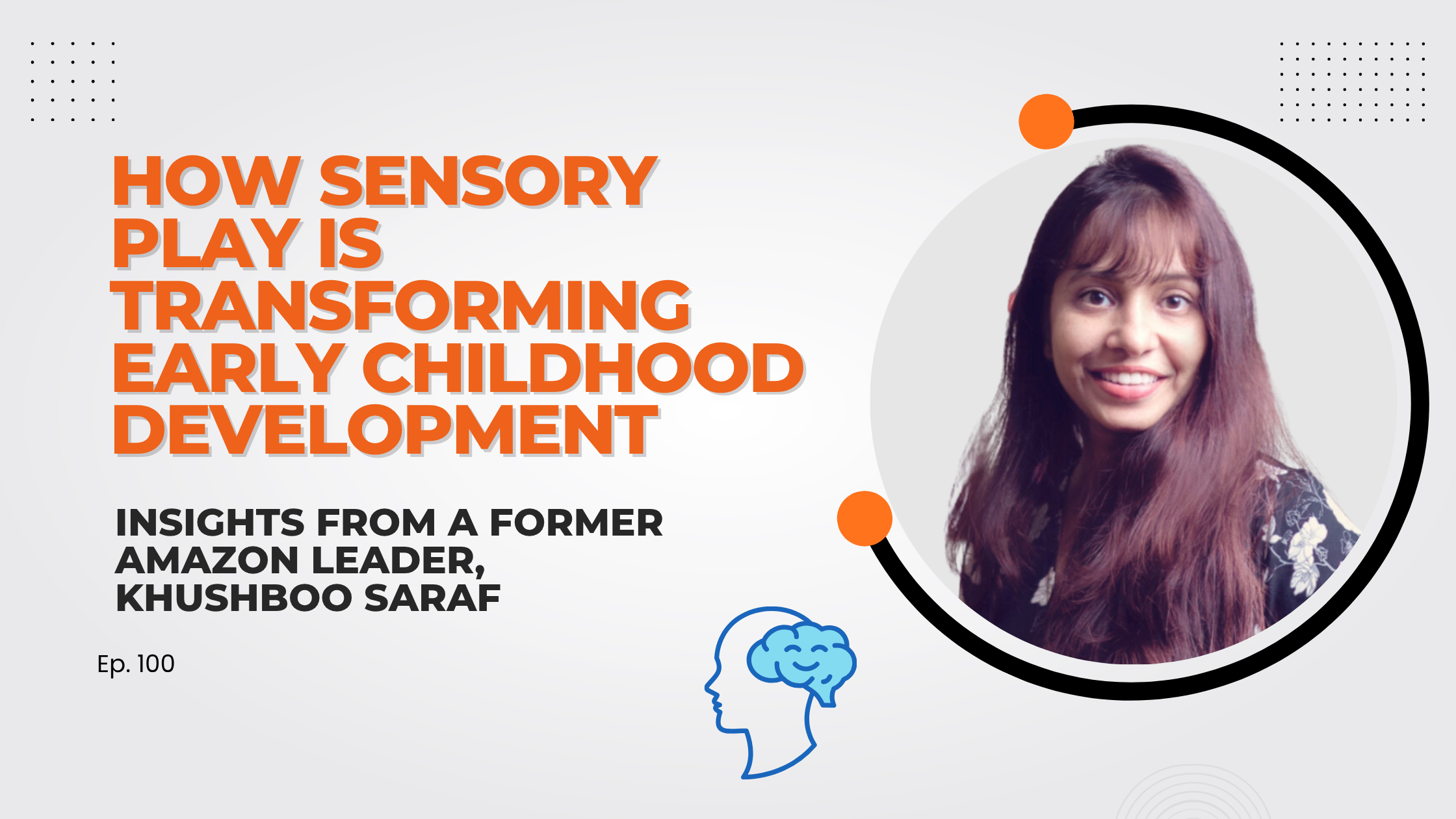
Are you curious about innovative toys that support emotional regulation and brain development in children? This episode of Toy Business Unboxed explores how a former Amazon leader turned entrepreneur is shaping the future of sensory toys, driven by personal purpose and market needs. You’ll discover how sensory play can impact neurodivergent children, the journey of scaling a purpose-driven business, and practical insights for entrepreneurs in the toy industry.
Episode Highlight
- 00:00 Kushboo’s Journey into Sensory Play
- 04:18 Challenges of Entrepreneurship
- 07:59 Navigating Tariffs and Market Uncertainty
- 10:16 Showcasing LaTulian’s Products
- 15:03 Customer Feedback and Team Structure
- 18:05 Emotional Regulation through Sensory Play
- 20:18 Differentiating LaTulian’s Products
- 23:03 Future Vision for LaTulian
- 24:57 Advice for Aspiring Toy Entrepreneurs
The Power of Sensory Toys in Emotional Regulation
Children, especially those with neurodivergent needs like autism or ADHD, often struggle with overstimulation or understimulation. Sensory toys—like taste-safe clay, rice kits, or natural paints—serve as emotional “toolkits.” They help children release tension, focus, and self-regulate. As Khushboo explains, repetitive sensory actions stimulate the parasympathetic nervous system, which calms the body and reduces stress hormones such as cortisol.
Designing Differentiated Sensory Products for a Global Market
Khushboo emphasizes that her company’s products stand out by being open-ended, screen-free, and taste-safe. Unlike many mainstream toys that are flashy or app-based, her sensory toys encourage limitless creativity—kids can shape, form, and explore in multiple ways. She highlights that her products are crafted from food-grade ingredients, ensuring safety even if children chew or ingest small parts.
Scaling Purpose-Driven Business in a Low-Margin Industry
Starting small, Khushboo began her journey by making sensory toys for her child on weekends, sharing her creations via Instagram. Gradually, she transitioned from a garage startup to a full-fledged company with 15 team members, primarily based in India. Her experience echoes many entrepreneurs who begin part-time, balancing risk and passion.
Key Lessons from the Entrepreneurial Journey
- Purpose fuels perseverance: When your work is driven by a mission, it sustains you through tough times.
- Start small, think big: Iterative growth, paired with a clear vision, leads to scalable impact.
- Build strong processes: Managing remote teams and supply chains requires disciplined workflows—something Khushboo emphasizes as essential.
- Innovate for emotional health: Sensory toys are not just developmental tools but also therapeutic aids, especially important post-pandemic.
Future of Sensory Play: Mainstream Acceptance and Global Impact
Khushboo envisions sensory play transitioning into mainstream childhood routines worldwide. Her company aims to introduce more products into markets like the US, where sensory tools are increasingly recognized as essential for supporting mental health and emotional well-being.
Practical Advice for Aspiring Toy Entrepreneurs
Khushboo’s guiding principle: “Do it with passion and purpose, not just for the product.” Passion sustains effort during setbacks, and purpose keeps you aligned with real market needs.
Conclusion
Sensory toys are more than entertainment; they are essential tools for emotional regulation and early brain development. Purpose-driven entrepreneurship can lead to impactful innovation, especially in underserved markets. Building scalable processes, managing remote teams, and maintaining focus on safety and engagement are vital for growth. The future of toys lies in supporting mental health, emotional resilience, and inclusive development through purposeful design.
To stay updated with the latest episodes of Toy Business Unboxed and embark on your own journey into the toy business, don’t forget to subscribe and follow the podcast. If you found this episode insightful, please leave a rating and review, and share the podcast with fellow toy enthusiasts. Let’s embrace the world of toys together, staying curious and continuing to innovate.
Guest Contact Information
If you’re interested in learning more about Khushboo Saraf’s journey or connecting with her, you can reach out through the following channels:
- Website: lattooland.us and lattooland.com
- LinkedIn: Khushboo Saraf
Transcript
Jason Hsieh (00:43)
Welcome back to another episode of Toy Business Unboxed podcast. Today we’re joined by Kushboo. She is an engineer, MBA, and also a former Amazon leader. Now she’s a heart behind Lattooland a brand making sensory play safe, meaningful, and also magical. What really began as her mom’s, like her own search for better toy really turned into a mission driven company that’s impacting thousands of families across India and also US. Thank you so much for joining us on the podcast today.
Khushboo Saraf (01:11)
Thank you Jason for having me over.
Jason Hsieh (01:13)
So first of all, will you mind sharing your journey a little bit about like how this company all came around? The kind of just a quick story behind it and your journey so far.
Khushboo Saraf (01:22)
Sure, sure. So I was working in corporate, as I said, I was working with Amazon. So there’s something that I had not thought about it. So my child happened. And when he was young, just like any other parent, any other mother, right, I was looking for the right tools for my kid, for his brain development, for his right growth. And that is when I read about sensory science, sensory play. And I was looking for those sensory toys in India market. And I would see that whenever
I would give a sensory bin or anything like that to my kid. It would really help him focus. It would really help him calm down and he would sit there for hours. So it was literally the time of COVID where we were looking to engage kids without a screen and in a meaningful way. And that is where my search for sensory toys really started. Then I found that India toys, the India market didn’t have those many sensory toys. And when it came to taste safe options, were hardly any.
because kids have this inherent thing of putting everything into their mouth, especially at the young age. So that is where my quest really began and I started doing it for my own kid. Just like you know, a mother would just want to do anything for her child. That is what I did. So in the journey, I realized that I was filling a gap in the market and many parents came to me asking, can you do this for me as well?
That is when I took a conscious call that yes, there is a gap in the market and let me also serve more parents and help create the value around it. So I think everything connected together, motherhood literally helped me connect the dots in my life, like literally being in on my education, my corporate experience, and then the motherhood altogether, right? So that passion then finally became a purpose.
Jason Hsieh (03:04)
I see. Do you start out like part-time before you kind of scale, kind of walk us through your scaling process for the business? Because I know you have a bigger staff now after the years, but I’m pretty sure you you didn’t start out with like 15 people right out of the gate. So can you walk us through your journey so far on growing your
Khushboo Saraf (03:22)
So
I literally started, it was not a part time sort of thing, I would say. I used to do it for my kid when I was working for Amazon. And I used to just put it on Instagram that time. So many parents really liked the idea. They used to come to me. So on weekends, I would just oblige and kind of make something for them if they asked and send it to them. So it was very natural a flow.
And when I realized I was filling a gap in the market, that is where I literally started. So it started from a garage sort of thing, from where you went to one warehouse, second warehouse, and know, bigger warehouse and so on. So it didn’t start, yes, you’re right, didn’t start with a team of 15, it started literally with me as doing everything and slowly and gradually when one function I thought, you know, that is something I could outsource, I hired a person, then another function.
that I could outsource, I hired another person and that is how we grew the team right now to 15 members.
Jason Hsieh (04:18)
Yeah, because the reason why asked is because I went through a very similar journey myself, you know, when I first started PACK in 2016 is also I was doing it on the weekend, also by myself and, know, slowly and surely we are able to slowly grow the teams as well. So was a very similar journey and I can definitely relate to that. And one of the follow up questions I want to ask is like, has been the biggest challenge on growing this business so far?
Khushboo Saraf (04:43)
So I think mostly as an entrepreneurship, I think you would relate Jason. I felt it is a very lonely journey, especially when you start, right? So what I felt that, yes, on the outside, it may look very rosy. You’re getting the sales, you’re getting maybe media coverage, celebrities are buying, all those good things are happening. But at the same time, sometimes on the inside you feel you’re carrying the burden of the entire world on your shoulders.
Jason Hsieh (05:10)
Alone.
Khushboo Saraf (05:11)
So
that feeling, right? And that kind of becomes so overwhelming, especially when you are a parent. So as a mom, my guilt kind of layered that, listen, you know, am I doing enough for my child now that I have my own business? But at the same time, am I giving enough to the business as well? Am I doing justice for that? Because, you know, there’s this tug of war that keeps you mentally exhausted as to what is happening. Are you?
are you doing the right thing at the right time? So that I felt was quite something. In fact, it’s still something some days you do feel lonely. yeah, so this entrepreneurship is quite a lonely climb. When people see you from the top, only when you are near the top, you’re visible.
At the same time, you’re carrying the weight of the entire thing on your way up, which is not visible. So that invisible weight, right, that I felt was something that was the biggest challenge.
Jason Hsieh (06:08)
I can relate to that. think that’s a lot of like pressure and also like a lot of the friends or even family member around you. They never understand Whereas entrepreneurship is really about taking the risks, taking the challenge and it doesn’t always work. It’s not every single project is going to work. You’re taking a lot of risks at the same time. It’s definitely an interesting journey.
And especially within the toys and game industry, as you know, it’s not a super high margin business. So it’s not easy to scale. because we’re selling physical product, everything takes time. I don’t know if you can relate to that.
Khushboo Saraf (06:41)
Totally, Jason. think it feels really nice to be connecting to someone who does the same industry, has seen what is happening here, right? It is difficult, being a physical product. It’s not that rosy, to be honest here, right? There’s a cycle to it.
Jason Hsieh (06:56)
Yeah, especially this year since we are recording in 2025. One of the biggest problems we are all facing within the industry is the tariff. It’s really throwing a lot of uncertainty on, is this 30 %? it 145 %? What percentage are we talking about? We don’t even know what really is happening right now. And as a business owner, it’s really difficult to run a business without knowing your number and exactly what’s going to be happening because it creates so much uncertainty.
planning, scaling, cost management, financial planning, creating a lot of issues, even in my own business as well.
Khushboo Saraf (07:30)
Yeah,
totally. since we do a lot of imports from India, here we have a new rule, which is 50 % tariff. So it was 25 % and now from August 27th, is going to be 50%. So yeah, so everyone, because there are many containers which are still on their way, which will reach after 27th. Yeah.
All of a sudden the chaos has become multi-formal.
Jason Hsieh (07:59)
Yeah, can 100 % relate to that. But going back to your journey, how long does it took you just out of curiosity to take you until you take that leap of faith and say, I’m done. I don’t want to work for Amazon anymore. I just want to do this business full time. How many years, how long does it took you to make that?
Khushboo Saraf (08:17)
think around six to seven months when… Yeah, I mean, see, was all because I was very passionate about what I was creating. As I said, right, the dots really connected in my life. I had always been very interested in art and craft. And then there was my business acumen, which I had developed from the MBA and also the jobs that I had because I’d worked for corporate for 10 years. So that plus the motherhood. So I think everything kind of came together.
Jason Hsieh (08:20)
That’s really quick, okay.
Khushboo Saraf (08:45)
Plus I saw that real gap in the market. So that is where I thought you know I should. And I generally believe that you know you should never have something, oh I should have done that. I don’t believe in that. I always say okay don’t think, if you can do it.
Jason Hsieh (09:00)
Okay, thank you for sharing that. That’s also like one of the hardest decisions as an entrepreneur is like, when do you make that shift? Because a lot of people I know in the toys and games space, they started part time as well, like building their own business, their own like, publishing companies. So and I assume during that period, your husband is also working at that time. So you have another income? okay. So that definitely helped with the decision.
Because in my own journey, I’m the sole provider, my wife doesn’t work. So it took me six years to build a business and finally quit because I need to make sure whatever the business is bringing in can support the entire household because I don’t have another secondary income to rely on in my situation. So it took me extremely long to get to that.
Khushboo Saraf (09:43)
That is right Jason, it’s not easy for sure. think until you have a parallel source, it becomes difficult to jump into anything like this because there is uncertainty as you said and it kind of keeps creeping up only. yes, I mean I think I heard about your journey as well in your prior discussion. It’s very, very heartful. So this is really nice.
Jason Hsieh (10:05)
But I want to kind of switch focus about today’s discussion and talk a little bit about all the wonderful product that you created. And I think you have a few products with you right now. Can you show the audience some of the products that your company has developed so far?
Khushboo Saraf (10:16)
Sure, So we have those set of, as I said, we developed the sensory educational kits and sensory kits are basically where kids involve multiple senses. So like our clay dough, right? This is completely taste safe. So as you can see, You can see this here. This is our brand. So when I say taste safe, even if I put it in the mouth a little, it’s completely fine because it’s made 100 % from food grade ingredients.
Jason Hsieh (10:32)
Yeah, yeah, yeah.
okay, okay, okay, okay. Yeah.
Khushboo Saraf (10:44)
So, and kids have this habit. So the point here is that obviously we don’t suggest that you eat it. It’s not meant to be edible or so. But what I’m trying to say is that we try to give that peace to the parents because in the early age, especially when the kids are till three or so, they have this tendency of putting everything in them. That’s their way of exploring the world around them. And this becomes even more pronounced when kids who are neurodivergent like ADHD, autism, because
Jason Hsieh (11:05)
Yes
Khushboo Saraf (11:12)
This can continue even for longer years. So that is where the taste safe element plus everything comes with a distinct smell. So this has one distinct smell like this. have the entire set of colors where kids, know, kids can play with the dough, the play dough, the we call it clay dough. So this clay dough set and along with it, it comes entire tool set, like, you know, the rolling pins and everything, cutters. And then we have the knife, everything so that kids can create an entire world out of that.
Plus we have also something here, which is, you know, the Play-Doh mods. As you can see over here. Right. So, So kids can basically create different shapes using Play-Doh. So if I take Play-Doh and if I start creating the shapes. Right. So this is the way kids actually learn. So they can create say A.
Jason Hsieh (12:03)
okay, okay, okay, okay,
Khushboo Saraf (12:04)
Yeah,
yeah, I’m just trying to put it here. So this is how they can create the entire alphabet because kids say if you if you just give them pencil, especially in our Asian culture, we have this habit of giving, you know, pen and pencil to kids very early on. Right. So but that is not how kids learn because their overall fingers and hand muscles are not yet developed to hold a pencil and write, but we still want to teach them
Jason Hsieh (12:18)
Yeah, sure.
Khushboo Saraf (12:32)
the formation of letters. So why don’t we make it fun so that they actually learn the formation of letters through the right medium which is a sensory play and they get it. So they can create different things. They can create what is with A and we have different things around it. So this is for all the alphabets as you can see and we also have it for letters and shapes.
Jason Hsieh (12:52)
I see. And that is one of your best selling product line right now.
Khushboo Saraf (12:56)
Yeah, yeah, definitely. So that is there. And then we have this rainbow rice kit, as you can see. So that is another product, again, a sensory play, where it comes with different colors of rice, colored rice. And then it comes with something that kids can create in the art form as well. So yeah, so if I open the box, it comes with different packets of rice. All the different eight colors of rice are there. It comes with a scoop, and it comes with, you know,
Jason Hsieh (13:01)
Mm-hmm.
Okay, okay.
Khushboo Saraf (13:23)
So these are taste safe for sure. Again, we don’t say it’s edible, edible, but everything is safe even if kids put it in the mouth by mistake. So all these are food grade colors. There are nothing harmful over there, no toxins involved. So that definitely is always our priority. In fact, we have nature paints. So these, this is a blue color and this is a nature paint powder.
These are again edible powders. again, I don’t say edible edible, but taste safe. So even if kids put it in their mouth, say I’ve taken the powder, it’s not a problem. The paint powder, which, and you mix it with water, it will become a proper paint blue color and you can paint it on a piece of paper. And this is like excellent for kids who are small, especially six months and above.
Jason Hsieh (14:10)
Okay, okay ⁓
Khushboo Saraf (14:12)
All
these are vegetable fruit based powders which help kids create their own imagination and especially at the young age, it is very, very important. So yeah, I certain products that I just wanted to show up, but we have more in the pipeline as well. And we have more that we have on our website and also on Amazon storefront. So that is available too.
Jason Hsieh (14:34)
Honestly, thank you so much for sharing that. I think I, because my toy company also create a different type of sensory product, but there’s some overlap as far as the type of audience that we’re trying to serve. And just like you mentioned, a lot of the sensory toys could also help not just kids that is, you know, newer typical, but also kids that’s newer, diverse, that could be on autism spectrum, ADHD or other sensory needs. What are some of the feedback?
that you’re getting from your customers so far with the toys and the product that you did develop.
Khushboo Saraf (15:03)
I think it’s been a very exciting journey so far and customers are loving it so that makes my heart really full. We’re actually working on developing more products and getting more products because a lot of products are on the India market which are not yet launched in US so we’re working on getting those but the feedback has been very positive so far so yeah I mean I’m full I’m very grateful about that.
Jason Hsieh (15:27)
I
see, see. For your team, is majority of your team based in India? how do you structure your team right now?
Khushboo Saraf (15:35)
So majority of our team is based out of India.
Jason Hsieh (15:37)
Okay, okay, okay. Got it. Got it. it. And you say you currently, think in the pre-interview, mentioned you currently have 15 team members already. Yeah. So that’s a decent sized team to manage for sure.
Khushboo Saraf (15:46)
Right, right, right.
Yes, yes and remotely, you know, it becomes, it’s a challenge because I again believe in setting up the processes and going ahead with it. So that has really helped and of course kudos to the team who have been managing really well. So yes.
Jason Hsieh (16:05)
Yeah, well, that’s very similar to my setup because it’s for my business, it’s me and my sister in US and we have 15 staff overseas in Philippines, actually. We’ve managed everything.
Khushboo Saraf (16:16)
You would also use the systems and processes I’m assuming to kind of manage things well with your team.
Jason Hsieh (16:21)
Yeah, well, that’s why we have a lot of the meeting early and a lot of the team actually work in US hour, half of the team work in US hours. And on the process side, it’s very important to set up the project management system. If you’re interested, we can set up a different call. can show you our processes that we have established for project management, communications. because, you know, I believe it doesn’t matter what kind of business you manage is really about process workflow and then the people that’s implementing those.
process and workflow in order for the business to scale properly. especially for the type of business we run, was such a low margin. We couldn’t really afford to make a lot of major mistakes in the business as well.
Khushboo Saraf (17:02)
You’re absolutely right. And in fact, I would want to learn those processes because it’s an ongoing learning, right? You keep learning. mean, we do it right now on Excel and spreadsheets like that. But if there are certain things, certain softwares that I can implement that makes my life easier, my team’s life easier, then I would definitely love to do that. I would love to learn.
Jason Hsieh (17:22)
I would love to show you that. mean, offline as well. That’s a lot of data, dashboard that we use. We keep track of all of our employees and teams’ times and life. So every single day, every single week, we know what project they’re working on. Are they behind? Are they ahead? What is the deadline they’re hitting? Are they hitting the deadline? And also doing some workload capacity planning, which is super important for a small team. we know, they overload or are they don’t have a network?
So it’s very important to understand as well. Yeah, but going back to your product, I think a lot of the product you develop not just great for sensory play, but it’s also very good for emotional regulation as well. Can you kind of share and expand on that a little bit more?
Khushboo Saraf (17:52)
Lovely!
Yes, just I think the best way to kind of talk about this, the kids really don’t know how to say, know, hey, I need a break. I need to calm down. I am very angry at this moment. Don’t talk to me. Even as adults, many a times we suffer, right? We don’t know how to express. So for kids, it is very, very difficult and they don’t know how to articulate it, but they need tools.
need tools which is the sensory toolkit which helps which basically act as your emotional toolkit for the kids. So what they do is you know if I have this right the play dough or the clay dough whatever you want to say right. So if I’m just squeezing this this is how I’m releasing my tension as a child. I am just working on it and I’m releasing my tension this really helps. I am just putting my fingers around the sensory rice.
and that helps me calm down because sensory play or repetitive sensory actions, right? That actually helps in working on parasympathetic nervous system which is your resting system which helps the body calm down and it also lowers the stress hormone which is our cortisol hormone. So it works on both the ways and that is the reason it helps in emotional regulation, it helps in focusing, it helps in calming down.
It helps them to reduce anxiety. And again, this becomes more pronounced in case of neurodivergent kids because in those cases, kids may be having overstimulation from the environment or understimulation from the environment. And because of that, they may be feeling very stressed out or anxious. And in that case, if they get something where they can release their attention,
They can feel more calm or they can feel that they are with the world, right? It really helps in the emotional regulation. In fact, it is used as a therapy in those cases.
Jason Hsieh (19:56)
Okay. That makes sense. Like Bayes therapy. True. Okay. Thank you for sharing that. And like just following up on some of your product. What do you say that make your product different than some of the mainstream kind of toy offering?
The question I was going to ask you next is what makes some of your product different than other competition or like what is currently out there in the marketplace?
Khushboo Saraf (20:18)
So many of the toys that kids play with, either they are flashy lights, battery operated, right? Or could be app based, even where the parents have to log in and then the kids play on that. are toys, so in that case, what is happening, right? If the kids are playing with those kinds of toys, the toy is doing all the work. The kid is just a passive observer. It’s just a passive consumer over there.
In our case, we try to give the power in the hands of the kids. So we create open-ended play, which means it cannot just be done in one particular fashion. The play can happen in multiple fashion and that totally depends on how the child wants to do it. Think of this clay dough, the sensory dough. A kid can create an alphabet out of it, a kid can create a house out of it, a kid can just roll, make a cookie out of it.
or just, you know, make some figuring out of it, do anything that they want. It’s literally the imagination and that is what we want the child to develop at this stage. So that is very important. So these are completely open-ended toys. Secondly, we also focus on taste safe. So most of our sensory bin fillers, even the Clero that I showed you, the paint, the nature paint, and then we have the sensory bin fillers like rice and all.
All those things, those are completely taste safe because kids have a tendency of taking things into mouth. And as I said, right, for neurodivergent kids, it becomes even more pronounced, this issue. And the third one I feel is that our toys are not meant for short term, which means, you know, it doesn’t work like that. I played for 20 minutes and then the toy is there and the kid is there. So, and the parents are like, why did I buy this toy? We don’t know.
Jason Hsieh (22:02)
Yeah.
Khushboo Saraf (22:03)
So the kids keep coming to the toy again and again. That is continuous engagement. So we design it in a way that the toys are meant for continuous engagement. And the fourth, which I think is very, important and which is very true to our philosophy is we always keep it screen free. I think in this, or even app free for this matter, in the age that we are in, think parents are bored of logging in every time. You every time you have to do, you have to log in, have to create a password.
You have to sign in. There is no app. There is no screen. We want child to just open the package and play with it without anything in between. And that is where it is a screen free place, screen free, open ended, taste safe and continuously engaging.
Jason Hsieh (22:47)
Got it. Okay. Thank you so much for sharing that. as we’re kind of like wrapping up today’s conversation and interview here, what is next for your company? What is your vision for the next three to five years? Where do you want to take the business to and what are some of the projects you’re currently working on?
Khushboo Saraf (23:03)
So we are in a very exciting phase, Jason, because we are growing in international markets, especially US. I mean, besides the milestones, I think what is very, very exciting for the entire company here is to see kids playing with the same set of toys across the continents.
And it is so nice because play is universal. There is absolutely no translation needed. You just give the toy and in different continents, kids are playing. So we’re very excited. We are in that journey. We’re excited to see all the kids playing around the world with Lettuland toys. that, I think as a vision, what we have is that sensory play does become a mainstream toy because you mentioned, right? That is a different from mainstream, but
That is the vision that ultimately it should become a mainstream toy and every parent should be able to incorporate sensory play in their kid’s childhood because it really, really helps in the brain development. It is actually the source of the right brain architecture in early childhood. yeah.
Jason Hsieh (24:06)
That’s a very good point that you brought up. And even within the toys industry, there’s a trend called MASH. I don’t know, have you heard of it? Stands for mental, emotional, social health. That is the type of toy that you’re developing. I think that will fit really nicely into that particular category. There’s even specialized certification you can get that’s like MASH certified as well. Definitely a trend and I think especially
After COVID, we see a lot of emotional regulation issues that arise from people being shut down at home. And definitely there’s a lot more mental health issues or challenges that we’re facing across the world, not just in the US, but in multiple countries. So thank you again for the work you’re doing and the product you’re developing. But looking back, if you have to share just one piece of advice with someone that’s also just getting started within the toys or game industry, what would that be?
Khushboo Saraf (24:58)
I I would suggest do it with passion and a purpose. Don’t be product driven. It really never helps because life never goes as planned. And if you start with a product and you’re not passionate about it, it will be very difficult to say.
Jason Hsieh (25:16)
and content.
Khushboo Saraf (25:17)
and continue, especially on the days when it becomes very rough and it will happen because that is how it is supposed to be. It is chaos, it is a curve in itself. So when you start with a passion that really helps you sail through, it really helps you go through those dark nights, would say, those bad days and then again, you know, pull yourself up and continue because there’s a purpose you’re working towards.
Jason Hsieh (25:43)
For sure. Yeah, I can relate to that. Just like you mentioned, entrepreneurship is really like a roller coaster ride. There’s a lot of up and down and a lot of uncertainty sometimes. And if you don’t have like a clear north star of where you are heading to, it is really hard to even get anywhere.
Khushboo Saraf (26:00)
Totally
and your journey as well Jason, right? It is so inspiring the way you worked for six years part-time and then got into it and how you’re running the very similar challenges, right? And working for the same goal I think to help the parents both neurodivergent as well as neurotypical kids. So very interesting journey.
Jason Hsieh (26:21)
For sure, yeah. And thank you so much for being on our show and sharing your journey. Where is the best place for people to find your companies online?
Khushboo Saraf (26:28)
So for US audience, can buy our toys on http://www.lattoland.us. And you can also find us on amazon.com. And for others, we have our India website, where we deliver across the world, which is http://www.lattoland.com. And feel free to ping me on LinkedIn. I would be very happy to talk.
Jason Hsieh (26:54)
I see. Okay. Thank you so much for sharing that. And thank you again for your time and to share your journey and some of your wisdom and even experiences with our audience today.
Khushboo Saraf (27:02)
Thank you so much Jason for having me over and it was really nice interacting.
Jason Hsieh (27:07)
For sure. And thank you for our audience to turning into this episode of Toy Business Unboxed podcast. We hope you have enjoyed today’s conversation and find it insightful and inspiring. If you like what you have heard, be sure to subscribe to our podcast on your favorite platform so you never miss an episode. We really appreciate your support and would love it if you can leave us a review and share the podcast with your friend and colleague. For more resource tips and the latest update within the toys end game industry, visit our website at toy-launch.com.
Join the conversation and connect with us on social media using hashtag toybusinessunbox. We would love to hear your feedback and suggestions for future episodes. Until next time, keep innovating, keep creating, keep bringing joy to toys. This is Jason Shea signing off on the Toy Business Unbox podcast. We’ll see you in the next episode.