
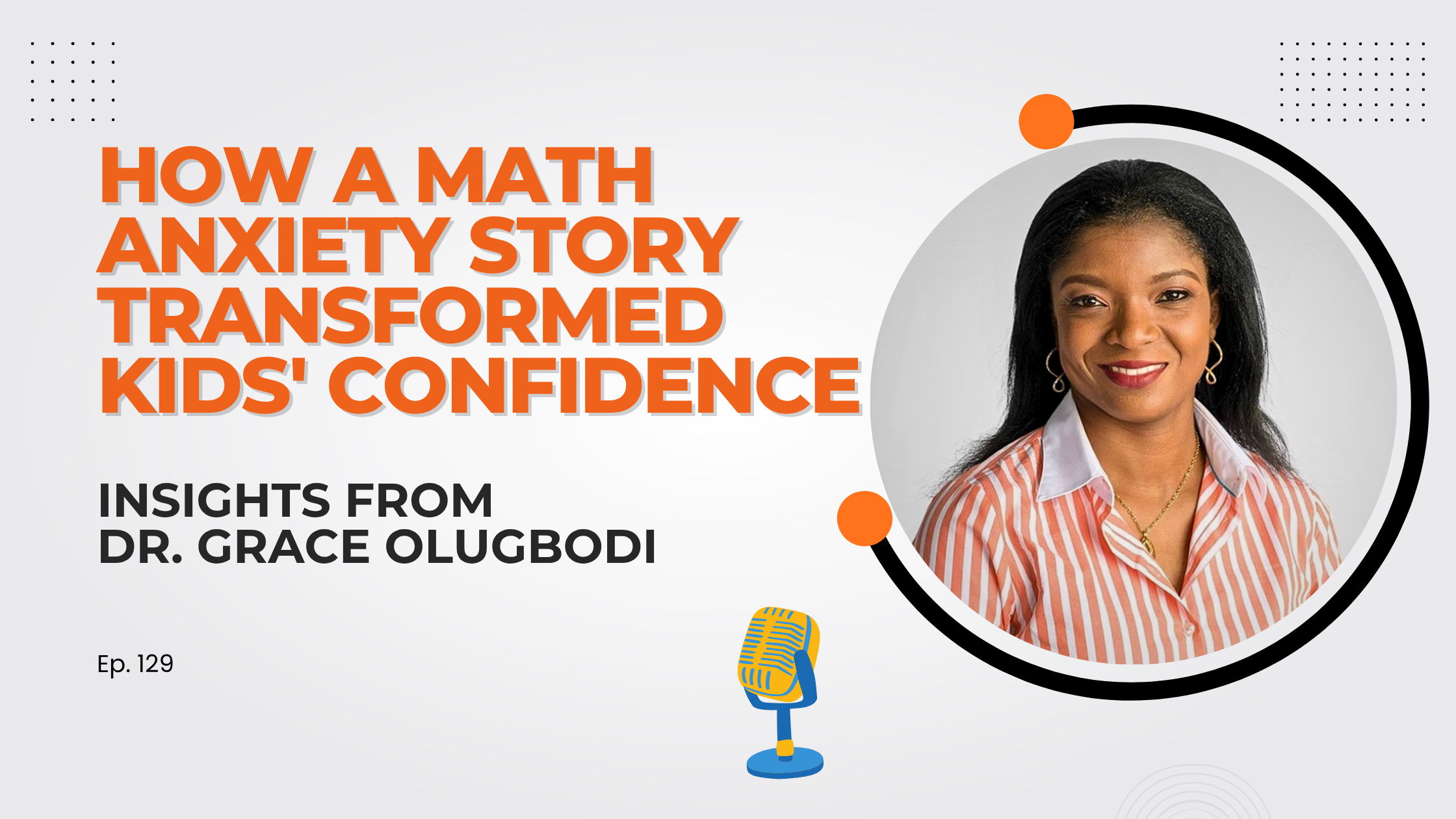
In this episode of Toy Business Unboxed, we dive into the inspiring journey of Dr. Grace Olugbodi, the brilliant mind behind Race to Infinity. From her roots in computing and investment banking, Dr. Grace has transformed her passion for education into a mission to conquer math anxiety in children. Join us as we explore her innovative approach to turning a board game into a digital learning experience. Her story is a testament to the power of creativity and determination in driving educational change.

#129: From Math Anxiety to Confidence: The Game That Changed How Children Learn – Toy Business Unboxed
Episode Highlight
- 00:43 Guest introduction and background
- 01:50 Overcoming math anxiety
- 02:42 Creating Race to Infinity
- 05:15 Game mechanics explained
- 06:48 School integration strategies
- 08:14 Digital transformation benefits
- 10:14 Physical vs. digital differences
- 11:23 Effective marketing strategies
- 20:27 Advice for industry newcomers
The Journey from Banking to Education: Leveraging Diverse Experiences
Many of us underestimate the power of personal stories in shaping meaningful educational tools. Dr. Grace Olugbodi’s journey shows how early childhood experiences can drive innovative solutions. With a background in computing, finance, and software development, her path shifted when her father made math fun, turning her from an anxious C student into a confident A student. That experience sparked her mission: eliminating math anxiety by transforming math into an engaging, strategic game. Her impact extended beyond her own turnaround — volunteer work in schools proved that children’s confidence could improve dramatically within weeks when learning felt playful and supportive.
How Race to Infinity Turns Math Concepts into a Strategic Race
At the heart of Grace’s approach is Race to Infinity, a board game that turns mathematical reasoning into an exciting strategic challenge. The premise is simple: be the first to go from zero to infinity. Players roll dice and manipulate values through addition, subtraction, multiplication, and division, making calculated decisions much like chess. Rather than rote memorization, the game emphasizes strategy, reasoning, and mental agility, translating complex math concepts into playful decision-making. The result is learning that feels natural, engaging, and genuinely fun.
Embedding the Game in Schools: From Classroom Icebreaker to Learning Catalyst
In thousands of schools across the UK and US, Race to Infinity is changing how children interact with math. Teachers use it as a warm-up activity, a class ender, or part of after-school and lunchtime clubs. Its versatility makes it an ideal addition to various educational settings, helping reduce math anxiety and promote collaboration. The game also serves as a bridge from play to learning. For instance, using Race to Infinity as a starter activity can prepare students mentally for math lessons, easing anxiety and increasing participation. In after-school clubs, children ask each other questions, strategize, and learn from making mistakes—all within a fun, supportive environment.
The Digital Leap: Scaling Impact During COVID and Beyond
Given her computing background, Grace quickly saw the potential for a digital version of Race to Infinity. COVID made the transition urgent, pushing her to expand beyond physical limitations. The digital adaptation offers clear advantages: easier distribution through web apps, data-driven insights on student progress, and greater scalability. Though still in trial with schools and not yet publicly launched, early feedback is overwhelmingly positive. Kids love playing online against AI opponents, and automated report generation makes the game more accessible and insightful for educators.
Challenges and Nuances in Creating Digital Educational Games
Transitioning a physical game into a digital experience isn’t seamless. Grace points out challenges such as designing an interface that’s easy to navigate on mobile devices, ensuring game actions translate smoothly into digital interactions, and maintaining the core strategic and educational value. For example, the physical game involves components like cards and tokens, while the digital version automates these elements for smoother gameplay. Ensuring the digital interface is intuitive involves thoughtful UI/UX design, particularly for young users.
Building and Scaling Through a Smarter Marketing Approach
While the physical game has gained traction via Amazon and targeted outreach, Grace highlights that marketing strategies differ for digital products. She emphasizes the importance of email marketing targeted at schools and educators, gathering referrals and feedback to refine the product, and customizing messaging for different markets (US vs UK), considering spelling, cultural nuances, and user preferences. In the US, for instance, reviews tend to be more positive and less critical, offering valuable insights into regional perceptions. Future plans include targeted digital advertising, especially to reach broader audiences.
Advice for Newcomers in the Toy and Game Industry
Grace’s advice to aspiring innovators is to embrace fear and take action. Her journey from prototype to successful product is a testament to the power of perseverance and passion. She encourages others to feel the fear and do it anyway, as this mindset has been key to her success. Her story inspires others to pursue their dreams despite uncertainties.
Conclusion
Dr. Grace Olugbodi’s journey from investment banking to educational innovation is a powerful example of how diverse experiences can lead to impactful change. Race to Infinity continues to transform the way children engage with math, offering a fun and strategic approach to learning. As the game evolves digitally, its potential to reduce math anxiety and build confidence in children grows exponentially. The future holds exciting possibilities for this innovative educational tool.
Connect with Dr. Grace Olugbodi
If you’re interested in learning more about Race to Infinity or connecting with Dr. Grace Olugbodi you can reach out through the following channels:
- Website: Visit BeGenio’s website for the Digital Game of Race to Infity and more.
- Website: Visit BeGenio’s website for the Physical Game of Race to Infity and more.
- facebook: Follow BeGenio on Facebook for updates and community discussions.
Transcript
Jason Hsieh (00:43)
Hi, welcome back to another episode of Toy Business Unboxed. Today we’re joined by Dr. Grace, brilliant mind behind Race to Infinity, a game that helped help thousands of children conquer mass anxiety and really build confidence. And her journey has been both personal and very powerful. And today we’ll dive in on how is she taking her award winning board game and transform it into digital experiences using AR and different technology as well.
Thank you so much for being on our podcast today, Grace.
Dr. Grace Olugbodi (01:11)
Thank you very much for having me.
Jason Hsieh (01:12)
Yeah, so first of all, can you kind of share with our audience a little bit about your background? Like what were you doing before you launched your own products and just kind of sharing your overall journey within the industry?
Dr. Grace Olugbodi (01:25)
Okay, well, thanks for asking and thanks for having me on the podcast. So my background is computing. I studied a bachelor’s in computer programming. So I did a lot of Java and things like that. Software programming, worked in investment banks for many years and also my master’s was in financial markets with information systems and, and as I said, I’m an ex investment banker, programmer. So a geek basically.
But I don’t look like one, hopefully.
Jason Hsieh (01:50)
I see.
And what lead you to the idea of creating the game that you currently have?
Dr. Grace Olugbodi (01:55)
Yeah, great question. said, you know, my story goes way back. So when I was 10 years old, my dad supported me and he made maths fun and creative for me. And he turned me from an average C student with mathematical anxiety to an A student just by making maths fun and creative. And this was the summer between primary school and secondary school where, you know, in the summer, I just didn’t really know what to do. And I was asking my dad, you know, what can I do on board?
And he was like, oh, let’s do some fun maths. And I thought, no, maths is not my idea of what I should be doing in the summer because I’d just finished primary school and secondary school. And so I was just finished that going into middle school. So it was that summer in between. And so we did all this maths, creative, fun stuff at home. And then I got into secondary school,
And it was the end of the academic year of the first year. And it was prize given day. And they called out the name of the person who won the math prize out of over 350 students. And that was me. And I couldn’t believe it because I thought it was a clerical error because it was not one of the math people at all. No, not at all. I had mathematical anxiety just the summer before for crying out loud.
Jason Hsieh (02:59)
I see.
Dr. Grace Olugbodi (03:04)
And even now, I didn’t know that my life had changed because it kind of did prize-giving day before you actually get your results. So I didn’t know that my lot had changed, you know? so that gave me a lot of confidence. And it made me realize one thing, that there’s no such thing as a maths person and that maths is only really a skill. And any skill doesn’t need deliberate practice with the right guidance. And so fast forward many years from then, I went
to do more, you know, I was being invited to competitions to represent the schooling competitions. I went on to maths, which is what I think you guys call the advanced maths. And I won the prize as well for that in middle school and high school. And then I went on to university, And I studied computing because I was looking for something that was very maths-ish because of my new accomplishments.
So, and, there was an interview that was going on and there were interviewing for people who could go into schools and help children who were struggling with maths, build them, maths confidence, but through games and through creative ways. So I applied to go, it was actually volunteer work and we were going into schools once a week doing this and we’ll just go to schools and play games with the kids and
Within six weeks, the teachers were giving us feedback to say that their confidence had turned around and they were much more confident than the way before. They could put their hands up more in class now. They were no longer sitting there hiding and thinking, gosh, we don’t want to be caught out. Like, you know, I’m dumb and that kind of stuff. They were a lot more confident. So I thought, wow, their life is changing the way that my life changed. And at the end of the academic year, all of them had raised their matlab
by one level, So I realised that wow, they went through what I went through. And that’s kind of why from then on that I made it my mission to turn mathematics into a game that every child would love to play every time and help them eliminate mathematical anxiety.
Jason Hsieh (04:56)
I see. OK. And I want to kind of talk a little bit more about the game that you have. I think you have like an actual sample as well if you could share with our audience and also talk about how the like what is the rule of the games and how does the student can engage using the game and really learn about math concepts.
Dr. Grace Olugbodi (05:15)
Okay,
So it’s called Race to Infinity. And the goal of the game is to be the first player to go from zero to infinity. So it’s like a wheel on the board there that you could see. It’s like a wheel. This is one of the older sort of boxes that we have. But anyway, you’ll recognize it because it’s the same logo and everything else. Sometimes you might see one with a white box, but it’s the same thing. so children are going and they’re racing.
To infinity just like the name says and what they’re doing is they have to roll the dice and then strategically decide Where to move on basis of their manipulate in a dice values? They can add numbers the traffic and divide they can multiply and Every time they’re all the dots before they move. They’ve got to consider what to move to a bit like chess This is not as you know brains asking chess
It’s more a strategic game than a maths game. But it does lend itself to basic maths, fluency, reasoning and problem solving when children are developing those skills.
Jason Hsieh (06:06)
Okay. And what is inside the game? Like what kind of component is inside?
Dr. Grace Olugbodi (06:11)
Okay, there’s a board and two dice, two 12-sided dice. And then there are what we call luck cards, which could be good stuff or it could be bad stuff on there, or it could be neutral stuff. So that’s why we call them luck cards. And then we’ve got money tokens, which are like money, you know, credits, they’re non-denominational. and then on the board, there are places on there that they could get caught up and get trapped in for a while and they can banish other people as well.
Jason Hsieh (06:35)
okay.
Dr. Grace Olugbodi (06:35)
Yeah, those are the components.
Jason Hsieh (06:37)
I see. And I know you have been actually engaging with a lot of schools through the games. you also kind of talk about how is school using the game and try to kind of incorporate as part of their educational curriculum?
Dr. Grace Olugbodi (06:48)
Yeah. So great question. So we’re in over 3000 schools in the UK and the US and schools use it as a teaching aid. So there are I think that three main ways that schools have been using it. One is as a starter before maths classes or at the end of maths classes, you know, when they use it at the start of maths class, they’ll use it for like five, 10 minutes just to sort of break up, you know, just just just to break the ice, you know, a little bit. So like an ice breaker because a lot of people, again, you know, start having that
mathematical anxiety feeling just before maths classes. So schools have found it like a way to start a class, get everybody sort of excited and happy before they start the actual maths lesson. Some use it at the end. So as something to encourage the children to do their schoolwork on time and when they finish, they can go there to the back or to the corner and play the game.
So that’s one way that you use it as a starter or at the end of the maths class. The second way they use it is in after school clubs. So a lot of schools have it in their after school club settings where children can just play it every time. And third way they use it is that they set up lunch clubs or maths clubs, especially for it during school hours. Yeah.
you know, and children just go and play the game and they ask each other questions, they collaborate, they learn more at the same time while they’re playing.
Jason Hsieh (08:04)
I see. And I know you also have a digital version of the game. Can you also kind of talk about the digital version a little bit? And why do you decide to create a digital version of it?
Dr. Grace Olugbodi (08:14)
Yeah, a great question. So after COVID, we very quickly realized that, or should I say during COVID, we very quickly realized that we needed to go digital. And even though that was always the plan, know, at the end of the day, I’m a tech lady anyway, so computing, but there was no immediate hurry to sort of digitize before COVID. Well, during COVID, we had a lot of issues with logistics, you know, shipping was five times the normal cost.
Manufacturers were closed and even though there was huge demand in the UK and the US for the games, you know It was such a challenge to actually deliver those games and even get our Manufactured the new ones in you know to get our stock in was a big big challenge as well Yeah, so we decided to digitize now the second benefit obviously of digitizing is that we found that we could scale faster wider and we could get broader for us to wider impact just by you know Just by digitizing
And we also realized that we could then collect that data and process that data, you know, and actually use that to detect weaknesses in children and help them improve through measured progress.
Jason Hsieh (09:13)
Okay,
Dr. Grace Olugbodi (09:14)
we haven’t actually launched it physically yet. We it as a web app at the moment. Yes, yes, but it’s on our website for people who want to play.
Jason Hsieh (09:21)
I see. Okay. So he’s on the website, but not in the app store yet. Okay. Got it.
Dr. Grace Olugbodi (09:25)
We haven’t launched yet. We haven’t publicly launched yet, but schools are trialling it out.
Jason Hsieh (09:28)
I see, I see, I see. What are some of the feedback you are getting from the user so far with the digital version?
Dr. Grace Olugbodi (09:35)
they’re absolutely loving the digital version. And it’s great to see that, especially where we first started to test it out last year, where we were nowhere near where we are right now. And kids were just loving the whole idea of being able to access something even easier without actually needing a physical game, because they could then play with AI. And that was some of the best parts of it. They would be able to see reports on how they’ve done.
just by playing the game so it’s like the game is assessing them.
Jason Hsieh (10:02)
I see. Okay. Thank you so much for sharing that. for the physical version, I guess, is the rule and the digital version pretty much identical? Is there any, like, what is the major differences between the physical version and the digital version?
Dr. Grace Olugbodi (10:14)
They’re very similar. are some things that are redundant on the board when you go digital, because for example, when you have to pick up a card or you have to pick up credit notes, now the digital will automatically give that to you as a player. then you’re not really having to actually do anything with those boxes on the board where those would ordinarily have been, you know, so just those slight differences are there. But other than that, the actual rules of the game
are actually the same.
Jason Hsieh (10:43)
Okay, okay, the interface is mainly different. So, and since you launched the product for a few years now, what are some of the marketing strategy that you have tried and you have implemented for the company that you find it to be working for the company?
Dr. Grace Olugbodi (10:58)
Yeah, great question. So what we found actually with marketing strategies for physical games totally different from marketing strategies for digital games. And there are lot of things to consider when you go digital, you know, just a lot of things in terms of just operational stuff, just then being able to have access and play the game normally without any hitching, know, without any sort of hiccups and stuff. So I found that marketing strategies for digital, particularly email marketing,
in actually contacting schools, you know, good old fashioned email, we found a really good one, and we will be doing adverts later in future, but we haven’t started those yet. We’re still just using email marketing and using sort of our one market, which are like people we know that know other people, but we’re doing that through email, so that we can get referrals on where we can trial our products in because it’s helping us to refine it and get it even better.
Jason Hsieh (11:49)
I see. for the physical product, it’s not only just available in the UK but it’s also available in US, correct?
Dr. Grace Olugbodi (11:56)
That’s correct, we’re still in this, you know, Amazon.
Jason Hsieh (11:58)
Do you see a different kind of feedback for US-based customer versus UK when you come to using your games and maybe getting feedback from a different user?
Dr. Grace Olugbodi (12:08)
Yeah, that’s a great question. So we found that Americans are bit more open minded than our people.
Jason Hsieh (12:15)
How so?
Dr. Grace Olugbodi (12:17)
so yeah, that’s what we found that over here, we’re a little bit more cautious and a bit you know, we were a bit more critical, which is a good thing for those of us who have products because we want to know, right? And I would say that Americans are a little bit more less critical.
and a bit more excited than we are, usually generally about things, but also about the game. That’s kind of the main differences that I found. yeah, reviews would be slightly better in America than the UK.
Jason Hsieh (12:49)
I see, see, I see. So that’s a very interesting observation that you also notice as well. And are you doing any special type of marketing for the US audience as well? Are you digital ads for US that’s different than UK?
Dr. Grace Olugbodi (13:04)
Not yet, but we do plan to do that and it would be slightly different because there are things like spelling wise, there is a difference between American spelling and British spelling and you know, it looks like Americans don’t like it when they see British spelling and vice versa. So there’s a bit of a challenge there to sort that out when we come to when we go back to doing ads. We have actually done ads before for the physical games, which worked really well. But in America,
for the digital as well, they’re gonna be slightly different just because of the spelling and grammar. Because we’re talking about maths at the end of the day, so even just maths in itself, in America it’s spelled M-A-T-H, in the UK it’s spelled But I’m gonna get into who’s right or who’s wrong, no problems. I’ll take both.
Jason Hsieh (13:45)
There’s a lot of nuances on how it’s been.
Dr. Grace Olugbodi (13:49)
Yeah, because
we haven’t had this for so long. Like, who’s right and who’s wrong?
Jason Hsieh (13:55)
I see. I see. I see. And what is your current, I guess, goal for 2025 and beyond for the brand? are some of the additional projects you’re currently working on and what is your vision for the company?
Dr. Grace Olugbodi (14:08)
Yeah, absolutely. We’re looking to, in particular, one of the main goals we have is to increase our data analytics, improve it and make it even stronger. So that’s one. And secondly, we plan to redesign it. At the moment, we just have a basic one that looks, it’s better than the physical games because obviously you can’t be the same as a physical game, but it’s currently a digital board game, which we haven’t looked at apps yet. So we plan to launch it out to iOS and Android.
once we’re launching later this year, but in particular, we’re looking at improving the data analytics and our UI/UX.
Jason Hsieh (14:43)
Hmm, I see, see, I see. What is the timeline your team is currently looking at for launching those? September? yes. I see, I see. so there’s still a few months to go.
Dr. Grace Olugbodi (14:49)
September.
Yeah, not long at all.
Jason Hsieh (14:56)
Yeah. And what are some of the biggest challenge that you face when you’re turning the board game into a digital experience?
Dr. Grace Olugbodi (15:03)
Yeah, it was so tricky. I mean, there are things that we didn’t expect to have problems with that we that came up just by turning it around, you know, especially like the UI UX, you know, when you have a board game, you’ve got like space for them to throw things around and do things and move things around and all that. But a digital game, it’s not quite the same. And when you think about it on a phone, then you can’t really have an open board, you know, without
Jason Hsieh (15:26)
Yeah.
Dr. Grace Olugbodi (15:28)
without trying to make sure that you make provisions for people to be able to zoom in and see parts of the board if they want to see closer, know, especially if the board is, you know, 60 spaces or more. That’s kind of tiny on a phone. So it’s that that tricky part of trying to make sure that it goes, you know, that you look at how the display in particular, you know, the display. I think that’s where the challenges come in.
how to sort of present it to make sure that it’s not too tiny and people can see it and not feel like what, you know, can’t see things properly, I can’t read things properly. And that’s where the tricky part is. So it’s all about being able to zoom in the camera and zoom out the camera and doing some of those things automatically as well.
Jason Hsieh (16:11)
you
I think one of the games that has been very, very successful turning their board game into digital experiences is Monopoly Go. And they have a lot of business case study on how successful it was. Because the original board game was already very successful with Monopoly, but the digital version, actually they got a lot of attraction with the digital version as well. I think for the board game industry, this is something that we can also learn from some of the successful case study on like
what they did for the digital version that becomes so successful and become one of the major drivers as well. and I think it’s also depending because the user experience like you mentioned for the digital version is very, different than the physical version. Like some of the nuances you mentioned, the way they are interacting with the game. It’s also
very different. So for your particular version, how are you planning to monetize the digital version? Is it just a one time fee or are you going to have like in app purchases that the user can make like ⁓ micro transactions?
Dr. Grace Olugbodi (17:16)
It’s actually a freemium app, so it’s going to be free to use and we’re going to charge for data analytics. So when it produces reports and analyzes what data has been collected for a person who’s playing, that’s where the charges come in. So we will charge for the reports and the data analytics.
Jason Hsieh (17:31)
OK. That’s a very different approach. OK, OK, OK. Yeah. So I see. that’s something you don’t really know until you launch. And maybe that’s something you need to kind of face as the product going live and see what kind of user experience it is and how do they interact with the digital version as well. And are you also taking some of the feedback on the physical version and try to implement that into the digital version as well?
Dr. Grace Olugbodi (17:55)
Absolutely, absolutely. We’re trying to get the best of the physical because it was so successful. It was also proven through academic research to the link to helping children increase their fluency, reasoning and problem solving skills. So we’re taking the best of the physical game and all of the things we learned from the academic research and all of the feedback we’ve had from people everywhere. We’ve had over a thousand positive reviews on Amazon across
12 different marketplaces and more reviews from others and crash settles and huge companies who have endorsed it. So we’re taking the best of that, putting that in the digital, but also then learning from other digital games that have been successful so that we can improve it further.
Jason Hsieh (18:34)
I see. OK. Thank you for sharing that as well. So it sounds like your current focus is still going to be on the digital version and on the physical version. It’s already getting quite a bit of traction, but you’re not heavily invested into the physical version because of the bandwidth of the team. You’re really trying to make sure you finalize it.
Dr. Grace Olugbodi (18:55)
Right,
we’re transitioning, we’re transitioning, but we’re still around, still around. It’s just that way our focus is more on the digital because we can scale that faster and I’d achieve our mission bigger.
Jason Hsieh (19:06)
Yeah, I see. the other question I have is really like, with the latest tariff development with the in the US side, is that impacting your US business as well because of the, you know, the changes
Dr. Grace Olugbodi (19:20)
Well, we hope not because with digital, there hasn’t been anything clearly or at least I haven’t heard any clear, you know, impacts on our digital. Having said that, because we’re still, we haven’t launched
publicly yet. We’re kind of safe, we can allow people to test and try all things for free. So we’re not too worried at this point, but we’re watching what’s happening and what they’re going to say about, you know, digital games and maybe educational games.
Jason Hsieh (19:45)
How about the physical game? Because I think you are currently also selling the physical copy in US right now, correct?
Dr. Grace Olugbodi (19:51)
in the US right now, yes we are. So because we’re transitioning, again even with the physical we’re not too worried because our focus is more on the digital so the physical with the tariffs there would be a bit of an impact but we don’t have to say it’s a massive impact and if a massive impact for comms then we’re going to accelerate the digital faster.
Jason Hsieh (20:10)
I see, see. Got it. thank you so much for sharing that. So as we’re kind of toward the end of today’s interview, what would you say to someone that’s getting started within the toys and game industry? What are some of the advice you can give them when they just trying to create their first tabletop board game or their first product?
Dr. Grace Olugbodi (20:28)
Yeah, you know, I have to say it’s quite funny that I’m here because I remember 2015 when I was still trying to think about how to launch mine and I had my prototype and I was kind of a ready prototype at this stage and I was really doing lots of testing and lots of testing and then trying to see, you know, how to get here and also a lot of the communities for games.
for gamers and board games particularly. I remember that there was a question then from somebody who said, when would you consider your board games successful? And I remember that someone had said that when you sold 20,000 games and I thought, wow, that is such a big, big, big number. it’s even a crazy number. You know, I wonder if I could ever get there, but you know.
And even though I wasn’t sure, they always say, feel the fear and do it anyway. And that’s what I would say, because I felt the fear and did it anyway. then somehow, we’re here now, four years down the line, after our first lunch day, four years down the line, we’ve done some pretty good numbers already. So I’ll say, feel the fear and do it anyway.
Jason Hsieh (21:28)
Okay. That’s a really good piece of advice. And for our audience, I want to find a little bit more about you and your company. Where is the best place for people to find online?
Dr. Grace Olugbodi (21:37)
Yep. Okay. So physical game, we’re at EasyMathSkills.com. So M-A-T-H spelled with the American spelling. So EasyMathSkills.com. And for the digital, it’s BeGenio.com, http://www.BeGenio.com.
Jason Hsieh (21:52)
OK, got it. We’ll make sure we put that into the show note
thank you again for being on our show and sharing your experiences within the industry and how you have built up the business so far. And I really wish you for the ongoing success with your brand and also with the digital app. So please also let us know once the digital version is live in the app store. We can also share some of those information with our audience that will be interested.
Dr. Grace Olugbodi (22:17)
Thank you very much for having me, I appreciate it.
Jason Hsieh (22:19)
Yeah. And for our listeners, thank you so much for tuning into this episode of Toy Business Unboxed podcast. We hope you have enjoyed today’s conversation and find it insightful and inspiring. If you like what you have heard, be sure to subscribe to our podcast on your favorite platform so you never miss an episode. We really appreciate your support and would love it if you can leave us a review and share the podcast with your friend and colleague. For more resource tips and the latest update within the toy industry, please visit our website at toy-launch.com. Join the conversation and connect with us on social media using
toybusinessunboxed. We’d love to hear your feedback and suggestions for future episodes. Until next time, keep innovating, keep creating, keep bringing joy to toys. This is Jason Hsieh signing off on the Toy Business Unboxed podcast. We’ll see you in the next episode. Thank you so much, everyone.