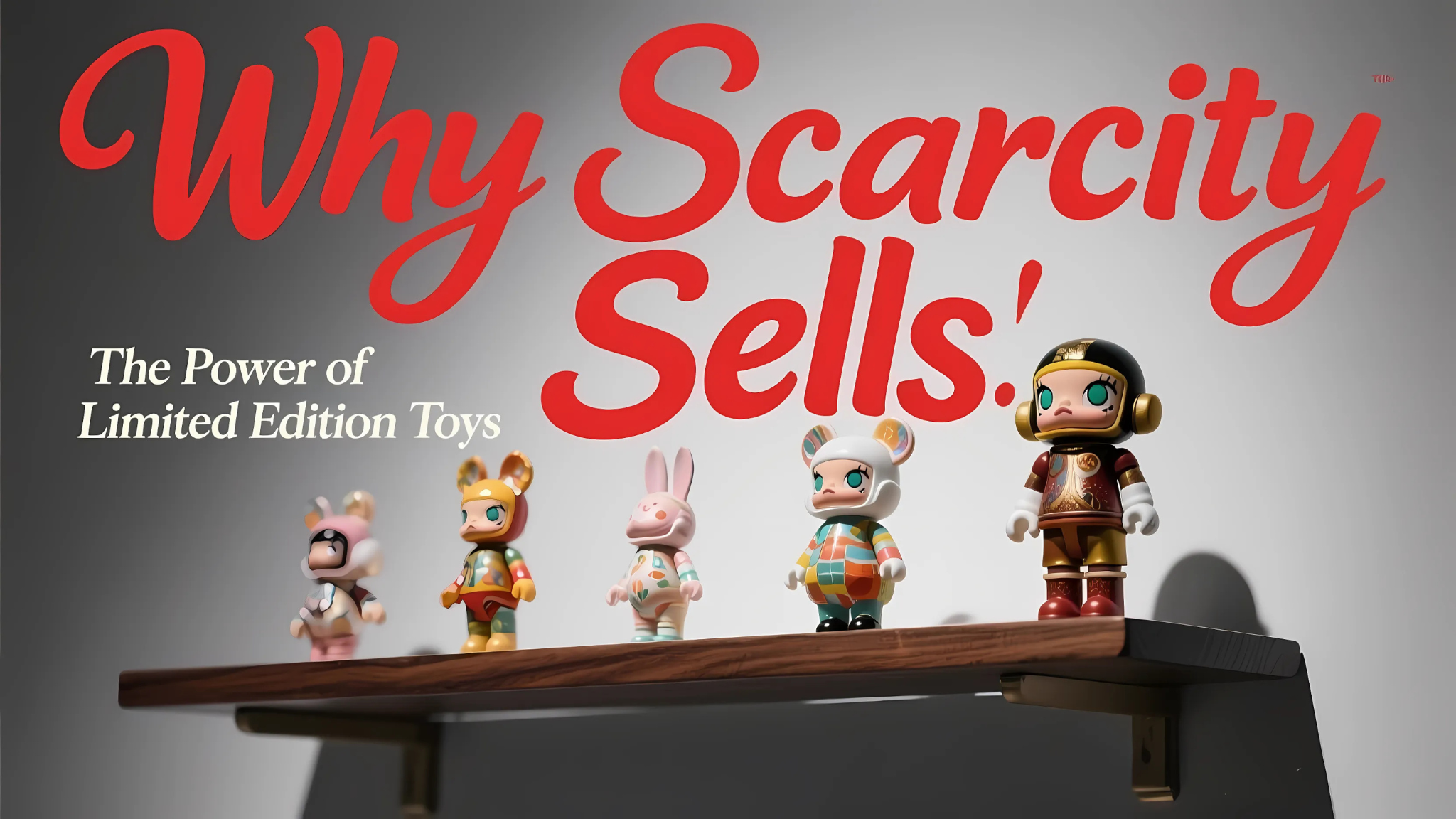
Imagine walking into a toy store and seeing a bold sign that reads: “Only 10 left – once they’re gone, they’re gone!” Suddenly, your decision-making changes. That toy isn’t just a plaything anymore; it’s an opportunity you might miss forever.
This is the essence of scarcity marketing—a timeless strategy that leverages human psychology to drive urgency, elevate perceived value, and fuel sales. In the toy industry, scarcity has been a proven driver of collecting frenzy, resale booms, and long-term brand loyalty.
For entrepreneurs, online sellers, toy and game brand owners, retailers, and even buyers, understanding why scarcity sells and how to harness it ethically is the key to thriving in an increasingly competitive market.
View Table Of Contents
Key Takeaways
- Scarcity works because it creates urgency, exclusivity, and value.
- It appeals to both collectors and casual buyers.
- Successful examples like Funko, LEGO, and Pokémon show its lasting power.
- Scarcity must be authentic, balanced, and strategically marketed.
- The future of limited editions will merge digital and physical experiences.
The Psychology Behind Scarcity Marketing
Why do consumers feel a rush of adrenaline when they see a product labeled “limited edition” or “only 2 left in stock”? Why do people camp outside toy stores overnight or refresh an online cart hundreds of times in hopes of snagging a rare collectible? The answer lies in psychology. Scarcity marketing works not because the product suddenly changes, but because our perception of it does.
Human beings are wired to respond strongly to loss and missed opportunities. Psychologists call this phenomenon loss aversion—we feel the pain of losing something more intensely than the joy of gaining it. Scarcity taps into this instinct by making people feel that if they don’t act now, they’ll lose out forever. This is the foundation of FOMO (Fear of Missing Out), a driver so strong it compels buyers to act quickly, sometimes even irrationally.
Scarcity also affects our sense of status. Owning something that others cannot have creates an immediate feeling of exclusivity and prestige. Just as luxury cars or high-end fashion brands thrive on limited production runs, toys become more desirable when framed as rare treasures. In fact, research consistently shows that products with limited availability are rated as more valuable, more attractive, and even more enjoyable by consumers.
For toy entrepreneurs and brand owners, this isn’t just theory—it’s a blueprint for creating emotional urgency around products. When buyers believe that a toy might vanish tomorrow, their hesitation disappears. What might have been a “maybe later” purchase transforms into a “buy now or regret it” decision. This is why scarcity isn’t just a sales tactic, it’s a powerful emotional trigger that changes the entire buying journey.
Collectors vs. Casual Buyers: Who Limited Editions Attract
Scarcity isn’t a one-size-fits-all strategy—it resonates differently with different types of buyers.
1. Collectors and Enthusiasts
Collectors are the lifeblood of the limited edition market. They chase exclusives not just because of their aesthetics but also because of their cultural and financial value. For collectors:
- Owning a rare toy can be a matter of pride, a badge of honor within their community.
- Rare toys often appreciate over time, making them investments as much as passions.
- Scarcity creates bragging rights—owning something most others will never have.
Collectors are so driven by scarcity that they’ll queue overnight at conventions, refresh online stores in seconds, and pay astronomical resale prices. For them, the toy isn’t just an object—it’s a piece of history.
2. Casual Buyers and Parents
On the other hand, casual buyers may not be deeply invested in collecting, but scarcity still moves them to act. Imagine a parent who sees a “Holiday Limited Edition” doll that their child has been begging for. Even if they weren’t ready to buy, the words “limited run” convince them to act before it’s too late.
Scarcity also plays on emotional triggers: the joy of surprising a child with something rare, the thrill of being among the “few” to own it, or simply the avoidance of regret when the shelves run dry.
This dual appeal makes scarcity especially potent in toys—it attracts both the die-hard collector and the everyday shopper.
How Scarcity Drives Higher Perceived Value
Scarcity doesn’t just sell more units, it elevates the perceived worth of each unit. This is why brands can confidently charge premium prices for limited editions.
Here’s how scarcity increases value:
- Perceived Rarity = Higher Price: Limited runs create the sense that the toy is worth more because not everyone can own it.
- Special Packaging & Design: Even small tweaks—like unique packaging, a signed certificate, or holographic features—signal exclusivity.
- Emotional Elevation: Buyers don’t just see the product; they see the story, the prestige, and the future resale potential.
Take LEGO, for instance. Their limited-edition Star Wars sets aren’t just collections of bricks, they’re cultural artifacts that sell out quickly and command thousands of dollars on resale platforms. Scarcity turns the ordinary into the extraordinary.
Case Studies: Famous Limited Edition Toys That Sold Out Fast
History has no shortage of toys that went from shelves to legends thanks to scarcity.
- Beanie Babies (1990s): Ty Warner revolutionized scarcity by “retiring” certain designs, making them instantly valuable. Some $5 plush toys skyrocketed to hundreds or even thousands on resale markets.
- Funko Pop Exclusives: Convention-only or store-exclusive Pops create feeding frenzies, often selling out in minutes. Their limited nature fuels both collector demand and resale markets.
- LEGO Collector Sets: Limited-run sets like the Millennium Falcon or Taj Mahal became icons not just for kids but for adults willing to pay top dollar years later.
- Pokémon Cards: A first-edition holographic Charizard card, once just playground bragging rights, now sells for six figures.
These case studies show a consistent truth: scarcity transforms toys into cultural phenomena.

Scarcity in the Digital Age: E-Commerce and Online Selling
Scarcity has evolved dramatically with the rise of digital commerce. Gone are the days when scarcity was confined to store shelves and physical lines outside retailers. Today, scarcity happens in real time on screens, amplified by global connectivity and social media buzz.
- Countdown Timers: “Sale ends in 2 hours!” creates instant urgency.
- Stock Warnings: Amazon’s “Only 3 left in stock” has proven to boost conversions.
- Pre-Orders: Limited slots for pre-purchase build anticipation before products even launch.
- Exclusive Drops: Online-only editions reward digital buyers and drive traffic to branded sites.
Social media has amplified this even further. A single TikTok showing an exclusive toy can spark viral demand, while Instagram influencers flaunting “numbered edition” packaging can push thousands of buyers to act immediately. Scarcity has become more global, instant, and scalable.
Creating Scarcity the Right Way for Toy Brands
Scarcity is powerful, but it’s a double-edged sword. When done wrong, it can alienate customers, damage trust, and cheapen a brand’s image. That’s why toy companies must learn to apply scarcity in ways that feel authentic, balanced, and respectful of the customer experience. Here’s how to use scarcity responsibly:
Be Authentic
One of the most important rules is honesty. If you claim a toy is “limited edition,” customers expect it to truly be limited. Re-releasing the exact same toy undercuts credibility. Instead, brands can issue variations—different colors, accessories, or packaging—to maintain integrity while still offering new opportunities for purchase.
Balance Demand and Supply
Another key principle is balance. Too few items frustrate buyers, leaving loyal fans disappointed and resentful. Too many, on the other hand, erode the sense of exclusivity. The art lies in finding the sweet spot where demand exceeds supply just enough to spark excitement without fueling backlash.
Reward Loyalty
Offer exclusives first to your VIP customers or most engaged fans. Scarcity should be used strategically, not constantly. If every single product is marketed as “exclusive” or “limited,” customers stop believing it. Scarcity works best when it’s tied to special events, anniversaries, collaborations, or unique creative projects. In these contexts, customers view it as a celebration rather than a gimmick.
Marketing Tactics to Sell Out Limited Edition Toys
Scarcity works best when paired with smart marketing. The key is to build hype before, during, and after launch.
Proven tactics include:
- Pre-Launch Teasers: Share behind-the-scenes images, sketches, or packaging reveals weeks in advance.
- Collaboration Drops: Team up with artists, celebrities, or popular franchises for irresistible exclusives.
- Storytelling: Add narrative value—every toy should feel like it comes with a story worth owning.
- Scarcity Messaging: Use urgency-driven language like “Only 500 units worldwide.”
- Waitlists and VIP Access: Build email lists by offering early access to insiders.
The result? A product that sells out instantly and keeps your brand at the center of conversations long after.
Potential Risks and Challenges of Scarcity Marketing
Scarcity is powerful, but it’s not foolproof. When mismanaged, it can create as many problems as it solves.
One major risk is overuse. If every toy is marketed as “limited,” consumers quickly lose faith in the claim. Scarcity must remain rare to remain believable. Another challenge is customer frustration. Nothing breeds resentment faster than loyal fans who repeatedly miss out on drops. Over time, this can push them away from your brand entirely.
Counterfeits are another danger. The more desirable your limited editions become, the more likely they are to attract counterfeiters eager to exploit unmet demand. This not only hurts sales but also risks damaging brand reputation.
Finally, scarcity carries the danger of short-term thinking. It’s tempting to rely on sell-out hype, but without a broader strategy of consistent product development and brand building, scarcity alone cannot sustain long-term growth.
This is why scarcity must be part of a balanced marketing mix. It should enhance your brand’s overall strategy, not define it completely.
Future Trends in Limited Edition Toys
Scarcity in toys is evolving rapidly, blending physical and digital worlds. Key trends to watch:
- NFTs and Digital Collectibles: Toys paired with blockchain tokens verifying ownership.
- Hybrid Collectibles: A physical toy with a digital unlock, expanding the play experience.
- Micro-Runs with 3D Printing: Small-batch, hyper-personalized designs at affordable cost.
- Entertainment Tie-Ins: Collaborations with movies, shows, and gaming franchises keep demand evergreen.
Tomorrow’s scarcity will be defined not just by fewer units, but by greater creativity, storytelling, and digital integration.

Frequently Asked Questions
Why do limited edition toys sell out so quickly?
Limited edition toys sell out fast because they tap into psychological triggers like FOMO (fear of missing out), exclusivity, and urgency. When buyers see that an item is available in small quantities, they perceive it as more valuable and rush to secure it before it disappears. In addition, many collectors and resellers monitor launches closely, often purchasing items the moment they’re released, which further accelerates sellouts.
Are limited edition toys a good investment?
Yes, but with caution. Some limited edition toys—such as certain LEGO sets, Funko Pops, or Pokémon cards—have increased significantly in value on the resale market. However, not every limited run guarantees a profit. Long-term value depends on brand reputation, cultural relevance, condition of the toy, and how well the scarcity is managed. Entrepreneurs and collectors should research trends and focus on brands with proven collector demand.
How can toy brands use scarcity without frustrating customers?
The key is balance and transparency. Scarcity works best when it feels genuine and special. Brands should clearly communicate why an item is limited (e.g., collaboration, anniversary, seasonal release) and avoid re-releasing products labeled “exclusive.” Creating waitlists, pre-order opportunities, or VIP early access helps manage demand while keeping loyal customers happy. When scarcity is overused or feels manipulative, it risks alienating buyers instead of exciting them.
What marketing strategies work best for launching limited edition toys?
The most effective strategies combine anticipation, storytelling, and exclusivity signals. Successful tactics include:
- Teasing product drops on social media weeks in advance.
- Partnering with influencers or entertainment brands to amplify buzz.
- Using countdown timers, “only X left in stock” messages, or limited-time sales.
- Offering early access to members, subscribers, or VIP customers.
When these strategies are layered together, they create a sense of urgency and prestige, ensuring that limited editions sell out quickly while generating long-term brand loyalty.
What trends are shaping the future of limited edition toys?
The future is moving beyond just physical scarcity. Digital scarcity is becoming a huge driver of demand, with toys linked to NFTs, in-game unlockables, or exclusive digital content. In addition, micro-limited runs enabled by 3D printing, hybrid collectibles tied to popular entertainment franchises, and personalized exclusives are all on the rise. These trends show that scarcity will remain powerful but evolve into blended experiences that combine the physical and digital worlds.
Final Thoughts
Scarcity is more than a sales tactic, it’s a timeless principle of human psychology. When applied with creativity and integrity, it transforms ordinary toys into cultural icons, sparks passionate communities, and drives profitability for brands and sellers.
For entrepreneurs, retailers, and toy creators, scarcity isn’t just about selling fewer items at higher prices; it’s about building demand, elevating brand prestige, and creating unforgettable buying experiences.In the world of toys and games, one truth will always remain: when something feels rare, it becomes irresistible.